The five days at Pied Dore (12th July to 16th of July) situated on the countryside of Vendee, will focus on a ongoing project and/or the primary interests of the photographer. The starting point is the question who am I.
I would like you to work on a storyline that is the most important to you right now, photograph and work on the individual private space, transform the images inside you on paper; work with the startingpoint on your identity. Turn the skin inside out.
I believe in translating emotion into images, feeling and experiencing life through photography, seeking and questioning, trying to see behind the visual reality. I’m interested in personal, self-experienced stories, the very individual language of expression.
-- Arja Hyytiäinen
PUBLIC
The workshop is open to any amateur or professional photographer.
MATERIAL
Bring with your work on progress (preferably on paper), laptop, camera/s , texts,drawings or any other support that can help you on the process of working and editing the photographic work. There will be a scanner, fix computer and a darkdoom available.
DESCRIPTION
The workshop will focus to deepen the personal language and the photographic work on progress. It is a practical workshop in the surrounding countryside. We start with presenting our works and projects and continue by photographing and editing so that the resulting work does not only become a style or a pretty image but a portrait of the individual who is telling his/her story. Please think of a project you would like to realize/continue working on/bring to end.
PRACTICAL INFO
The workshop will be held at Pied Dore, St Florent des Bois, Vendee, starting at 10H Wednesday 12.7 until 18H Sunday 16.7.
The closest railway station is La Roche sur Yon. (Possibility to be picked up, please think of a vehicule or a bike to move around the area) The participants can put their tent on the ground or search a guesthouse or a guetsroom if preferred.
The number of participants is limited between 8 to 10 persons.
PRICE
580 € (100 € with the inscription and the rest till the 16 of July by banktransfer or cheque.) inclusive breakfast daily lunch and two
dinners.
Deadline for the inscriptions; 8th of May
Contact: 07 86 60 39 34
arjahyytiainen@gmail.com
Arja Hyytiainen
8 Route du Pied Dore
85310 St Florent des Bois
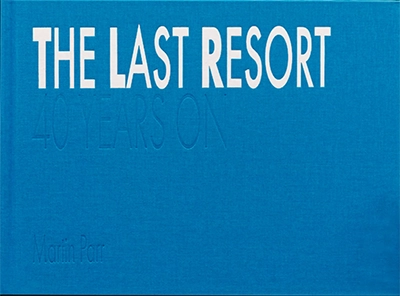
Publisher : Dewi Lewis Publishing & Martin Parr Foundation
2026 | 60 pages
"The pictures from The Last Resort still hold up brilliantly. If I ever reach the Pearly Gates, those are the ones I’d probably pull out first!" – Martin Parr
Published in collaboration with the Martin Parr Foundation, this special edition accompanies a tribute exhibition at the Foundation’s Bristol gallery, honouring Martin Parr following his passing in December. Shot in and around the English seaside town of New Brighton between 1983 and 1985, The Last Resort remains a landmark in British colour documentary photography, establishing Parr as one of the nation’s most influential photographers.
This volume presents a carefully curated selection of images from the iconic series, alongside extensive archival material, including contact sheets, photographs, and ephemera drawn from Martin’s personal collection. Isaac Blease, Archivist at the Foundation, provides insight into the project’s origins, exploring the artistic and cultural influences that prompted Parr’s shift from black-and-white to colour photography, as well as the series’ initial exhibitions in Liverpool and at London’s Serpentine Gallery.
Peter Brawne, designer of the original 1986 book, reflects on the creative process behind the design and his collaboration with Martin, while Susie Parr, Martin’s wife, contributes a personal account of New Brighton and the first public presentation of the work at Liverpool’s Open Eye Gallery in 1985.
Richly illustrated and thoughtfully contextualized, this book offers both longtime admirers and new readers a unique glimpse into the development of Martin Parr’s iconic vision and the vibrant world of British seaside life that inspired it.
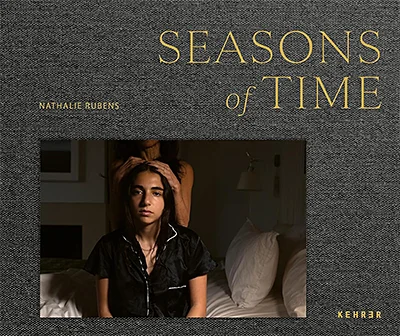
Nathalie Rubens: Seasons of Time marks a thoughtful and intimate debut, tracing the subtle thresholds that define a woman’s life. In this carefully composed photobook, Nathalie Rubens reflects on two parallel passages: her daughter Ruby’s emergence into young adulthood and her own transition into post-menopausal life. Through this mirrored gaze, the work becomes a meditation on continuity and change, revealing how beginnings and endings often unfold side by side.
Rubens turns the camera inward and outward with equal tenderness. Portraits of Ruby capture the fragile confidence and uncertainty of youth—moments poised between dependence and independence. In contrast, self-portraits confront the physical and emotional transformations of midlife with quiet candor. The images resist sentimentality; instead, they dwell in nuance, acknowledging vulnerability while affirming resilience. The body, in its evolving forms, becomes both subject and witness to time’s passage.
Domestic interiors, shared gestures, and fleeting glances anchor the book in lived experience. Light filters through windows, falls across skin, and settles on everyday objects, creating a rhythm that echoes the seasons invoked in the title. Rubens approaches aging not as decline, but as a shifting landscape—one marked by introspection, memory, and renewed self-awareness. The dialogue between mother and daughter unfolds without hierarchy, suggesting that each stage of life carries its own clarity and its own mystery.
Deeply personal yet widely relatable, Seasons of Time speaks to the universality of transition. It honors the complexity of female identity as something neither fixed nor singular, but constantly in motion. Through measured composition and emotional honesty, Rubens crafts a visual reflection on growth, separation, and connection. The result is a quiet affirmation that time, though relentless, can also be a source of understanding and grace, binding generations even as it gently transforms them.
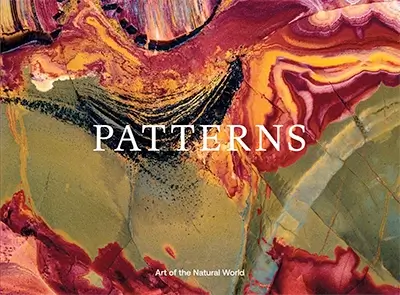
The structural organization of the biosphere is the primary subject of Patterns: Art of the Natural World, a comprehensive visual catalog by Australian photographer and conservationist Jon McCormack. The work operates on the premise that life and geology are governed by a shared geometry, manifested in the recurring arrangements found within botanical specimens, animal migration routes, and topographical transformations. McCormack utilizes high-resolution digital sensors to isolate these rhythms, presenting a data-rich look at the physical world that spans from the macro-scale of elephant trails in the Kenyan savanna to the micro-textures of fossilized feathers. This survey functions as an empirical record of the planet’s innate design, emphasizing the mathematical consistency of natural forms across disparate ecosystems.
The geographical scope of the project encompasses a wide range of extreme environments, including the volcanic coastlines of Iceland and the sub-zero fjords of Antarctica. McCormack documents the silent, systemic logic of the earth, such as the intricate symmetry found within the ice caves of Svalbard and the rhythmic branching of tree rings. A significant portion of the archive focuses on the photographer’s local environment in California, where the interplay of desert erosion and coastal tides provides a laboratory for studying the evolution of landforms. By removing the distraction of color in certain instances or utilizing flat lighting, the imagery highlights the "technofossils" of the natural world—the enduring structures that define the history of a landscape and its inhabitants.
Supplementing the visual evidence are a series of short essays penned by a multidisciplinary group of scientists and explorers. These texts provide a theoretical framework for the photographs, explaining the biological and physical forces that generate specific patterns, such as the fractals in river deltas or the hexagonal tiling of basalt columns. This collaboration ensures that the book remains a rigorous journalistic inquiry into the interconnectedness of life rather than a purely aesthetic exercise. As ecosystems face unprecedented pressure from climate instability, Patterns stands as a definitive document of the planet’s foundational architecture, recording the complex symmetries that underpin global biodiversity before they are irrevocably altered by human intervention.
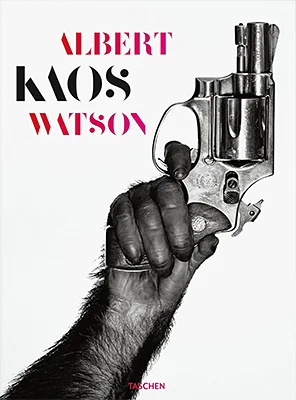
Albert Watson: Kaos is a masterful survey of one of photography’s most influential voices, spanning five decades of work that oscillates between intimacy and spectacle. Watson’s photographs are at once meticulously composed and viscerally immediate, capturing both the iconic and the unexpected with equal authority.
KAOS charts Watson’s journey from his breakthrough Alfred Hitchcock portrait in 1973 to the present, revealing the astonishing range of his vision. Across its pages, readers encounter a kaleidoscope of subjects: celebrities in revealing vulnerability, strangers in fleeting urban moments, wildlife in arresting stillness, and landscapes that shimmer with elemental power. Each frame is a study in light, shadow, and narrative tension, embodying Watson’s extraordinary ability to render the familiar as extraordinary.
The book moves fluidly between worlds. Supermodels and pop icons—David Bowie, Kate Moss, Jay Z, Jennifer Lopez, Mick Jagger—sit alongside anonymous figures in neon-lit cities and remote Scottish landscapes, their presence amplified by Watson’s uncanny sense of timing and composition. From sensuous nudes to stark urban street photography, his work explores surface beauty while hinting at the emotional and psychological depth beneath. Watson’s camera captures not only what is seen, but the subtle textures of human experience: desire, humor, solitude, and magnetism.
Accompanied by an essay from Philippe Garner and enriched with Watson’s own reflections, as well as previously unpublished Polaroids from his personal archive, KAOS is both an authoritative career retrospective and a deeply personal document. The photographs pulse with cinematic allure, formal precision, and the irrepressible vitality of a life spent observing the world in its most dynamic and intimate moments.
Presented in a sumptuous hardcover, with optional signed Art Editions including exclusive prints, Albert Watson: Kaos is a definitive celebration of an artist whose work continues to inspire photographers, collectors, and enthusiasts around the globe, capturing a universe simultaneously chaotic, poetic, and utterly compelling.