All about photo.com: photo contests, photography exhibitions, galleries, photographers, books, schools and venues.
Win a Solo Exhibition in July 2026 + An Exclusive Interview!

All Photo Events

What are the best art shows and exhibitions dedicated to photography? We have listed the photo exhibitions you don't want to miss, including recently opened shows and more. With the photography art scene being so prominent, yet ever changing, you'll want to be sure to catch major exhibitions, fairs and festivals.
Stay up-to-date  with call for entries, deadlines and other news about exhibitions, galleries, publications, & special events.

Featured Events

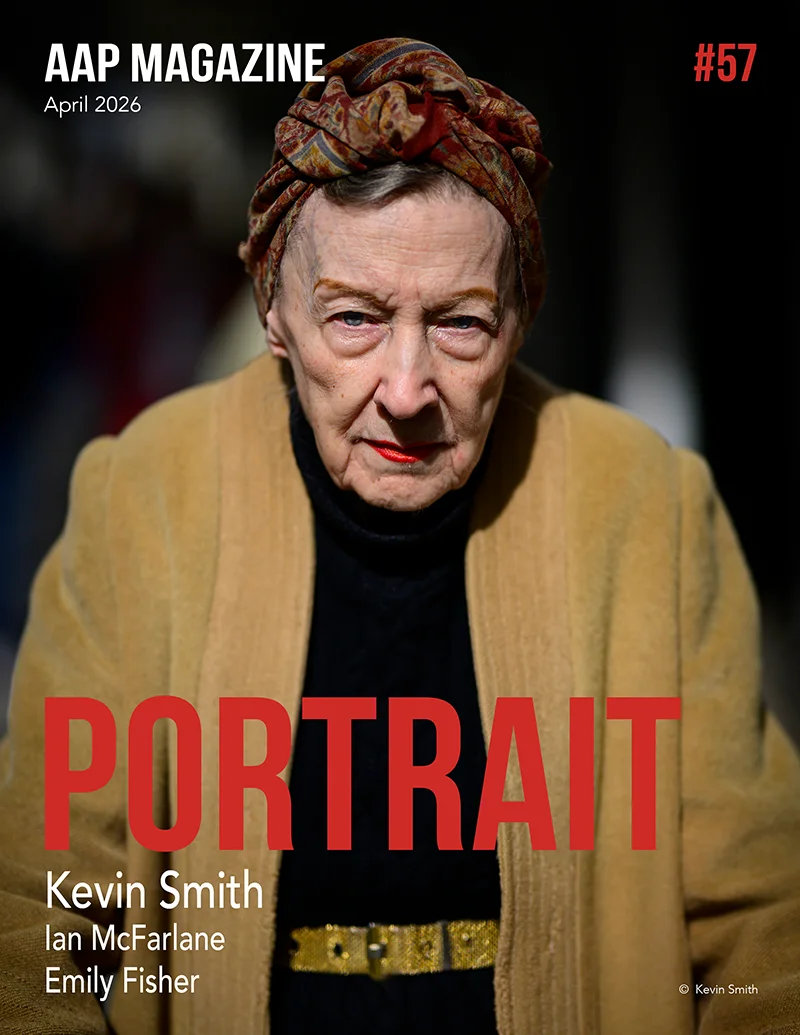
Our printed edition showcases the winners of AAP Magazine call of entries
All About Photo Magazine
Issue #56
Call for Entries
AAP Magazine #59 Shapes
Publish your work in our printed magazine and win $1,000 cash prizes

Exhibitions Closing Soon

Palomar (Part 1)
The Renaissance Society | Chicago, IL
From May 02, 2026 to June 07, 2026
Palomar (Part 1), presented at The Renaissance Society from May 2 through June 7, 2026, gathers an international group of artists in an expansive meditation on the sky, time, and humanity’s changing relationship to observation. Curated by Karsten Lund, the exhibition borrows its title from California’s historic Palomar Observatory and from Italo Calvino’s fictional character Mr. Palomar, whose attentive reflections on everyday phenomena transformed ordinary moments into philosophical inquiry. Across photography, sculpture, video, and installation, the exhibition considers what it means to look upward in an era shaped simultaneously by scientific discovery, ecological anxiety, surveillance, and technological acceleration. The participating artists approach the sky not as a romantic backdrop, but as a contested and emotionally charged space. Works by photographers and image-makers including Rinko Kawauchi, Myriam Boulos, Heji Shin, and Aspen Mays explore cycles of light, perception, and memory, while historical references such as Eadweard Muybridge’s pioneering motion studies connect older forms of observation to contemporary questions about visibility and time. Celestial rhythms become intertwined with personal experience, political realities, and environmental fragility. Throughout the exhibition, moments of stillness coexist with reminders of instability, extinction, and human intervention. The exhibition arrives during renewed global interest in space exploration following the Artemis II lunar mission, yet Palomar remains grounded in earthly concerns. Rather than celebrating technological conquest, the project reflects on how people continue to orient themselves through natural cycles even as urban light pollution obscures the stars and satellite systems reshape the night sky. The works suggest that looking upward can carry contradictory meanings: wonder and grief, comfort and unease, intimacy and distance. Structured in two parts, the exhibition unfolds gradually, with certain works remaining in place while others rotate throughout the presentation. This shifting format creates an experience akin to a photographic double exposure, where ideas overlap and evolve over time. By combining scientific references with poetic reflection, Palomar (Part 1) examines observation itself as a cultural act. The exhibition ultimately asks how humans measure existence within vast cosmic systems while confronting the increasingly uncertain realities unfolding closer to home. Image: Sarah and Joseph Belknap, 4 Months of the Sun, 2014
Photosynthesis XXI: Winchester and Burlington High School Students
Griffin Museum of Photography | Winchester, MA
From May 29, 2026 to June 07, 2026
Photosynthesis XXI, on view at the Griffin Museum of Photography from May 29 through June 7, 2026, highlights the creative voices of students from Burlington High School and Winchester High School through a collaborative exhibition shaped over the course of five months. Organized annually by the Griffin Museum, the program connects emerging photographers with professional artists, curators, and mentors, encouraging students to use photography as a tool for personal expression and visual storytelling. The exhibition reflects the diversity of perspectives and experiences within the two school communities. Through portraiture, documentary work, conceptual imagery, and observations of everyday life, the students construct a collective portrait of adolescence at a particular moment in time. The photographs explore identity, friendship, family, memory, and belonging while also addressing broader social and emotional realities. Rather than presenting polished commercial aesthetics, many of the works embrace experimentation and sincerity, revealing photography as a language of curiosity and self-discovery. A central aspect of the Photosynthesis program is its emphasis on dialogue and mentorship. Throughout the project, students work closely with photographers John Willis, Melinda Hurst Frye, and Jeff Larason, while receiving guidance from teachers Caitlin Nitzberg and Catherine Cashman. These exchanges introduce students to both the technical and conceptual dimensions of image-making, while also encouraging collaboration across schools and backgrounds. The resulting exhibition becomes less a competition than a shared creative experience rooted in observation and exchange. The Griffin Museum has long supported educational initiatives that connect photography to community engagement, and Photosynthesis XXI continues that mission by giving young artists the opportunity to exhibit their work in a professional museum setting. Supported by the John & Mary Murphy Foundation, the program also extends beyond the gallery through a summer public art project displayed on the museum grounds, allowing student work to reach a wider audience. More than a student showcase, Photosynthesis XXI captures the role photography can play in helping young people articulate how they see themselves and the rapidly changing world around them. Image: © Eva Albert
Erica Baum: the bite in the ribbon—a paper show
George Eastman Museum | Rochester, NY
From November 22, 2025 to June 07, 2026
Erica Baum: The Bite in the Ribbon—A Paper Show invites viewers into a world where text and image converge in unexpected ways. Through the careful selection, transformation, and reinterpretation of printed materials, Baum constructs a poetic interplay of language and form, encouraging both deep looking and reading. This exhibition presents a dynamic juxtaposition of her early and ongoing projects alongside her latest work, including never-before-seen pieces. At the heart of the show, Dog Ear, displayed in the Potter Peristyle, exemplifies Baum’s signature method of repurposing found books. By folding pages at precise angles, she creates surprising interactions between words and images, generating new narratives and abstract compositions from existing texts. This simple yet radical intervention challenges traditional notions of reading, inviting fresh interpretations with every fold. In the Project Gallery, Baum’s recent series, Patterns and Fabrications, explore the aesthetics of fashion and craft through printed media. Patterns focuses on the striking geometries, colors, and textual fragments found in mid-century sewing pattern designs, while Fabrications expands this investigation to include materials from magazines, catalogs, and books on fashion and craft. By incorporating advertisements and coupons, Baum reframes the domestic and commercial imagery embedded in these everyday objects, offering a meditation on material culture and visual storytelling. Through these interwoven series, The Bite in the Ribbon—A Paper Show highlights Baum’s ongoing fascination with the interplay between print, language, and image, revealing the hidden beauty and meaning within overlooked materials. Image: Erica Baum (American, b. 1961), Wrought Iron, from Fabrications, 2024. Inkjet print. Courtesy of the artist and Bureau, New York. © Erica Baum
Farah Al Qasimi: Psychic Repair
SCAD Museum of Art | Savannah, GA
From January 30, 2026 to June 07, 2026
Farah Al Qasimi: Psychic Repair unfolds as a vivid, immersive experience that blurs the boundaries between image, sound, and belief. Installed across the SCAD Museum of Art’s façade vitrines and interior gallery, the exhibition plays with shifts in scale and dimension, inviting viewers to navigate a visual environment that feels at once intimate and overwhelming. Al Qasimi’s saturated palette and layered compositions reflect a world shaped by constant exposure, where identity is performed, adjusted, and endlessly reframed. Rooted in memories of growing up in the United Arab Emirates and shaped by her life in the United States, Al Qasimi’s work explores how rituals of self-presentation take form across cultures. Her photographs examine everyday gestures, domestic interiors, and symbolic objects, revealing how beauty, fashion, and personal style become tools for meaning-making. These images oscillate between documentation and fantasy, suggesting that belief systems are often built not through grand narratives, but through small, repeated acts of looking and being looked at. The exhibition’s visual language draws inspiration from early internet aesthetics and commercial display strategies. Overlapping images, vinyl prints, and architectural interventions recall pop-up windows and storefront vitrines, where desire is carefully staged. Al Qasimi moves fluidly between analog and digital processes, using patterns, textures, and shadows to create spaces where the real and the imagined coexist. Her approach reflects a generation shaped by screens, where memory is fragmented and emotion circulates at high speed. Sound plays a crucial role in Psychic Repair. Through music videos and audio works, Al Qasimi transforms jump-rope chants, spoken poetry, and punk-inflected songs into hypnotic refrains. These sonic elements function as modern incantations, reinforcing the exhibition’s interest in the supernatural as a metaphor for unseen cultural forces. Beauty standards, online hierarchies, and consumer fantasies appear as invisible energies that quietly influence behavior and self-perception. Across photography, film, and music, Al Qasimi embraces collaboration and storytelling as acts of resistance to fixed meaning. Her anthropomorphized narrators and unexpected performers introduce humor and vulnerability, echoing the logic of children’s cartoons while addressing adult anxieties. Psychic Repair ultimately offers a space for reflection, proposing art as a site where fragmented identities can be examined, reassembled, and momentarily healed through imagination and play. Image: Farah Al Qasimi, "Leopard Print Blanket," 2022, archival inkjet print. Courtesy of the artist and François Ghebaly, Los Angeles. © Farah Al Qasimi
Ming Smith: Jazz Requiem – Notations in Blue
Portland Museum of Art | Portland, OR
From February 06, 2026 to June 07, 2026
Ming Smith: Jazz Requiem – Notations in Blue offers an intimate journey into the early artistic path of Ming Smith, focusing on the shaping forces of place, identity, and creative freedom that marked her emergence in the 1970s and 80s. At a time when many Black artists sought opportunities beyond the United States, Smith found in Europe a space that welcomed experimentation and allowed her to refine her vision. This exhibition reflects on those formative travels and how they continue to echo through her work today. The selected photographs, many newly printed, reveal Smith’s nuanced approach to depicting the Black experience—capturing fleeting gestures, shadows of movement, and the quiet poetry found in daily life. Her images resist the traditional documentary expectations once imposed on photographs of Black communities. Instead, she expands the medium toward a more expressive, introspective language. By challenging the assumptions surrounding the photographic gaze, Smith both acknowledges and subverts the medium’s history, offering images that feel at once personal and universal. Central to the exhibition is the influence of music and dance, especially jazz, whose improvisational rhythms have long guided Smith’s approach behind the camera. Her encounters with the atmospheric works of Brassaï and Henri Cartier-Bresson during her time in Paris deepened her interest in mood, motion, and the lyrical possibilities of the photograph. These early influences merge with her own instincts, resulting in a style defined by blur, abstraction, and a sensitivity to the ephemeral. Smith’s legacy is anchored in her groundbreaking achievements and unwavering dedication to portraying the depth of Black life. From her early days in New York—balancing modeling with photographing city streets and intimate cultural spaces—to her historic milestones with the Kamoinge Workshop and major museum collections, she has continually expanded what photography can express. Her images, alive with emotion and spontaneity, function as both memory and meditation, honoring the complexity of lived experience while inviting viewers to feel its resonance. Image: Ming Smith (United States, born 1950), Judith Jamison, 1981, archival pigment print, 36 x 24 inches. Courtesy of the artist and The Gund at Kenyon College © Ming Smith
CLICK! Photographers Make Picture Books
The Eric Carle Museum of Picture Book Art | Amherst, MA
From January 17, 2026 to June 07, 2026
Photography has long held a special place in the world of children’s imagination, shaping how young readers see and understand the world around them. From the poetic lens of Edward Steichen and the whimsical humor of William Wegman to the inventive compositions of Dare Wright and Mo Willems, generations of photographer-illustrators have used the camera to tell stories that blur the line between the ordinary and the extraordinary. This exhibition celebrates that vision, presenting eighty archival photo prints alongside a remarkable collection of rare children’s books dating from the 1890s to the present. Together, they reveal how photography has illuminated the pages of childhood—transforming shadows, reflections, and simple gestures into windows of wonder. Whether through black-and-white studies of daily life or colorful staged scenes, these artists show how photography can speak directly to a child’s curiosity and sense of discovery. The exhibition includes works by celebrated creators such as George Ancona, Nina Crews, Tana Hoban, Charles R. Smith JR., and Walter Wick, whose inventive puzzles and intricate compositions have delighted generations. Each artist contributes a distinct voice: some document the richness of everyday life, while others construct dreamlike worlds where toys, textures, and light become characters in their own right. By reuniting these photographs and books, the exhibition invites visitors to reconsider photography as an essential language of children’s literature—one capable of teaching observation, empathy, and imagination. The images remind us that a camera can be more than a tool of record; it can be an instrument of wonder, one that captures the poetry of the moment and preserves the timeless magic of seeing the world anew. Image: Peter Buckley, Illustration for Cesare of Italy: An Around the World Today Book, 1954. Peter Buckley Papers and Photography Collection, Harry Ransom Center, The University of Texas at Austin. © Estate of Peter Buckley.
Shadows and Traces: Selections from PAMM’s Collection
Pérez Art Museum Miami - PAMM | Miami, FL
From October 16, 2025 to June 07, 2026
Shadows and Traces brings together a compelling selection of women artists from the Pérez Art Museum Miami collection, highlighting photography and printmaking as mediums that capture the subtle imprints of lived experience. The exhibition’s title evokes the duality of these practices: shadows as ephemeral echoes captured through the camera, and traces as physical marks rendered through printmaking, both bearing witness to the passage of time and memory. Through carefully staged photographs and intricately layered prints, these artists investigate the ways personal and collective histories leave enduring yet often unseen marks. Their work explores absence, identity, and the emotional landscapes that quietly persist in daily life, revealing nuances that might otherwise go unnoticed. Each image or print functions as a visual meditation, prompting viewers to consider how memory and experience manifest in tangible form, and how artistic practice can give presence to what is intangible. The exhibition emphasizes the interplay between documentation and interpretation, showing how photography and printmaking allow for both the recording of lived moments and the construction of deeply reflective narratives. Shadows and Traces demonstrates the ability of these mediums to uncover layers of meaning, whether through a photograph’s fleeting gesture or the deliberate, tactile process of printmaking. In this sense, the exhibition is both intimate and expansive, bridging private recollection with broader cultural memory. Featuring works by Belkis Ayón, Consuelo Castañeda, Naomi Fisher, María Martínez-Cañas, Ana Mendieta, and Joiri Minaya, Shadows and Traces invites viewers into a contemplative space where images and impressions converge. Through their combined approaches, the artists create a resonant dialogue about presence, absence, and the persistent echoes of human experience, reminding us that even the most delicate marks can carry profound meaning. Image: Joiri Minaya. Container #5 , 2020. Archival pigment print. 36 x 24 inches. Collection Pérez Art Museum Miami, gift of Patricia Phelps de Cisneros in Honor of Darlene Boytell – Pérez. © Joiri Minaya
Graciela Iturbide: Photographs from Colecciones Fundación MAPFRE
MOPA - Museum of Photographic Arts | San Diego, CA
From February 14, 2026 to June 07, 2026
Graciela Iturbide, one of Latin America’s most celebrated photographers, has spent more than fifty years capturing the essence of human life through a lens that merges poetry, observation, and emotion. Born in Mexico City in 1942, she developed a visual language rooted in curiosity—a desire to understand how tradition, ritual, and belief continue to shape modern existence. This exhibition offers a sweeping view of her career, featuring her most iconic works created in Mexico as well as photographs taken in India, Italy, Panama, and the United States. Iturbide began her artistic journey in the late 1960s while studying film at the National Autonomous University of Mexico. Her apprenticeship with the legendary Manuel Álvarez Bravo profoundly influenced her early vision, instilling a respect for the interplay between the everyday and the mystical. Like her mentor, she explored Mexico’s diverse cultural landscape but infused her imagery with a deeply personal symbolism. Her photographs often focus on women—powerful, enigmatic figures who embody strength and continuity within Indigenous and rural communities. Through her lens, cultural identity becomes a dialogue between past and present, resilience and change. In later decades, Iturbide’s work evolved toward greater abstraction. Her attention shifted from portraiture and ritual to landscapes, objects, and the silent presence of the natural world. These images—spare yet evocative—reflect her ongoing fascination with transformation, mortality, and the traces of human existence within the environment. Organized by Fundación MAPFRE in collaboration with The San Diego Museum of Art, the exhibition presents approximately 150 photographs spanning the full breadth of Iturbide’s career. Together, they reveal an artist whose vision transcends borders and decades, offering a lyrical meditation on the enduring beauty and complexity of life. Image: Graciela Iturbide, La Nuestra Señora de las Iguanas, Juchitán, Oaxaca, México (Our Lady of the Iguanas, Juchitán, Oaxaca, Mexico) (detail), 1979. Gelatin silver print. Museum of Photographic Arts at The San Diego Museum of Art; Gift of Walter Pomeroy, M.2018.003.003. © Graciela Iturbide.
Boom and Bust: Photographing Northern California
De Young Museum | San Francisco, CA
From October 18, 2025 to June 07, 2026
California has long been considered a land of opportunity, offering a promise of prosperity that drove westward expansion from the Gold Rush era to its transformation into an epicenter of technological innovation. Since the 19th century, photographers have used the camera to bear witness to the continual construction of the California landscape as well as the destructive environmental forces that threaten its habitability. The photographs in this exhibition chronicle these cycles of urban settlement, including the building and renewal of San Francisco before and after the 1906 earthquake and fire, the construction of the Golden Gate Bridge and Bay Bridge, and the development of San Francisco’s South of Market neighborhood. Above all, the works reveal how periods of growth and decline have always been part of the story of Northern California, and attest to the continued resilience of this land and its inhabitants. Image: Untitled (Howard Street, now South Van Ness, between 17th and 18th Streets, San Francisco), 1906 © Arnold Genthe
From Shadow to Substance: Grand-Scale Portraits During Photography´s Formative Years
National Portrait Gallery | Washington, DC
From June 20, 2025 to June 07, 2026
“Secure the shadow, ere the substance fade”—this early photography slogan captured the promise and allure of a new medium: the ability to preserve a fleeting moment, a face, or a memory before it disappeared forever. In the early decades of photography, ambitious studios offered grand, whole-plate portraits measuring 8 ½ × 6 ½ inches, presenting the public with striking images that combined technical innovation, aesthetic refinement, and cultural significance. This exhibition draws from the National Portrait Gallery’s extensive early photography collection to explore the evolution of the whole-plate format, tracing its journey from the high-end daguerreotype through the mid-range ambrotype to the widely accessible tintype. Each format reflects changes in technology, social trends, and economic accessibility, revealing how photography moved from an elite luxury to a medium available to broader audiences. Visitors will encounter remarkable examples from each stage of this evolution. Daguerreotypes include portraits of notable figures such as U.S. Senators Daniel Webster and John C. Calhoun, emphasizing the medium’s role in shaping public memory and documenting national leaders. The ambrotype collection features an image of landscape artist John Frederick Kensett, capturing not only the likeness of the subject but also the artistic ambitions of early photographers. A tintype of an unidentified African American woman illustrates the democratization of portraiture, showing how ordinary people could now participate in visual culture and claim a place in history. Through these images, the exhibition highlights photography’s dual nature: as both a technical achievement and a deeply human endeavor. By preserving faces, gestures, and expressions in enduring form, these early portraits invite viewers to reflect on the passage of time, the impermanence of life, and the enduring power of photography to anchor memory. In this way, the whole-plate portrait stands not only as an artifact of photographic innovation but as a testament to our universal desire to remember and be remembered. Image: ‘Daniel Webster’ (c. 1845), by Southworth & Hawes. National Portrait Gallery, Smithsonian Institution
Western Cowboy: Reloaded
Colorado Photographic Arts Center CPAC | Denver, CO
From May 08, 2026 to June 09, 2026
Western Cowboy: Reloaded, on view at CPAC from May 8 through June 20, 2026, revisits one of the most enduring figures in American visual culture with a measured, contemporary lens. Curated by Samantha Johnston, the exhibition gathers six Colorado-based photographers—Juan Fuentes, Constance Jaeggi, Amanda Lopez, Jack Ludlam, Rob Hammer, and Ian Warren—whose work collectively challenges the simplified mythology of the cowboy and reframes it within a broader cultural and historical context. For generations, the cowboy has occupied a central place in the American imagination, often portrayed as a solitary figure embodying independence and resilience. Yet this exhibition shifts the focus away from that familiar narrative, drawing attention instead to the diverse communities and traditions that have shaped the American West. Indigenous histories, Hispanic heritage, and the practical realities of ranching and rodeo life all surface in these images, complicating the notion of a singular, unified identity. The photographers approach the subject from varied perspectives. Some turn toward portraiture, capturing riders, wranglers, and workers in moments of quiet presence that emphasize lived experience over legend. Others focus on the material culture of the West—worn leather, weathered landscapes, tools of labor—highlighting the tactile dimensions of a life often romanticized from a distance. Scenes of rodeo culture introduce a different energy, where physical endurance and risk replace the stillness of traditional iconography. What emerges is not a rejection of the cowboy figure, but a recalibration. The exhibition acknowledges the symbolic power of the image while insisting on a more nuanced understanding of its origins and meanings. By presenting multiple viewpoints, it opens a space for reconsideration, where the West appears less as a fixed idea and more as an evolving set of relationships between land, labor, and identity. Timed alongside significant historical anniversaries, Western Cowboy: Reloaded situates its inquiry within a broader reflection on national narratives. It suggests that revisiting familiar symbols can reveal overlooked histories, offering a more grounded and inclusive vision of the American West. Image: Cowpuncher, © Rob Hammer
Paul Fusco and the RFK Funeral Train - a remembrance.
Danziger Gallery New York | New York, NY
From June 04, 2026 to June 11, 2026
Paul Fusco and the RFK Funeral Train - a remembrance returns to one of the most haunting public moments in American photography. On view from June 4 to 11, 2026, the presentation marks the anniversary of Robert F. Kennedy’s assassination and revisits the funeral train that carried his body from New York to Washington, D.C., and then to Arlington National Cemetery. Paul Fusco, working on assignment for LOOK magazine, rode the train and photographed the crowds that gathered along the route. The images show families, workers and children standing beside the tracks in towns and cities across the country. They are ordinary faces caught in an extraordinary moment, and together they form a record of public grief that still carries force nearly six decades later. Kennedy was killed on June 5, 1968, and the funeral train became a national event watched in silence by millions. Fusco’s photographs, made from the moving train window, capture a country suspended between shock and reflection. The pictures do not rely on spectacle. Their strength comes from repetition, from the steady sequence of people who stopped to watch, and from the range of emotions that pass across their faces as the train moves by. The selection of 20 images highlights both the scale of Fusco’s original coverage and the discipline behind it. He made hundreds of photographs that day, building one of the most recognizable visual archives of public mourning in American history. The work also connects to Kennedy’s message of justice and compassion, which remained central to his political legacy and continues to shape how the era is remembered. Presented as a remembrance, the exhibition treats photography as both document and witness. Fusco’s images preserve a national moment, but they also point to something more enduring: the way grief, memory and public life often appear most clearly in the faces of strangers gathered at the edge of the road. Image: #20 from the series "RFK Funeral Train", 1968 © Paul Fusco
Advertisement
AAP Magazine #59 Shapes
Win a Solo Exhibition in July
AAP Magazine #59 Shapes

Related Articles

Huxley-Parlour Presents ‘Select Works, 1962-2019’ by Joel Meyerowitz
Huxley-Parlour Gallery is thrilled to announce Select Works, 1962-2019, a major exhibition celebrating the enduring legacy of world-renowned photographer Joel Meyerowitz. Marking the artist’s fourth solo show with the gallery, this carefully curated collection brings together twenty-five seminal photographs. Spanning a remarkable six-decade career, the exhibition tracks the evolution of Meyerowitz's influential photographic voice and his pioneering approach to the medium, offering viewers an intimate look at how one of masters of modern photography transformed the way we view the world.
CPW Upstate Photography Biennial
This summer, CPW (Center for Photography at Woodstock) will debut the inaugural Upstate Photography Biennial, a major new exhibition celebrating the thriving photographic arts scene across upstate New York. Bringing together the work of 39 artists, the landmark exhibition offers a compelling snapshot of the region’s creative vitality and its growing influence on contemporary photography.
Beneath the Surface: Mining and American Photography
Beneath the Surface to feature some 150 photographs by 100 artists spanning 185 years of society and industry in the United States
photo basel 2026 Celebrates the Expanding Language of Photography
Switzerland’s Premier Photography Event Returns for Its 11th Edition. Shifting Frames: Photo Basel 2026 Redefines the Limits of Fine Art Photography A Convergence of Legends: Curating 450 Masterworks
All About Photo Presents ’Fading Shehuo’ by Chris Yan
All About Photo is proud to present Chris Yan as the featured artist of our upcoming solo exhibition with his project Fading Shehuo, showcased exclusively on All About Photo. A project preserving the Spirit of Rural China Through Street Photography.
Belfast Photo Festival 2026: Horizons
The 2026 edition takes visitors towards new ‘Horizons’, a theme that positions photography at a critical threshold in an age of AI-generated imagery, automation and algorithmic seeing. The festival returns as the medium undergoes profound transformation and its claims to truth, trust, authorship and materiality are increasingly being questioned.
Meryl Meisler: Queer-Friendly Nightlife Now
Nearly five decades after documenting disco-era revelry, photographer Meryl Meisler returns with a bold new body of work capturing the pulse of contemporary queer nightlife—its grit, glamour, and enduring sense of community. Meryl Meisler: Queer-Friendly Nightlife Now premieres the CPW's inaugural Upstate Photography Biennial, a new exhibition series featuring 39 artists from across the region, opening May 30, 2026.
Prix Pictet Exhibition Makes U.S. Debut at MoCP
The Museum of Contemporary Photography at Columbia College Chicago (MoCP) will present Prix Pictet Storm from May 29 through August 22, 2026, marking the U.S. debut of the internationally touring exhibition dedicated to photography and sustainability. Organized in partnership with Prix Pictet — widely recognized as the world’s leading award focused on photography and sustainability — the exhibition brings together twelve exceptional contemporary photographers whose work explores environmental instability, political unrest, social tension, and the fragile state of the modern world.
Marilyn Monroe at 100: Landmark Exhibition Opens at National Portrait Gallery
Exploring Monroe’s life, career and legacy , the exhibition will include portraits created by many of the greatest photographers and artists of the 21th and 21st centuries , including Andy Warhol, Pauline Boty and Richard Avedon .
Call for Entries
Win A Solo Exhibition in July
Get International Exposure and Connect with Industry Insiders