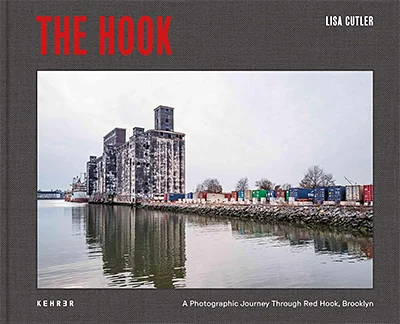
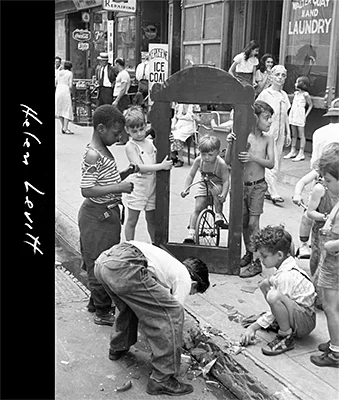
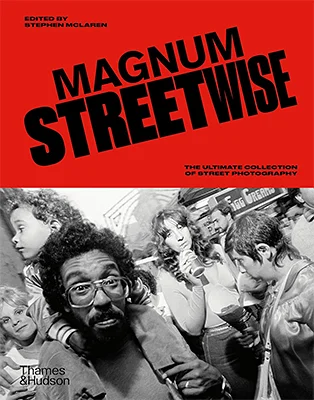
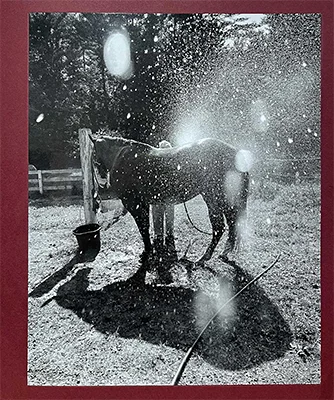
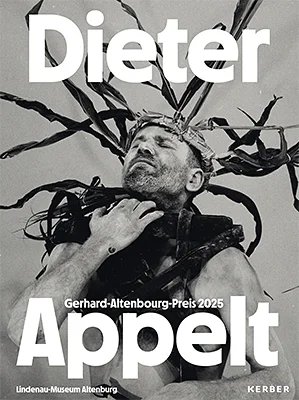
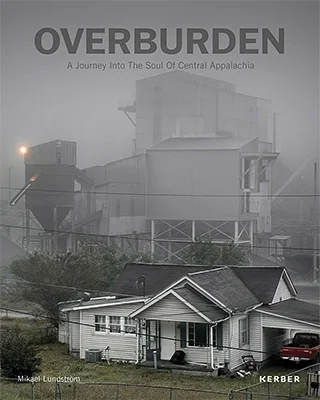
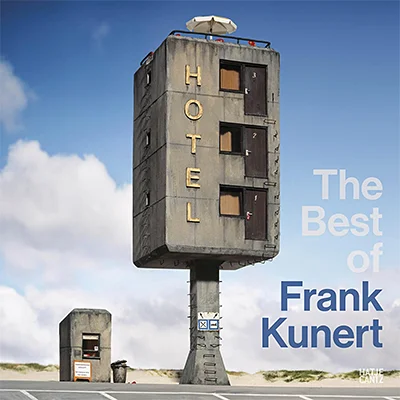
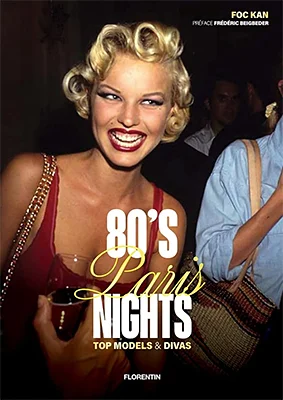
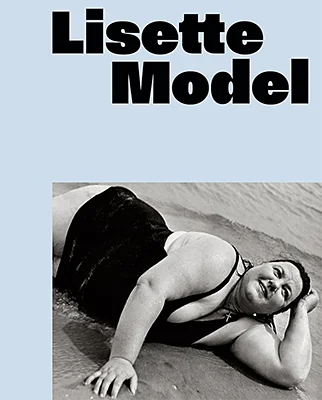
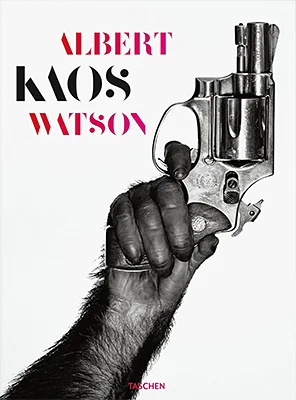
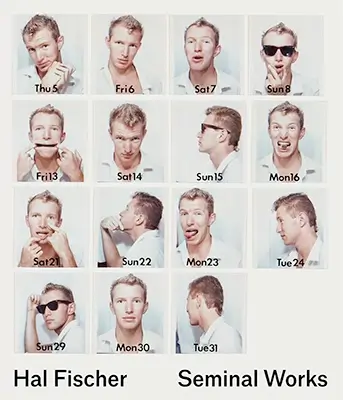
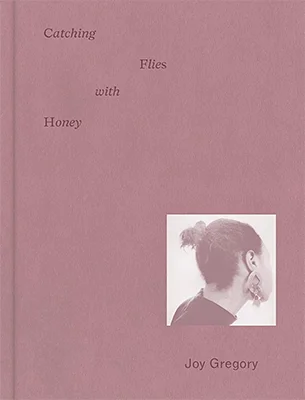
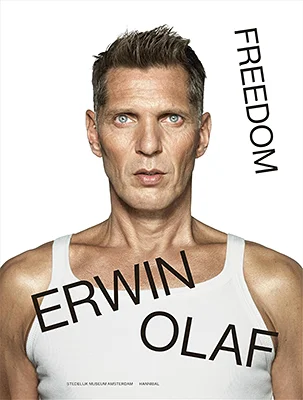
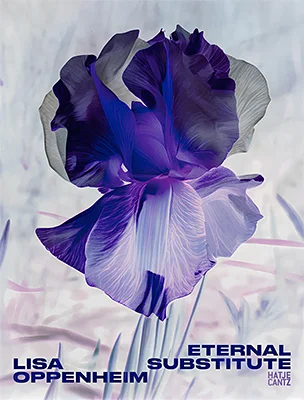
We have carefully selected a list of photography art books we think you should read. They are divided into categories to better help you with your search: photographers' monograph, photo technique, history of photography and miscellaneous photo books. You can also discover paper and online magazines related to the art of photography as well as our beautiful AAP Magazine.
Stay up-to-date with call for entries, deadlines and other news about exhibitions, galleries, publications, & special events.
Stephanie Duprie Routh: The Atlas of Invisible Things unfolds as a contemplative journey through Morocco, where landscape and identity intertwine in subtle, unexpected ways. Blending photography and prose, Stephanie Duprie Routh constructs a work that feels less like a travelogue and more like an interior map. Light drifts across tiled courtyards, desert horizons, and quiet domestic spaces, revealing how place can shape the contours of self. Each image carries a hushed intensity, as though the air itself were holding memory.
Rather than offering grand panoramas alone, Duprie Routh attends to fleeting gestures and overlooked details: a curtain stirred by wind, the geometry of shadows across stone, the layered textures of fabric and earth. Morocco becomes both a physical setting and a metaphorical terrain, where questions of gender and belonging surface gently through suggestion. The photographs are neither documentary nor purely abstract; they hover between observation and reverie, inviting viewers to inhabit the spaces between what is seen and what is felt.
The accompanying prose deepens this sensory experience. Fragments of reflection and lyrical passages move through themes of visibility and erasure, intimacy and distance. In tracing her encounters, Duprie Routh resists definitive statements. Instead, she offers an atlas composed of impressions—an emotional cartography that charts vulnerability, resilience, and transformation. The result is immersive yet restrained, a meditation shaped as much by silence as by image.
Based in Austin, Texas, Duprie Routh is known for using photography as a vehicle for narrative and conceptual exploration. In The Atlas of Invisible Things, her vision is distilled into a carefully designed volume that rewards slow engagement. It is a book meant to be returned to, each viewing revealing new layers of tone and texture. Through its interplay of image and word, the work suggests that the most enduring truths about place and identity are often those that cannot be named directly, only sensed in passing light.
Pamela Thomas-Graham: Stone by Morning is a quiet invocation of Iceland’s elemental power, where geology and myth seem inseparable. In this luminous volume, Pamela Thomas-Graham turns her lens toward a land shaped by fire and ice, tracing how its stark terrain has nourished centuries of storytelling. Basalt cliffs rise like ancient fortresses, glaciers glow beneath low northern light, and distant horizons dissolve into mist. The photographs suggest that the landscape itself is sentient, holding memory in stone and wind.
Thomas-Graham pairs her images with reflective essays that move fluidly between observation and legend. Ravens sweep across volcanic plains as bearers of memory; sea stacks stand as silent witnesses to trolls caught by daylight; hidden valleys whisper of huldufólk, the elusive beings said to dwell within rock. Rather than treating folklore as quaint superstition, she approaches it as a living language through which Icelanders have long understood their environment. Fact and fable coexist, each illuminating the other.
Light plays a central role throughout the book. The long summer dusk and the deep blue of winter shadow create a visual rhythm that echoes the tension between revelation and concealment. In these shifting atmospheres, waterfalls appear like thresholds, lava fields resemble frozen waves, and the simplest farmhouse becomes part of a larger cosmology. The camera lingers patiently, inviting viewers to slow down and consider what lies just beyond sight.
With Stone by Morning, Thomas-Graham offers more than a photographic journey; she proposes a way of seeing. Iceland emerges not merely as a destination, but as a realm suspended between the tangible and the imagined. Through attentive observation and lyrical prose, she reminds us that landscapes are never empty. They are repositories of belief, shaped by generations who have read meaning in every ridge and shadow. In honoring those traditions, the book becomes a meditation on how place can shape myth—and how myth, in turn, reshapes the way we inhabit the world.
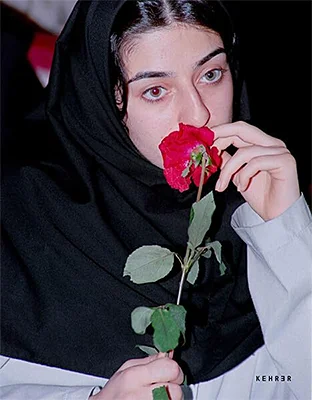
1331Newsha Tavakolian: And They Laughed at Me is a bold and disarming return to the fragile beginnings of a photographer who would later gain international recognition. Instead of assembling a volume of celebrated images, Newsha Tavakolian turns to what she once dismissed as her “eyesores”—photographs made in her teenage years when she began working as a photojournalist in Tehran. Taken at sixteen, in the charged atmosphere of a country shaped by political tension and social constraint, these early frames carry the urgency and uncertainty of youth.
Revisiting these photographs decades later, Tavakolian confronts not only her technical inexperience but also the emotional terrain of growing up under scrutiny. The images reveal crowded streets, intimate domestic moments, and fleeting expressions that hover between defiance and vulnerability. What once felt flawed now reads as raw testimony. Through this act of excavation, she reframes imperfection as evidence of persistence, tracing the arc from youthful aspiration to the sobering awareness of reality’s weight.
The book unfolds as a rite of passage. Tavakolian reflects on the tension between hope and disillusionment, between the instinct to withdraw into darkness and the determination to move toward light. Her career, later marked by international exhibitions and major honors, including the Carmignac Photojournalism Award and the Prince Claus Award, began in these formative encounters with the camera. The photographs capture the seeds of a voice that would grow increasingly nuanced, attentive to identity, censorship, and the quiet resilience of everyday life in Iran.
And They Laughed at Me becomes more than an archival project; it is a meditation on self-doubt and endurance. By embracing images she once rejected, Tavakolian asserts the value of vulnerability in artistic growth. The result is an honest and reflective volume that invites readers to reconsider failure, to see in missteps the contours of becoming, and to recognize that the path toward clarity often begins in uncertainty.
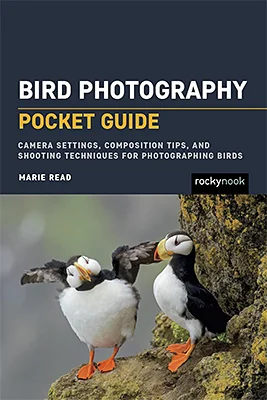
The art of avian photography requires a unique synthesis of technical precision and biological insight, a challenge Marie Read addresses in her latest field-focused publication. As birds represent some of the most elusive and rapid subjects in the natural world, the window for a perfect exposure often lasts only a fraction of a second. This new guide functions as a specialized toolkit for enthusiasts who navigate the unpredictable environments of wetlands, forests, and coastal shorelines. By distilling decades of professional experience into a portable format, the work ensures that photographers maintain the correct configurations for shutter speed and focus tracking without needing to consult a heavy manual mid-shoot.
Success in this genre depends heavily on an intimate understanding of ethology—the study of animal behavior. Read emphasizes that the ability to anticipate a flight path or a hunting strike is just as critical as selecting the right lens. The text provides a framework for recognizing behavioral patterns, allowing the observer to remain unobtrusive while positioning themselves for the most dramatic lighting. From managing the complexities of depth of field with long telephoto glass to mastering the art of "panning" with a subject in motion, the guidance focuses on achieving tack-sharp clarity in every frame. It transforms the chaotic nature of birdwatching into a disciplined practice of visual storytelling.
Beyond the technical settings, the guide explores the aesthetic choices that elevate a documentary record into a work of art. Compositional strategies, such as the use of negative space and eye-level perspectives, help to create a sense of intimacy between the viewer and the feathered subject. Whether dealing with the harsh glare of a midday sun or the dappled light of a dense canopy, the specialized checklists provide immediate solutions for typical outdoor scenarios. By bridging the gap between basic equipment knowledge and advanced fieldcraft, this resource empowers photographers to capture the fleeting beauty of the wild with newfound confidence and artistic intent.
GOST Books is delighted to launch Robin Bernstein’s debut photobook MAPALAKATA, a nuanced exploration of landscape, memory, and the layered histories embedded within Southern Africa’s terrain.
MAPALAKATA engages with the landscape through a visual reassessment of Mpumalanga province, South Africa, a region positioned on the escarpment bordering Mozambique and Eswatini. The title, meaning “visitors,” is drawn from oral histories and was historically used to describe traders from the East who moved through Southern Africa prior to European colonisation.
The work unfolds across a dramatic geography where lush cliffs rise abruptly from the hot, red earth of the lowlands. This natural threshold becomes a symbolic frontier—both geological and historical—where narratives of migration, extraction, and transformation converge. The region has long been shaped by movement and encounter, serving as a point of collision that continues to inform South Africa’s complex historical imagination.
Today, the landscape bears the imprint of successive waves of occupation and industry. Vast plantations of non-native trees stretch across the terrain, while industrial mills convert pine into paper through continuous streams of steam and machinery. Beneath and beyond this cultivated surface lie gold mines that have echoed with the sound of extraction for over a century, their rhythms marking an ongoing cycle of resource pursuit and economic ambition.
Scattered throughout the valleys and hillsides are remnants of earlier histories—fragments of pre-colonial societies, abandoned structures, and the wild descendants of horses left behind during conflicts and a failed gold rush. These traces form a dispersed archive, quietly embedded within the land itself.
MAPALAKATA reflects on the transient condition of “visitors” to place, examining how histories are continuously rewritten as successive groups attempt to overwrite or replace those who came before them. In doing so, it reveals how the pursuit of resources shapes both physical environments and collective memory.
Through a photographic investigation of these remnants and the people who currently inhabit the region, Bernstein’s work considers how place is experienced, contested, and internalised. MAPALAKATA ultimately reflects on the fragile relationship between land, history, and consciousness in contemporary South Africa.
1586Dayanita Singh: Forget Me Knot continues Dayanita Singh’s long-standing exploration of archives, memory, and the physical life of photographs. Known for transforming the photobook into an object that can be handled, rearranged, and experienced like a portable exhibition, Singh approaches the archive not simply as a repository of information, but as a poetic structure shaped by absence, repetition, and time. In this new volume, she turns her attention to the cloth-bound bundles that fill India’s public and private archive rooms, objects that quietly hold histories while revealing almost nothing of their contents.
The first body of work, Pothi Khana—Hindi for “archive room”—presents black-and-white photographs of these spaces in all their restrained monumentality. Shelves stretch endlessly, stacked with tied packages wrapped in faded cloth, their original colors nearly erased by dust, age, and sunlight. The people responsible for maintaining these records remain absent from the frame, yet their presence is strongly felt through empty desks, chairs, and corridors. Singh’s images transform these rooms into contemplative landscapes, where order and mystery coexist, and where silence becomes part of the visual language.
In Time Measures, Singh shifts from the architectural view to an intimate portrait scale. For the first time, the archive bundles are photographed individually, isolated against a neutral stone background. Here, folds, knots, and stains become expressive details. Each bundle carries the marks of decades of handling—sun-bleached reds, frayed edges, cloth retied countless times by unseen hands. Without revealing the documents inside, the photographs suggest that the exterior itself has become a form of biography. These packages begin to resemble portraits, their worn surfaces holding the emotional weight of lived experience.
Singh, whose work has been exhibited internationally at institutions including Tate Modern and the Museum of Modern Art, has long questioned how photographs are stored, displayed, and remembered. Forget Me Knot extends that inquiry through an understated but deeply tactile visual language. The book invites slow looking and patient reflection, asking viewers to consider what remains hidden, what survives, and how objects themselves become custodians of memory. In Singh’s hands, the archive is not static—it breathes, ages, and quietly resists disappearance.
World Press Photo Yearbook 2026 arrives as both a record of the past year and a reminder of photography’s enduring role in shaping public understanding. Gathering the winning images from the 2025 World Press Photo Awards, the publication presents some of the most urgent and memorable examples of contemporary photojournalism and documentary practice. Produced by the World Press Photo Foundation, the yearbook continues a tradition that has defined international press photography for more than seven decades, offering readers a visual archive of events that shaped the global conversation.
Each year, thousands of submissions from photographers around the world are reviewed across categories including single images, photo stories, and long-term projects. The selected works reflect not only breaking news, but also slower, deeply researched narratives that reveal the complexities behind headlines. Conflict, migration, climate crisis, political unrest, and intimate stories of resilience all appear within its pages, creating a publication that functions as both historical document and emotional testimony. One of the winning photographs appears on the cover, setting the tone for a volume built around images that demand sustained attention.
What distinguishes the yearbook is its ability to move between the immediate and the reflective. A single frame may capture the instant of a decisive event, while a long-term project traces the lasting consequences of social and political change over years. Together, these photographs resist the speed of the modern news cycle, asking viewers to pause and confront realities that often remain distant or abstract. In an era frequently described as “post-factual,” such visual reporting remains essential to democratic discourse and public accountability.
Published alongside the renowned traveling exhibition that brings these works to audiences worldwide, World Press Photo Yearbook 2026 serves as an accessible and lasting companion to that experience. For journalists, students, photographers, and general readers alike, it offers more than a survey of award-winning images; it becomes a time capsule of 2025, preserving moments of crisis, courage, and human connection. As a reference work, it affirms that photography still holds a unique power to inform, challenge, and bear witness when words alone fall short.
The evolution of mobile imaging reaches a new milestone as Scott Kelby releases the second edition of his definitive guide to the iPhone camera system. As the digital landscape shifts toward high-performance lenses tucked inside pocket-sized devices, the gap between amateur snapshots and professional-grade art continues to shrink. Kelby, recognized globally for his ability to translate complex technical jargon into accessible advice, approaches the smartphone not as a secondary tool, but as a primary instrument capable of sophisticated output. This updated volume serves as a bridge for those looking to harness the computational power of modern sensors without getting lost in the menus.
The core philosophy of the work rests on the idea that professional principles—lighting, composition, and posing—remain constant regardless of the hardware. By treating the iPhone with the same respect one might afford a high-end mirrorless setup, the text reveals how to master portraiture in challenging lighting and capture expansive landscapes with startling clarity. It specifically addresses the nuances of the latest Apple hardware, utilizing features like Photographic Styles and advanced ProRAW capabilities to ensure the final image rivals traditional studio work. The guidance moves beyond mere operation, touching on the delicate art of subject interaction and the organizational workflows necessary for managing a vast digital library.
What distinguishes this approach is the conversational tone that makes a day of shooting feel like a private mentorship. Instead of focusing on theoretical physics, the focus remains on practical execution: how to make food look appetizing, how to frame a car for maximum impact, and how to edit with a light touch that preserves a natural aesthetic. By dedicating each page to a single transformative trick or tool, the guide empowers users to produce photos that provoke genuine disbelief. The result is a testament to the fact that the best camera is indeed the one currently in hand, provided the person behind the lens knows which rules to follow and which to break.
Frank Gohlke: Measure of Emptiness returns to print as a quietly powerful meditation on the American landscape and the structures that define it. First published in 1992, the book gathers photographs made by Frank Gohlke between 1972 and 1977 across the vast expanse of the Great Plains. Moving from Minnesota to the Texas Panhandle, Gohlke focused on one recurring form: the grain elevator. These towering industrial buildings, stark and monumental against open skies, become the visual and symbolic center of a landscape shaped by agriculture, labor, and distance.
Born in Wichita Falls, Texas, in 1942, Gohlke turned to photography after initially studying literature, encouraged by figures such as Walker Evans and Paul Caponigro. His work has long examined the relationship between people and the environments they build, and Measure of Emptiness stands among his most defining projects. Supported by fellowships from the Guggenheim Foundation and the National Endowment for the Arts, the series reflects years of careful travel and observation rather than quick documentation. Each image carries a sense of stillness, where the ordinary becomes quietly monumental.
The grain elevator, in Gohlke’s photographs, functions as far more than agricultural infrastructure. Rising above church steeples and small-town streets, these concrete forms signal the economic purpose of the town itself. They dominate the horizon and shape daily life, serving as landmarks, workplaces, and symbols of permanence in an otherwise shifting environment. Against the expansive skies of the Plains, where weather and distance create the region’s deepest dramas, these structures appear almost sculptural—at once practical and strangely mysterious.
The title reflects the book’s larger philosophical question: what does emptiness mean in a place defined by so much open space? Gohlke approaches the Great Plains not as absence, but as presence—an environment where scale alters perception and architecture takes on unusual psychological weight. His photographs ask how vastness influences memory, emotion, and community. In revisiting this landmark publication, Measure of Emptiness remains both a study of American geography and a reflection on how landscape shapes thought itself. It is a book about silence, distance, and the quiet authority of things built to endure.
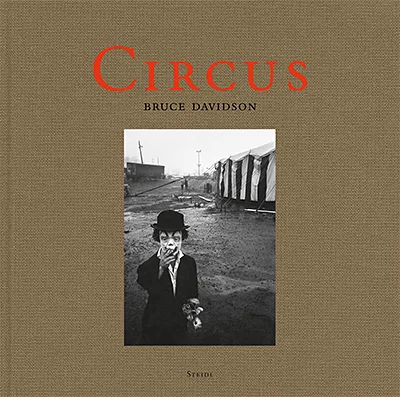
121Bruce Davidson: Circus revisits one of the most compelling early chapters in the career of Bruce Davidson, offering a vivid journey into the world beneath the big top. Known for his deeply human approach to documentary photography and his long association with Magnum Photos, Davidson turns his lens here toward the circus, capturing not only spectacle but also the fragile, often overlooked lives that sustain it. Spanning work made between 1958 and 1967, the book gathers images that move between performance and private ritual, many of them published for the first time.
Davidson first entered this world in 1958, photographing a three-ring circus where famous performers such as lion tamer Clyde Beatty and human cannonball Hugo Zacchini dominated public attention. Yet his real interest lay away from the spotlight. He followed roustabouts, riggers, animal handlers, and performers in quieter moments—between rehearsals, in dressing rooms, and in the improvised domestic spaces of circus life. Among the most intimate sequences is his portrait of a dwarf clown, rendered with remarkable tenderness and psychological depth, far removed from caricature or spectacle.
As the project continued into the mid-1960s, Davidson’s perspective shifted. In a large coliseum circus staged within a steel-and-concrete arena, the romance of the traditional tent gave way to something more mechanical and unsettling. His photographs became sharper, at times surreal, observing how spectacle changed when transplanted into a more industrial environment. By 1967, in contrast, his work with a one-ring Irish circus returned to a sense of intimacy and elegance, where performers and audience remained closely bound and the gestures of performance felt immediate and human.
What emerges across these years is not simply a portrait of a disappearing entertainment form, but a broader reflection on performance itself. Davidson’s photographs suggest that the circus mirrors larger human dramas—ambition, vulnerability, endurance, and reinvention. The book stands as both historical record and poetic study, preserving a world already fading even as he photographed it. In Circus, Bruce Davidson reveals not just the spectacle of the ring, but the emotional architecture that exists behind the curtain.
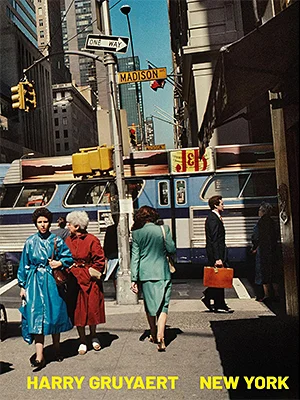
296The publication of Harry Gruyaert: New York marks a significant archival contribution to the visual history of the American metropolis, documenting over five decades of metropolitan evolution. Gruyaert, a member of Magnum Photos known for his sophisticated command of color and light, utilizes the city as a chromatic laboratory. This large-format volume organizes ninety-five illustrations into expansive double-page spreads, a design choice that emphasizes the cinematic scale of the urban environment. The collection tracks the shifts in New York’s physical and social infrastructure, moving from the gritty textures of the 1970s and 1980s to the high-gloss density of the modern skyline, all while maintaining a consistent focus on the interplay of artificial light and natural shadow.
The book functions as a structural narrative, utilizing a layout that mimics the rhythm of a film storyboard. This sequencing highlights the dramatic tension found in mundane street scenes, such as the neon saturation of night-time diners or the multicultural density of the city’s outer boroughs. To further blur the distinction between documentary evidence and narrative construction, the photographs are accompanied by fictional vignettes authored by French filmmaker Cédric Klapisch. These texts provide a speculative layer to the imagery, suggesting that the city serves as a global stage where private dramas intersect with public spectacle. Gruyaert’s methodology relies on a total immersion in the environment, where the photographer remains a detached observer of the city’s unrelenting energy and chaotic contrasts.
As a journalistic record, the volume illustrates the transformation of New York through its distinct palette. Gruyaert’s work is characterized by a rejection of the black-and-white tradition of his predecessors, opting instead to use color as a primary narrative tool to define space and mood. The photographs record the fleeting presence of the individual within the massive architectural framework of the city, capturing the isolation and vibrancy inherent in modern urban life. By compiling these five decades of observation into a single cohesive study, Harry Gruyaert: New York provides a definitive analysis of the city’s enduring role as a central site of twentieth and twenty-first-century visual culture. The result is a cold, precise examination of an ever-changing landscape through the eyes of a master of contemporary color photography.
The sociological and aesthetic dimensions of attraction are subjected to a rigorous analysis in Sexiness: The Secret of Irresistible Charm. Written by cultural commentator Nils Ketterer, the volume operates as an investigation into sexiness not merely as a biological impulse, but as a potent cultural currency and a tool of social influence. The text categorizes the various manifestations of charm across different historical epochs, moving from the curated glamour of mid-century Hollywood to the decentralized, digital expressions of desire prevalent in the twenty-first century. By synthesizing visual data with narrative inquiry, Ketterer seeks to isolate the specific components—confidence, ambiguity, and self-possession—that elevate an individual from a subject of attraction to a symbol of power.
The archive presented in the book draws on iconic reference points, including the enduring influence of Marilyn Monroe, to illustrate the mechanisms of the "sex symbol." However, the work expands significantly beyond these established tropes to examine how sexuality intersects with shifting social taboos and global cultural norms. The imagery records the subtle rituals of fashion, the performative nature of cinema, and the everyday details that signal allure within diverse societies. Ketterer’s journalistic approach treats these visual cues as data points in a broader study of human behavior, noting how the definition of what is "irresistible" remains in a state of constant flux. This analysis reveals that sexiness is frequently a byproduct of cultural resonance rather than an objective physical standard.
As a multidisciplinary survey, the work also explores the commercialization of desire and its role in shaping consumer habits and media consumption. The photographs function as evidence of how specific aesthetic markers are utilized to project authority and vitality. The volume provides a detached look at the evolving landscape of gender and identity, recording how modern expressions of sexuality often challenge traditional hierarchies. By documenting the vitality of this universal experience with clinical precision, Sexiness provides a definitive historical record of the hidden forces that drive human interaction and societal structure. The result is a comprehensive examination of a magnetic force that continues to define the boundaries of modern culture and personal identity.
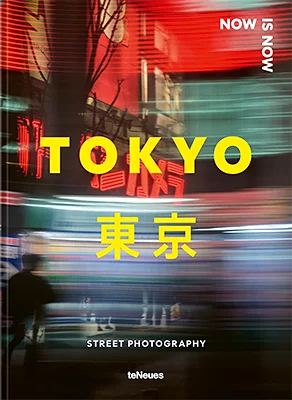
The urban landscape of the Japanese capital undergoes a rigorous visual interrogation in Now is Now Tokyo: Street Photography. This volume serves as a comprehensive anthology of contemporary lens-based observations, aggregating the work of diverse practitioners who navigate the city’s dense topographical layers. Tokyo, a metropolis characterized by its high-frequency movement and contrasting architecture, provides a complex environment for the street genre. The curated selection moves beyond the static tropes of neon-lit corridors, focusing instead on the "dynamic essence" of a city that exists in a state of perpetual flux. By synthesizing multiple perspectives into a single volume, the book documents the social and physical infrastructure of Tokyo with a detached, analytical clarity.
The publication highlights the specific aesthetic of Komorebi—the interplay of light and shadow—as well as the rigid social choreographies that define public life in districts like Shinjuku, Shibuya, and Ginza. The photographers involved utilize a range of technical approaches, from high-speed candid captures to long-exposure studies of human density. These images record the fleeting interactions of commuters, the silent geometry of residential backstreets, and the sprawling intersections that facilitate the city’s massive daily circulation. This multifaceted approach reveals a Tokyo that is both highly regulated and surprisingly intimate, capturing the minute details of urban existence that often escape the casual observer.
For collectors and enthusiasts of Japanese aesthetics, the work provides an essential record of the city’s current cultural climate. The text avoids the sentimentality of traditional travelogues, opting for a journalistic survey of how modern Tokyo functions as a living organism. By presenting the "How is How" of the genre, the book analyzes the various methodologies used to interpret the Japanese capital’s unique visual language. The resulting archive serves as a definitive document of the city’s diversity, preserving the present moment of one of the world’s most significant urban centers. It positions the street photograph as a critical tool for understanding the intersection of tradition and technological advancement in the twenty-first century.
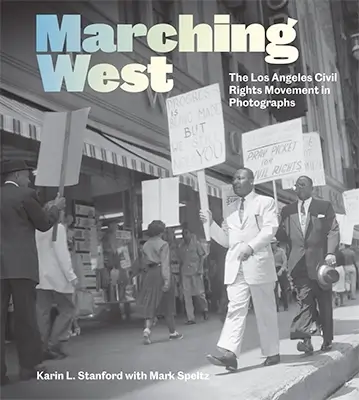
This volume offers a compelling visual record of the people, organizations, and coalitions that shaped the civil rights movement in Los Angeles, presenting a first-of-its-kind photographic history of activism on the American West Coast.
In 1963, during a landmark speech at Wrigley Field before nearly forty thousand people, Dr. Martin Luther King Jr. challenged Angelenos to confront inequality at home, stating that meaningful change required action within their own city: “The most important thing that you can do is to set Los Angeles free, because you have segregation and discrimination here, and police brutality.”
Marching West traces this urgent call through the lens of photography, revealing how images not only documented the struggle for Black equality but also actively participated in shaping its visibility and momentum. The book brings together more than one hundred photographs, including previously unpublished works, that connect local activism in Los Angeles to broader national movements.
Spanning churches, street demonstrations, cultural gatherings, and political organizing, these images highlight the role of a diverse network of participants—community leaders, religious figures, Hollywood personalities, and everyday citizens—who collectively advanced the fight for civil rights in the American West.
Drawn from significant archives such as the Tom & Ethel Bradley Center at California State University, Northridge, the Getty Research Institute, and other Southern California collections, the volume features work by photographers including Harry Adams, Howard Bingham, Charles Brittin, Joe Flowers, Vera Jackson, and Charles Williams.
Together, these photographs offer more than documentation. They form a layered narrative of resistance and solidarity, expanding the historical understanding of the civil rights era by foregrounding voices and events often overlooked in mainstream accounts of American social progress.
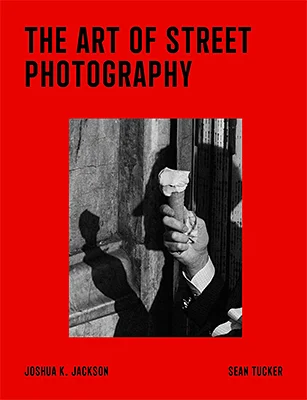
The traditional boundaries of candid urban documentation undergo a significant reassessment in The Art of Street Photography, a collaborative volume by photographers Joshua K. Jackson and Sean Tucker. While the genre historically prioritizes the "decisive moment" and objective reportage, this text advocates for a shift toward a more interpretive and subjective methodology. The authors position the metropolitan environment not merely as a site for observation, but as a malleable canvas for personal expression. By de-emphasizing the rigid technicalities of shutter speed and focal length, the work focuses on the psychological and artistic intent behind the lens, encouraging practitioners to utilize the public square as a reflection of their internal visual voice.
Joshua K. Jackson, known for his atmospheric use of color and light in the streets of London, joins Sean Tucker, whose philosophical approach to the medium emphasizes the "why" over the "how." Together, they analyze the mechanics of seeing, instructing the reader on how to transform mundane city infrastructure into extraordinary narrative compositions. The book operates on the premise that a photograph is a synthesis of the world and the photographer’s own life experience. This perspective challenges the student of the craft to move beyond simple snapshots of pedestrians and instead seek out patterns, shadows, and mood that convey a specific, individual perspective on the human condition.
The publication functions as an instructional manual for the creative spirit, offering a series of intellectual provocations designed to stimulate curiosity and long-term artistic growth. It addresses the common plateau where technical proficiency fails to produce meaningful imagery, providing strategies for finding beauty in the overlooked corners of the urban landscape. Through a combination of striking visual examples and analytical prose, the volume highlights how the street can become a laboratory for light and shadow. Ultimately, The Art of Street Photography establishes a framework for modern practitioners to elevate their work from mere observation to a sophisticated form of fine art that documents both the world and the self.
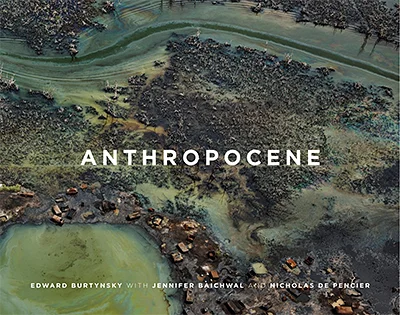
By Edward Burtynsky, Jennifer Baichwal & Nicholas de Pencier
Publisher : Steidl
2026 | 232 pages
62The Anthropocene project represents a monumental collaboration between photographer Edward Burtynsky and filmmakers Jennifer Baichwal and Nicholas de Pencier, offering a stark visual record of the current geological epoch. The term itself refers to the period during which human activity emerged as the dominant influence on climate and the environment, a concept this multidisciplinary work explores with clinical precision. This new edition of the previously out-of-print volume serves as a central pillar of the initiative, blending traditional photography with snapshots of video installations and augmented reality experiences. Through this synthesis of media, the authors document a world reshaped by "technofossils"—the human-made artifacts that will persist in the strata of the earth long after civilization has moved on.
Burtynsky’s photographs move through various global landscapes, from the marble quarries of Carrara to the lithium evaporation ponds in the Atacama Desert. These images illustrate the concept of terraforming, where the scale of human engineering rivals natural geological forces. The book provides a trenchant analysis of how the extraction of resources and the expansion of urban centers have fundamentally altered the biological and chemical composition of the planet. Accompanying the visual data are specially commissioned poems by Margaret Atwood and a series of scientific essays, which provide a literary and empirical framework for the imagery. This layering of art and science helps to translate abstract environmental statistics into a visceral, unsettling reality.
As a document of humanity’s indelible mark on the earth, Anthropocene focuses on the themes of extinction and permanent environmental transformation. The project highlights the destruction of coral reefs and the massive deforestation of the tropics, framing these losses not just as ecological tragedies but as permanent shifts in the earth’s history. By incorporating technological elements like AR, the work bridges the gap between the observer and the observed, making the scale of industrial impact inescapable. The resulting volume stands as a definitive artistic response to the climate crisis, challenging the viewer to confront the lasting legacy of the human species within the deep time of the geological record.
62The global management of the planet’s most essential resource takes center stage in the redesigned edition of \Edward Burtynsky: Water\. This ambitious survey by the acclaimed Canadian photographer chronicles the complex relationship between human civilization and the aquatic systems that sustain it. Burtynsky, a master of the industrial sublime, utilizes a characteristic aerial perspective to transform massive infrastructure and natural phenomena into intricate, painterly abstractions. From the sprawling center-pivot irrigation circles in the Texas Panhandle to the dry riverbeds of the Colorado River, the work provides a dizzying look at the scale of human intervention in the hydrological cycle.
The narrative of the book spans several continents, contrasting ancient methods of water conservation with the aggressive engineering of the modern era. Burtynsky captures the geometric precision of Indian stepwells and the spiritual density of mass bathing rituals along the Ganges, juxtaposing these traditional practices against the sheer industrial force of China’s Three Gorges Dam. His lens reveals how water is diverted, dammed, and redistributed to transform arid deserts into lush suburban waterfronts and to power the massive hydroelectric grids that fuel urban expansion. These images highlight a profound irony: the more we master the flow of water, the more precarious our reliance on these artificial systems becomes.
Beyond the documentation of engineering feats, the collection explores the environmental consequences of global water scarcity and pollution. The photographs depict the distressed landscapes of the Salton Sea and the toxic beauty of tailings ponds, where the water is no longer a source of life but a byproduct of extraction. Burtynsky’s work avoids simple polemics, opting instead for a lyrical clarity that forces the viewer to confront the fragility of the resource. By illustrating the vast network of aquaculture and irrigation that underpins the global food supply, he underscores the reality that the survival of modern society remains tethered to a finite and increasingly contested element. This volume serves as a critical visual record of an era defined by our attempts to control the uncontrollable.
The historical trajectory of Black liberation in the United States finds a powerful new resonance in Black Freedom: A Visual History of Juneteenth and Emancipation Days. This publication serves as the first comprehensive pictorial record of the varied traditions that emerged following the end of chattel slavery, moving beyond the singular narrative of June 19, 1865. While Juneteenth became a federal holiday in 2021, marking the arrival of Union General Gordon Granger in Galveston, Texas, this volume highlights a much broader constellation of observances. From the August 1st West Indies Emancipation Day to regional "Watch Night" services, the book documents how formerly enslaved people and their descendants crafted a distinct culture of remembrance across the American landscape.
The visual archive curated within these pages spans over a century and a half, featuring a compelling mix of early tintypes, documentary photography, and contemporary fine art. These images capture the evolution of freedom celebrations from clandestine gatherings in "Emancipation Parks" to massive public parades that challenged the racial hierarchies of the Jim Crow era. The narrative, provided by award-winning historians, contextualizes these photographs not merely as nostalgic records of festivities, but as evidence of political resistance. These rituals provided a vital platform for community organizing, education, and the public assertion of citizenship during periods when Black Americans were systematically denied basic civil rights.
By weaving together personal stories with broader historical analysis, the work illuminates the sophisticated ways in which Black communities sustained their collective memory. The photographs reveal the meticulous attention to attire, the prominence of the church, and the central role of veterans in these early processions. This history emphasizes that liberation was never a single static event, but a persistent, multi-generational process. As these celebrations continue to evolve in the twenty-first century, Black Freedom stands as an essential document of the enduring resilience and intellectual labor required to maintain the promise of liberty in the face of ongoing struggle.
The final public performance of the Beatles at San Francisco’s Candlestick Park remains one of the most storied chapters in music history, marking the end of a touring era that defined a global phenomenon. On August 29, 1966, the band stepped onto a makeshift stage surrounded by a chain-link fence, playing a brief set to a crowd of roughly 25,000 fans. While the technical conditions of the night were famously chaotic, the visual record of the event was secured by Jim Marshall, the only photographer granted unrestricted access to the band’s inner circle during their stay. This historic convergence between the premier chronicler of rock culture and the world’s most influential group is now preserved in a deluxe volume titled The Beatles by Jim Marshall: Live at Candlestick Park 1966.
Marshall’s unique standing as a trusted peer allowed him to bypass the frantic energy of Beatlemania to capture the exhaustion and camaraderie that characterized the group's final days on the road. The collection features over 150 photographs, including rare proof sheets and a significant number of images that remained hidden in archives for six decades. Beyond the wide-angle shots of the windy stadium, the book documents the quiet tension of the locker room and candid interactions with figures such as Joan Baez and her sisters. These photographs utilize the high-contrast tones and sharp clarity that became Marshall’s signature, offering a raw, unfiltered perspective on the musicians before they retreated into the studio experimentation of the late 1960s.
As the 60th anniversary of this landmark performance arrives in 2026, the publication provides a vital reassessment of the band’s transition away from the stage. Accompanied by an essay from music historian Joel Selvin, the imagery serves as a definitive document of the moment the Beatles decided to stop being a live act. Marshall, who famously documented the Monterey Pop Festival and Johnny Cash at Folsom Prison, treats the Candlestick Park show with the same journalistic integrity and artistic flair that defined his career. The result is an essential artifact for historians and collectors alike, capturing the precise second the four men from Liverpool stepped off the stage and into legend.
152The reissue of Nan Goldin’s Sisters, Saints and Sibyls arrives at a pivotal moment for the artist, coinciding with a comprehensive career retrospective at the Grand Palais in Paris. This body of work represents one of Goldin’s most harrowing and intimate projects, functioning as both a private memorial and a public indictment of institutional failure. At its heart is the tragic biography of her older sister, Barbara Holly Goldin, whose struggle against the social and psychiatric constraints of the 1950s and 60s ended in suicide at the age of eighteen. Goldin meticulously assembles a narrative from the fragments of a shattered life, weaving together clinical hospital reports, strained family snapshots, and her own evocative photography to reclaim her sister’s legacy from the silence of the past.
The narrative arc of the book parallels Barbara’s life with the hagiography of Saint Barbara, a third-century martyr imprisoned by her father, thereby elevating a personal tragedy into a broader meditation on female rebellion and societal punishment. Goldin explores how her sister was pathologized for her defiance and sexual autonomy, spending much of her adolescence in psychiatric detention facilities. By including raw medical records alongside family imagery, Goldin exposes the "shameful" realities of mid-century mental health care. The work serves as a haunting reminder of the cost of non-conformity, framing Barbara not merely as a victim, but as a pioneer of the resistance that Goldin later championed within her own artistic community.
The publication also draws direct lines between Barbara’s institutionalization and Goldin’s own history of addiction and recovery. This intersection turns the work into a liberatory exercise, stripping away the stigma surrounding trauma and substance abuse. As Goldin’s lens captures the cycles of descent and emergence, she fulfills a promise to honor those who struggle to survive in a society that often prefers they remain invisible. This definitive edition solidifies the project’s status as a cornerstone of contemporary documentary art, proving that the most profound political statements often begin with the most painful personal truths.
The 1975 exhibition at the George Eastman House in Rochester, New York, stands as a watershed moment that permanently altered the trajectory of landscape photography. Curated by William Jenkins, New Topographics: Photographs of a Man-Altered Landscape dismantled the romanticized traditions of the American wilderness popularized by figures like Ansel Adams. In their place, it installed a rigorous, detached aesthetic focused on the intrusion of human industry and suburban sprawl. This movement introduced a radical objectivity, where the camera functioned as a surveying tool rather than a romantic brush, capturing the stark reality of industrial parks, motels, and tract housing with a deliberate lack of emotional theater.
The original group of ten photographers—including Robert Adams, Lewis Baltz, Stephen Shore, and the influential German duo Bernd and Hilla Becher—represented a bridge between traditional craftsmanship and the burgeoning world of conceptual art. While their work appeared at first glance to be purely informational and topographic, it signaled a profound paradigm shift. By focusing on the "man-altered" terrain, these artists highlighted the mundane and the overlooked, finding a new kind of visual language in the grey geometry of the modern environment. Their collective vision established what many historians now consider the first truly photoconceptual style, influencing generations of artists who had not yet been born when the first catalog went to press.
Half a century later, the legacy of this exhibition continues to resonate within the contemporary art world. This meticulous reimagining of the original catalog, led by curator Britt Salvesen, provides an essential reassessment of how these ten individuals redefined our relationship with the land. Through installation views and comparative analysis, the volume traces the enduring impact of a style that once claimed to eschew beauty, yet ultimately found a profound, haunting significance in the ordinary. It remains a vital document for understanding the transition of photography from a niche documentary practice into a central pillar of fine art.
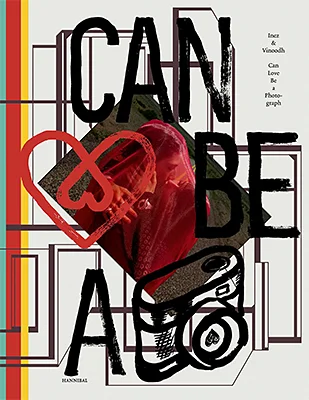
Can Love Be a Photograph: 40 Years of Inez & Vinoodh traces the evolution of a partnership that reshapes the visual language of contemporary photography. Over four decades, Inez van Lamsweerde and Vinoodh Matadin cultivate a practice that moves fluidly between fashion, portraiture, and conceptual art, producing images that feel both immediate and disquieting. Their work resists categorization, drawing equally from the polished world of magazines and the more introspective space of artistic inquiry. Throughout, a sense of curiosity and experimentation guides their approach, allowing each image to operate as both surface and question.
Emerging from the Netherlands and establishing an international presence, the duo collaborates with leading designers and publications while maintaining a distinct visual identity. Their photographs often present familiar subjects—faces, bodies, gestures—yet introduce subtle distortions that unsettle the expected. Early explorations with digital manipulation open new possibilities for the medium, but technology remains a means rather than an end. What persists is a sustained attention to the human figure, approached with a sensitivity that reveals vulnerability alongside artifice.
The title itself suggests a central tension within their work: the attempt to capture something as intangible as love within the fixed frame of an image. This question resonates across their photographs, where intimacy and distance coexist. Subjects appear both present and elusive, inviting a prolonged gaze that uncovers layers of emotion and meaning. The influence of broader cultural currents—fashion imagery, celebrity, advertising—intersects with a more reflective examination of identity and perception.
Accompanied by essays from critics and curators, as well as a conversation with Tilda Swinton, the book situates Inez and Vinoodh’s practice within a wider intellectual and artistic context. Can Love Be a Photograph unfolds as both retrospective and meditation, offering a sustained look at a body of work shaped by collaboration, attention, and a persistent desire to see beyond appearances.
1309Constantine Manos: Bostonians returns to a pivotal body of work that captures a city in motion, poised between commemoration and upheaval. Created in the mid-1970s, at the time of the United States Bicentennial, Manos’ photographs trace the rhythms of Boston as it navigates a period marked by both civic pride and deep social tension. Commissioned for the exhibition Where’s Boston?, the project unfolds over several months, during which Manos moves through streets, homes, and public spaces with a restless and attentive eye. His images form a layered portrait of a city defined as much by its divisions as by its shared sense of place.
Working in color, Manos brings a vivid immediacy to everyday scenes. Crowded sidewalks, neighborhood gatherings, and fleeting street encounters reveal a complex urban fabric shaped by class, race, and generational change. The photographs do not isolate monumental events but instead embed them within the flow of daily life. Moments of protest, including demonstrations against school busing and broader struggles for civil rights and labor equity, appear alongside scenes of leisure and routine. This juxtaposition underscores the tensions that run beneath the surface, suggesting a city grappling with its identity.
The strength of Bostonians lies in its ability to hold multiple perspectives at once. Manos neither simplifies nor resolves the contradictions he encounters. Instead, he allows them to coexist within the frame, inviting viewers to consider the lived realities behind public narratives. His compositions often rely on careful observation and timing, capturing gestures and expressions that reveal both individuality and collective experience.
This new edition expands the original project through essays and oral histories that reconnect the photographs to those who lived them. Voices of residents, activists, and cultural figures offer insight into the period, enriching the images with memory and reflection. In doing so, Bostonians stands not only as a document of its time, but as an enduring meditation on the evolving life of a city.
Keizo Kitajima: Tokyo―Koza brings together two seminal bodies of work that define the uncompromising vision of Japanese photographer Keizo Kitajima. Created in the late 1970s, Photographs of Okinawa and Tokyo 1979 emerge from distinct geographies yet share a common intensity. Kitajima approaches both places not as a distant observer but as an active participant, embedding himself within the charged atmospheres of nightlife, street culture, and marginal spaces. The resulting images carry a visceral immediacy, shaped by proximity and instinct rather than detachment.
In Okinawa, shortly after its reversion to Japanese control, Kitajima navigates a landscape marked by cultural tension and layered identities. Bars, clubs, and dimly lit streets become stages where encounters unfold with raw unpredictability. In Tokyo, he turns toward the restless energy of the capital’s underground, capturing fleeting moments that speak to desire, alienation, and the search for belonging. Across both series, the night operates as more than a setting. It becomes a metaphorical terrain where social boundaries loosen and hidden aspects of identity surface.
Shot in stark black and white, the photographs rely on direct flash that flattens space and heightens contrast. Faces appear suddenly illuminated against darkness, gestures freeze mid-motion, and environments take on a harsh, almost confrontational clarity. This aesthetic, now closely associated with Kitajima’s practice, reflects an urgency that resists refinement. The images feel immediate and unfiltered, preserving the tension of each encounter without smoothing its edges.
Although initially published as separate works, Kitajima later recognizes the deep continuity between these series. Tokyo―Koza unites them in a single volume, allowing their parallels to resonate across time and place. Presented in an expansive format, the photographs retain their original force, offering a portrait of a society in flux while revealing the foundations of a photographic language grounded in immersion, confrontation, and lived experience.
Juergen Teller: Young Young · White White presents a vivid photographic journey through some of China’s most dynamic cities, filtered through the unmistakable vision of German photographer Juergen Teller. Known for redefining the language of fashion photography with an approach that blends honesty, humor, and raw immediacy, Teller approaches Shanghai, Wuhan, and Chongqing with the same instinctive curiosity that has long shaped his work. The result is a body of images where fashion, documentary observation, and personal narrative coexist within the restless rhythms of contemporary urban life.
During a trip undertaken with his creative and life partner Dovile Drizyte, Teller photographs Chinese models Xiao Wen Ju, Lina Zhang, and Christina Chung in environments far removed from the polished settings traditionally associated with fashion imagery. Rather than carefully staged studios, the city itself becomes the stage. Narrow alleyways, crowded sidewalks, restaurant kitchens, parking structures, and escalators serve as backdrops where the models interact with the surrounding space in spontaneous and often playful ways. At times they lounge casually near butcher stalls or pause beside anonymous street corners, embodying a sense of immediacy that blurs the boundary between performance and everyday life.
This relaxed atmosphere emerges from a process that combines careful preparation with the photographer’s signature embrace of chance. Working alongside a local production team, Teller orchestrates situations that allow unpredictability to enter the frame. His photographs often carry a deliberately unpolished aesthetic—direct flash, awkward poses, and unexpected compositions—yet these choices reveal a deeper commitment to authenticity. By refusing the conventions of glamour, Teller redirects attention toward individuality, vulnerability, and the subtle humor found in ordinary moments.
Alongside the portraits, the book incorporates self-portraits, images of Drizyte and members of the crew, still lifes, and fragments of the surrounding cityscape. Together these elements form a loose visual diary that echoes Teller’s long-standing belief that art and life remain inseparable. Young Young · White White ultimately becomes less a fashion project than a meditation on presence, personality, and the vibrant contradictions of modern urban experience.
Clark Winter: Free Air: Robert Frank – Hands at Work offers a rare and intimate perspective on Robert Frank, shifting attention from his celebrated photographs to his lesser-known sculptural practice. Through Winter’s lens, Frank emerges not only as the visionary behind The Americans, but as a restless maker whose creativity extended far beyond the printed image. The book invites readers into the spaces where that spirit took physical form.
Central to this exploration are two places that shaped Frank’s later life: his longtime studio on Bleecker Street in New York and the weathered fisherman’s cottage in Mabou, Nova Scotia, which he shared with artist June Leaf. In Cape Breton, surrounded by wind, sea, and open sky, Frank assembled sculptures from found wood, fragments of photographs, discarded objects, and even parts of cameras. These constructions, raw and improvisational, echo the directness of his photographic work while revealing a tactile, hands-on engagement with materials.
Clark Winter documents this environment with attentiveness and restraint. His photographs capture not only the rugged coastal landscape but also the intimate details of Frank’s working process: tables strewn with tools, walls marked by memory, shelves crowded with postcards and keepsakes. Glimpses of personal artifacts—a snapshot of Leaf and Frank in a moment of shared laughter, faded notes pinned within reach—suggest the deep intertwining of art and daily life. Winter’s images convey the sense of a mind constantly assembling, rearranging, and rethinking.
By focusing on Frank’s hands at work, Free Air reveals an artist who never ceased experimenting. Sculpture becomes another form of inquiry, another way of confronting time, loss, and place. Winter’s quiet documentation honors that persistence, illuminating a dimension of Frank’s practice that feels at once humble and radical, rooted in material and memory yet always open to transformation.
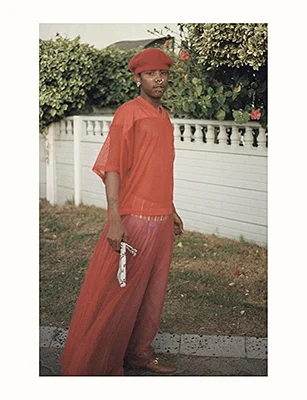
Richard Hay Jr.: Resounding with Echoes unfolds as a quiet passage between continents, tracing subtle correspondences between West Africa and the Americas during the 1970s. Moving fluidly between black-and-white and color, Richard Hay Jr. composes a visual dialogue grounded not in spectacle, but in the poetry of ordinary life. Streets, storefronts, interiors, and open landscapes emerge without fixed captions, allowing viewers to linger in the ambiguity of gesture and setting. Rather than reinforcing familiar narratives of hardship or exoticism, Hay’s lens rests on shared human rhythms shaped by local textures and global exchange.
His journey to West Africa began after working within an African Studies program at Northwestern University. With a used Leica camera, a backpack, and limited film, he traveled from coastal regions to Kano, Nigeria, photographing with the same attentiveness that marked his earlier road trips across the United States and Mexico. The influence of the New Topographics can be felt in his restrained compositions and interest in human-altered environments. Hay’s approach is observant yet intimate, revealing how architecture, clothing, signage, and posture quietly register histories of migration, trade, and aspiration.
The historical currents between West Africa and the Americas—shaped by centuries of forced displacement and later by renewed cultural exchange—form an understated backdrop. Hay does not illustrate these histories directly; instead, he attends to their traces in everyday scenes. An ocean apart and decades removed, the places he photographs seem to mirror one another in rhythm and repetition, as though bound by invisible threads of memory.
An essay by Emmanuel Iduma frames the work with reflective insight, situating the images within broader conversations on continuity and change. Together, photographs and text invite slow looking. Resounding with Echoes proposes the camera as a tool of patient witnessing, where each shutter click collapses time and the present moment becomes part of a longer, reverberating story.
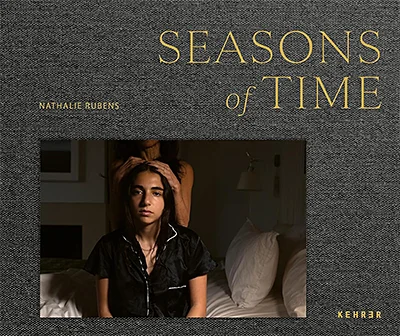
Nathalie Rubens: Seasons of Time marks a thoughtful and intimate debut, tracing the subtle thresholds that define a woman’s life. In this carefully composed photobook, Nathalie Rubens reflects on two parallel passages: her daughter Ruby’s emergence into young adulthood and her own transition into post-menopausal life. Through this mirrored gaze, the work becomes a meditation on continuity and change, revealing how beginnings and endings often unfold side by side.
Rubens turns the camera inward and outward with equal tenderness. Portraits of Ruby capture the fragile confidence and uncertainty of youth—moments poised between dependence and independence. In contrast, self-portraits confront the physical and emotional transformations of midlife with quiet candor. The images resist sentimentality; instead, they dwell in nuance, acknowledging vulnerability while affirming resilience. The body, in its evolving forms, becomes both subject and witness to time’s passage.
Domestic interiors, shared gestures, and fleeting glances anchor the book in lived experience. Light filters through windows, falls across skin, and settles on everyday objects, creating a rhythm that echoes the seasons invoked in the title. Rubens approaches aging not as decline, but as a shifting landscape—one marked by introspection, memory, and renewed self-awareness. The dialogue between mother and daughter unfolds without hierarchy, suggesting that each stage of life carries its own clarity and its own mystery.
Deeply personal yet widely relatable, Seasons of Time speaks to the universality of transition. It honors the complexity of female identity as something neither fixed nor singular, but constantly in motion. Through measured composition and emotional honesty, Rubens crafts a visual reflection on growth, separation, and connection. The result is a quiet affirmation that time, though relentless, can also be a source of understanding and grace, binding generations even as it gently transforms them.
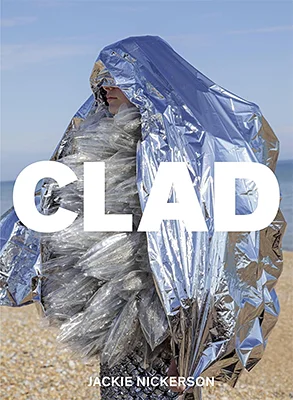
Jackie Nickerson: CLAD arrives as a bold new statement in fashion photography — one that turns away from glamour as spectacle and returns to clothing as a means of identity, expression and self-discovery. Over 400 pages and nearly 400 images, this comprehensive volume compiles the work of a photographer whose feminist vision treats clothes not as costumes, but as languages for being. The book presents a sweeping overview of Nickerson’s fashion photography, underscoring her belief that dressing is less about fantasy and more about identity, texture, and presence.
In CLAD, clothing becomes akin to architecture: each photograph situates garments within environments chosen to echo or challenge their form, often under natural light, open skies or muted urban backdrops. Nickerson’s ensembles thus do not float in idealized studios — they inhabit real spaces, shaped by light, geography and atmosphere. This choice reinforces a sense of honesty in her imagery, offering portraits grounded in reality but elevated by intention.
Though she has worked for prominent fashion houses and major magazines — from Louis Vuitton and Hermès to Dior, Vogue and Vanity Fair — Nickerson maintains an anti-commercial stance. Her commitment lies not in product-driven images but in revealing the deeper layers of selfhood. Through CLAD, she returns to the roots of her practice: not as a display of luxury, but as a study of clothing as lived experience, as social signifier, as personal armour or declaration.
For readers, CLAD goes beyond seasonal trends and surface beauty. It invites reflection on how we present ourselves, how garments carry memories, identities and context. The book becomes a meditation on self-expression — on how clothing surrounds and defines us, how it converses with space and light, and how it can transform the intimate into the universal. Jackie Nickerson: CLAD thus stands not only as a major milestone in her career, but as a compelling argument for fashion photography rooted in humanity, nuance, and introspection.
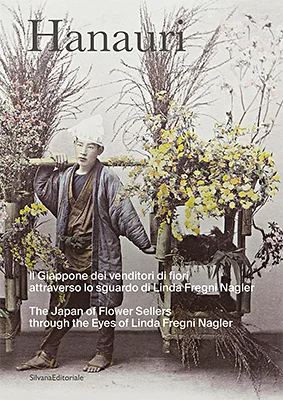
The aesthetic and sociological dimensions of nineteenth-century Japan are scrutinized in Hanauri: The Japan of Flower Sellers through the Eyes of Linda Fregni Nagler. This multimedia project investigates the specific iconography of the hanauri, the itinerant flower peddlers who occupied the urban landscapes of the Edo and Meiji periods. Fregni Nagler, an artist and collector noted for her rigorous archival interventions, compiles a diverse range of historical artifacts to trace how the identity of these vendors was constructed and consumed through visual media. The core of the survey consists of twenty-six albumen prints from the mid-nineteenth century, a period when photography began to supplant traditional woodblock prints as the primary method of documenting Japanese street life.
The exhibition and its accompanying documentation provide a comparative analysis of image-making techniques across the transition to modernity. Alongside the original albumen photographs, Fregni Nagler introduces six large silver salt prints that she has hand-colored, as well as four stereoscopic glass positives. These are positioned in direct dialogue with earlier Edo-period woodcuts, including significant works by Utagawa Kunisada, such as Toyokuni III from the series Six sellers on summer evenings. This juxtaposition reveals how the idealized, often poetic representation of flower sellers in ukiyo-e prints influenced the early photographic compositions designed for both domestic markets and the burgeoning Western tourist trade.
Beyond the two-dimensional image, the project incorporates material culture to provide a holistic view of the era’s decorative arts and social stratification. The inclusion of kesa textiles from the MAO (Museo d’Arte Orientale) collection, three period kimonos, fine lacquerware, and kakemono\ hanging scrolls allows for a deeper interrogation of the motifs and patterns associated with the hanauri. These objects serve as physical markers of a vanished vocation, illustrating the intersection of labor, commerce, and art. By synthesizing photography with traditional crafts and printmaking, Fregni Nagler creates a cold, analytical bridge between the pre-photographic past and the emergence of a modern Japanese visual identity, preserving the memory of a class of vendors who once defined the sensory experience of the Japanese city.
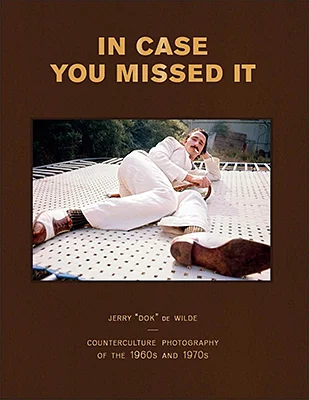
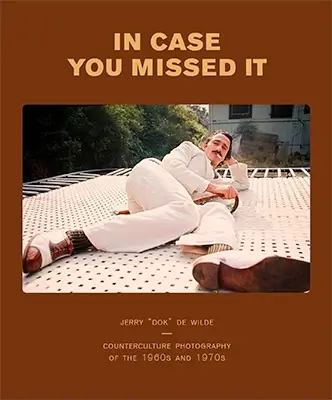
The visual history of the American counterculture finds a rigorous archival update in In Case You Missed It: Counterculture Photography of the 1960s and 1970s. The volume centralizes the work of Jerry “Dok” de Wilde, a photographer whose proximity to the era’s most significant social and artistic upheavals provided him with an unfiltered vantage point. De Wilde, whose father was a prominent figure in the Dutch Resistance and an influential theatrical designer, brought a disciplined eye to the seemingly chaotic developments of the Los Angeles scene. His documentation tracks the evolution of a decade defined by the rejection of traditional institutional structures, moving from the localized experiments of the Hollywood Hills to the mass mobilizations of the anti-war movement.
A primary focus of the collection is "the Farm," an agrarian commune situated in the hills above Los Angeles that functioned as a laboratory for alternative living. De Wilde’s imagery records the daily logistics of communal life, capturing the intersection of creative labor and social radicalism. These intimate domestic scenes are juxtaposed against high-profile cultural milestones, including the 1967 Monterey International Pop Festival. During this event, de Wilde captured iconic frames of Jimi Hendrix and Otis Redding, documenting the precise moment when the hippie movement transitioned into a global media phenomenon. His lens serves as a technical witness to the aesthetic shifts in fashion and performance that would eventually permeate mainstream American culture.
The publication also addresses the political maturation of the era through de Wilde’s coverage of the Moratorium to End the War in Vietnam and various civil rights demonstrations. By navigating fluidly between the private spaces of artists and the public squares of activists, the book presents a layered analysis of a community bound by the pursuit of systemic transformation. The high-contrast black-and-white plates and vibrant color sequences emphasize the sensory density of the period. In Case You Missed It functions as a cold, evidence-based survey of a fleeting sociological climate, preserving the visual data of a generation that attempted to redefine the American social contract before the tide of the 1970s brought new economic and political realities.
By Dr. Bruno Bernard, Joshua John Miller, M.A. Fortin
Publisher : Abrams Books
2026 | 272 pages
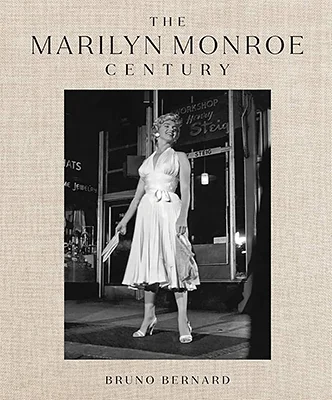
The centennial of Marilyn Monroe’s birth on June 1, 2026, serves as the catalyst for The Marilyn Monroe Century, a rigorous examination of the photographic and personal archives of Bruno Bernard. Known professionally as Bernard of Hollywood, the photographer maintained a decades-long proximity to the subject, beginning with their initial meeting when she was still Norma Jeane Mortenson. This volume, authored by Bernard’s grandson Joshua John Miller and Mark A. Fortin, moves beyond standard hagiography to analyze the calculated construction of the Monroe persona. By utilizing previously unreleased diary entries and correspondence, the text documents the transition of an aspiring actress into a global commodity, framed through the lens of a photographer who functioned as both a mentor and a confidant.
Central to the publication is the technical and cultural history of the image Marilyn in White, taken on the Twentieth Century Fox backlot during the filming of The Seven Year Itch. Declared a symbol of the twentieth century by the Museum of Modern Art, the photograph of the billowing white dress over a subway grate remains a primary artifact of American pop culture. The book utilizes a lenticular cover to simulate the motion of this event, emphasizing the performative nature of Monroe’s public image. However, the internal content provides a stark contrast, offering a data-rich look at the "woman behind the icon" through Bernard’s private observations. These records suggest a subject who was acutely aware of the power of her own image and deeply involved in the labor required to maintain it.
The narrative is bolstered by modern perspectives, including a foreword by Rose McGowan and commentary from director Sean Baker, which recontextualize Monroe’s career within contemporary discussions of the film industry and female autonomy. The archive reveals a complex interpersonal dynamic between Bernard and Monroe, characterized by a shared status as industry outsiders. Through the inclusion of unpublished contact sheets and candid snapshots, the book tracks the emotional and professional tolls of fame. It positions Monroe not as a passive figure of tragedy, but as an ambitious architect of her own legacy. As the global community marks her 100th year, this definitive collection stands as a journalistic record of the enduring tension between the private individual and the eternal cinematic myth.
The culture of the British academic elite receives a clinical examination in Cambridge Balls, the latest volume from society photographer Dafydd Jones. Since 1981, Jones has utilized his unique access to document the May Balls, a series of traditional, all-night celebrations marking the conclusion of the academic year at the University of Cambridge. Known for a style that balances technical precision with a sharp, observational wit, Jones records the rituals of a demographic often shielded from the public eye. The resulting collection spans over four decades, offering an unfiltered look at the intersection of wealth, youth, and institutional tradition within the secluded courtyards of the university’s historic colleges.
The imagery functions as a sociological record of the British upper class and its evolution over forty years. Notable inclusions feature figures such as former Prime Minister David Cameron, captured in the distinctive regalia of the Bullingdon Club, alongside rowing teams and international student cohorts. Jones tracks the shifting aesthetics of these events, from the formal rigidity of the early eighties to the more globalized and diverse face of the modern student body. Despite these changes, the core elements of the May Ball remain constant: the excessive consumption, the elaborate formal dress, and the physical exhaustion that sets in as dawn breaks over the River Cam. His lens captures both the choreographed public image and the unscripted moments of rowdiness that occur when the gates are closed.
Critics often describe Jones’s work as a study in the deflation of status, where his "wicked eye" identifies the precise moment when composure dissolves into revelry. By documenting gate-crashers punting across the water and the debris of expensive celebrations, the book avoids nostalgia in favor of a more detached, ironic perspective. Like his previous surveys of Hollywood and New York high society, Cambridge Balls archives a specific tier of social hierarchy that is simultaneously influential and insular. The work stands as a definitive historical document, preserving the antics and visual language of a society that continues to exert significant cultural and political power across the globe.
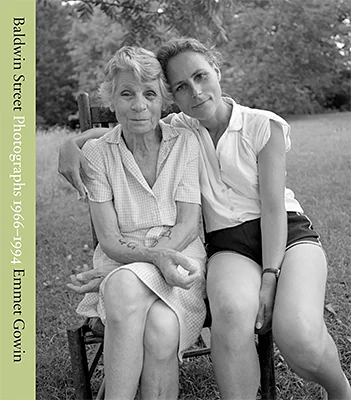
1265Emmet Gowin: Baldwin Street: Photographs 1966–1994 gathers a body of work that stands among the most intimate and quietly influential explorations of family life in American photography. First begun in the late 1960s, these images emerge from Gowin’s deep connection to the extended family of his wife, Edith, in Danville, Virginia. At the end of a modest street lined with closely situated houses, he discovers not only a subject but a lifelong source of meaning. The photographs reveal a world both ordinary and deeply felt, where daily routines and shared moments take on a heightened sense of presence.
Working with a gentle, attentive eye, Gowin photographs across generations, moving fluidly between portraits, gatherings, and quiet domestic scenes. Children play, adults rest or converse, and bodies appear in states of ease and vulnerability. His approach remains rooted in trust and proximity, allowing the camera to become part of the family’s rhythm rather than an intrusion. The resulting images carry a sense of immediacy, as though the viewer steps into a space shaped by familiarity and affection. Over time, Baldwin Street itself becomes a kind of stage where life unfolds in cycles, marked by growth, aging, and continuity.
Many of the photographs included in this volume remain unseen for decades, rediscovered and printed only recently. This return to the negatives offers a renewed perspective on Gowin’s early work, expanding its scope while preserving its original spirit. The prints, rich in tonal subtlety, emphasize the tactile quality of the photographic surface and the care invested in their making. Each image feels considered yet unforced, reflecting a balance between observation and emotional resonance.
Accompanied by reflections from Emmet and Edith Gowin, Baldwin Street unfolds as both a personal archive and a meditation on belonging. Within these photographs, the boundaries between the everyday and the transcendent blur, suggesting that meaning resides not in grand events, but in the shared texture of lived experience.
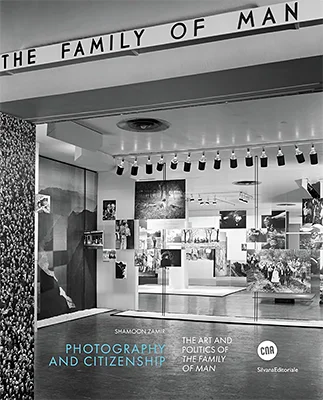
Photography and Citizenship: The Art and Politics of The Family of Man revisits one of the most influential photographic exhibitions of the twentieth century, offering a nuanced perspective on its cultural and political ambitions. Organized in 1955 by Edward Steichen at the Museum of Modern Art in New York, The Family of Man brought together hundreds of images from across the globe at a moment when the world grappled with the aftermath of World War II. Rather than presenting photography as a purely aesthetic pursuit, Steichen conceived the exhibition as a shared visual language, capable of addressing a fragmented international audience and fostering a sense of collective responsibility.
This publication challenges long-standing interpretations that reduce the exhibition to a simple expression of universal humanism or dismiss it as a vehicle of Cold War ideology. Through careful analysis and extensive archival research, the book reveals a more complex project, one that engages deeply with the political and philosophical currents of its time. Steichen’s approach to exhibition design plays a central role in this reassessment. Photographs were not merely displayed but orchestrated in sequences, scales, and juxtapositions that guided viewers through an emotional and intellectual journey. The installation itself functioned as a form of narrative, encouraging reflection on themes such as family, labor, migration, and conflict.
As the exhibition traveled to dozens of countries and reached millions of visitors, it established a model for how photography could operate within a global public sphere. The book argues that this circulation did not simply reinforce national agendas, but instead opened space for imagining forms of transnational citizenship grounded in shared human experiences. By drawing on the visual vocabulary of everyday life, the exhibition invited audiences to consider their place within a broader, interconnected world.
Combining historical insight with close readings of individual images and curatorial strategies, Photography and Citizenship repositions The Family of Man as a dynamic and forward-thinking endeavor. It highlights how photography, when thoughtfully assembled, can shape not only how people see the world, but also how they understand their role within it.
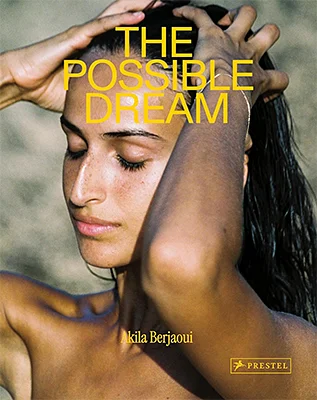
The Possible Dream: Akila Berjaoui unfolds as a luminous meditation on the enduring appeal of coastal life, where light, water, and the human body exist in quiet harmony. Building on the sensibility established in The Last Days of Summer, Berjaoui deepens her exploration of intimacy and presence, drawing from the landscapes and atmospheres of the Mediterranean. Her photographs evoke a world shaped by warmth and slowness, where time stretches across sunlit afternoons and the rhythm of the sea sets the pace of everyday experience.
Working primarily with film, Berjaoui embraces the tactile qualities of analog photography, allowing grain, softness, and subtle imperfections to shape the mood of each image. The resulting palette feels both immediate and timeless, recalling the visual language of vintage travel and beach culture while remaining grounded in a contemporary sensibility. Her compositions often favor natural light and unguarded moments, capturing her subjects in states of rest, movement, or quiet reflection. Skin glows under the sun, shadows fall gently across bodies, and the surrounding environment becomes an extension of the figures within it.
The women who inhabit these photographs project a sense of ease and self-possession. Rather than performing for the camera, they appear fully immersed in their surroundings, whether reclining on warm sand, emerging from the water, or pausing along rocky coastlines. Berjaoui’s approach emphasizes gesture over spectacle, allowing small movements and fleeting expressions to carry emotional weight. This attention to subtlety lends the images a contemplative quality, where sensuality arises naturally from presence rather than display.
Throughout The Possible Dream, the Mediterranean is more than a backdrop; it becomes a vital element that shapes the tone and rhythm of the work. The interplay between sea, light, and body forms a continuous thread, suggesting a deep connection to place and environment. The book invites a slow engagement, offering a sequence of images that resonate with nostalgia while remaining attentive to the textures of the present.
In Case You Missed It: Counterculture Photography of the 1960s and 1970s offers a vivid photographic journey into one of the most transformative cultural moments in modern American history. Through the compelling lens of Jerry “Dok” de Wilde, this remarkable photobook captures the spirit, creativity, and social upheaval that defined Los Angeles during the height of the countercultural movement.
At the heart of the book is “the Farm,” a legendary 46-acre commune in the hills above Warner Bros. Studios in Los Angeles. Founded in the mid-1960s by de Wilde and artist-filmmaker Anton Greene, the Farm quickly became a vibrant creative hub where actors, musicians, writers, filmmakers, designers, and poets gathered to experiment with new ways of living and creating. De Wilde’s photographs offer an intimate window into this unique community, documenting everyday life as friends explored art, fashion, and self-expression—from tie-dye experiments and spontaneous performances to moments of friendship, love, and collaboration.
Beyond the commune, In Case You Missed It expands into the broader landscape of the American counterculture. De Wilde’s camera captures defining cultural and political events of the era, including the legendary Monterey Pop Festival and the historic March on Washington. Love-ins, anti-war demonstrations, artistic happenings, and music gatherings reveal how art, politics, and activism became deeply intertwined during the late 1960s and early 1970s.
The book moves fluidly between documentary photography and personal storytelling, creating a layered portrait of a generation searching for change and collective meaning. More than a chronicle of events, de Wilde’s work reflects the emotional core of the counterculture—its friendships, communities, and shared ideals of creativity and social transformation.
Born in Brooklyn and educated at Columbia University, Jerry “Dok” de Wilde later became an influential educator, serving as an associate professor of fine art photography at Woodbury University. Today, In Case You Missed It stands as an important visual archive of a defining era in American cultural history, offering readers and photography lovers a rare and authentic glimpse into the artistic and social revolution that shaped a generation.
Keisha Scarville: Passports 2012–2025 gathers more than a decade of sustained inquiry by Keisha Scarville into a single, intimate publication. At its core lies her father’s earliest passport photograph—an image meant to function as neutral proof of identity. Scarville returns to this small bureaucratic portrait again and again, transforming it into a site of meditation, rupture, and repair. Through over three hundred reinterpretations, the once-static likeness becomes a living archive.
Each iteration is materially distinct. Scarville collages the original image with paint, beads, fragments of photographs depicting Black bodies, gold leaf, and glitter. Surfaces are layered, obscured, and reassembled, shifting the passport photo from administrative document to textured reliquary. What is typically standardized and impersonal becomes tactile and devotional. In these gestures, Scarville challenges the authority of state-issued imagery, exposing how such photographs flatten complex lives into legible data while claiming objectivity.
The book interweaves these altered passport works with archival photographs made between the 1960s and 1980s in Guyana and New York City, tracing her father’s migration and settlement in the United States. His own self-portraits appear alongside Scarville’s images of him and of Guyana’s luminous landscapes. Brief transcripts of their conversations punctuate the visual narrative, offering glimpses of memory, distance, and shared reflection. Together, these elements complicate the notion of citizenship, suggesting that belonging cannot be contained within the tight frame of a passport image.
With a newly commissioned text by Tina M. Campt, Professor of Humanities at Princeton University, Passports 2012–2025 situates Scarville’s project within broader discussions of diaspora, archives, and Black visuality. The publication ultimately asks what it means to know a person—especially a parent—through photographs. By reworking a single image into countless forms, Scarville affirms that identity is never fixed, but continually shaped by memory, movement, and love.
Eric Lusito: Soviet Scientific Institutes opens a portal into a hidden world where ambition, secrecy, and science intersect. In this striking volume, Eric Lusito documents Soviet-era research facilities across former republics of the USSR, revealing spaces that feel equal parts laboratory, cathedral, and science fiction set. Gigantic control panels, towering telescopes, and enigmatic machinery populate his images, evoking a surreal, almost fantastical vision of Cold War-era ambition. Yet behind the theatrical scale lies a history of real human effort, secrecy, and scientific pursuit.
The institutes Lusito captures were once central to Soviet visions of technological utopia. Science was promoted as a tool to accelerate modernization, replace religious authority, and secure global supremacy. “Big science” projects often involved thousands of researchers working in total secrecy, pursuing cosmic ray experiments, radar installations, and other endeavors that blurred the line between experimentation and militarization. With the fall of the USSR, many of these facilities fell into decay, abandoned yet still brimming with relics of past ingenuity. Some, however, continue to operate, as scientists navigate new political and technological landscapes, adapting old machinery to modern research—even amid ongoing geopolitical tension.
Lusito’s lens captures these spaces with precision and wonder, highlighting the unintentional beauty of complex machinery and the quiet persistence of knowledge in the face of abandonment. From a cosmic ray research station perched in the Armenian mountains to one of the world’s largest radars in Ukraine—rumored locally to be a climate-altering weapon—his photographs combine documentary rigor with cinematic composition. The book itself, featuring a tactile laser-cut cover referencing punched paper tape from early Soviet computers, mirrors the material and historical ingenuity of the sites it depicts.
Soviet Scientific Institutes is more than a photographic record; it is a meditation on ambition, decay, and human curiosity. Lusito invites viewers to contemplate the intersections of technology, secrecy, and aesthetics, offering a rare glimpse into a hidden epoch of scientific exploration that continues to resonate today.
Michael Jang: JANG presents a vivid and playful exploration of Michael Jang’s recent street-based interventions in San Francisco, blending humor, social commentary, and photographic self-expression. In the midst of 2021, at a time when the city faced both the challenges of the Covid-19 pandemic and rising anti-Asian sentiment, Jang took to the streets of Chinatown to stage clandestine visual installations. Over boarded-up storefronts, he pasted images from his black-and-white series The Jangs (1973), introducing the alter ego “Chef Jang,” a chain-smoking wok master, alongside posters and graphics that parodied product packaging and menus. These interventions turned everyday urban surfaces into a subtle act of resistance and a claim to belonging.
JANG documents over 100 of these ephemeral installations, capturing the energy of a city in flux and the imaginative ways Jang engages with its streetscapes. His work transforms ordinary urban environments into stages for social commentary, reflecting both solidarity with the local community and his own playful, subversive sensibility. The photographs themselves reveal a careful balance between street art and documentary practice, preserving moments that would otherwise vanish into the ephemeral texture of the city.
Beyond these recent works, the book situates Jang within a larger photographic practice. Beginning in the 1970s, he captured intimate portraits of family life, art school friends, and the broader social milieus of California, ranging from Hollywood parties to San Francisco’s punk scene. His self-aware eye and deadpan humor allowed him to create enduring images of social life, combining wit with a sharp sense of timing and composition. After five decades as a commercial and portrait photographer, Jang now brings these previously hidden, underground works into public view, highlighting both his mastery of the medium and his irreverent, experimental spirit.
Michael Jang: JANG is both a record of inventive street interventions and a retrospective of an artist who has long blurred the lines between documentary, performance, and visual storytelling. The book celebrates the ephemeral, the humorous, and the socially resonant, inviting viewers to reconsider the everyday streetscape as a canvas for art and engagement.
Catherine Opie: To Be Seen offers an immersive survey of over three decades of work by Catherine Opie, charting her unwavering exploration of identity, community, and social belonging. This volume, produced in close collaboration with the artist, accompanies a major retrospective at the National Portrait Gallery and spans the breadth of Opie’s career, from intimate studio portraits to socially engaged documentary work. At its core, her photography interrogates the ways in which individuals and communities navigate visibility, especially within the LGBTQ+ landscape.
Opie’s studio portraits are characterized by precision, attention to light, and an empathetic lens that captures vulnerability alongside strength. Friends, collaborators, and subjects are presented with both dignity and immediacy, their expressions and gestures revealing complex interiorities. These highly stylized images are complemented by photographs taken in public and civic contexts, including striking images from the inauguration of Barack Obama, which situate personal identity within the broader social fabric. Together, these portraits and documentary works form a dialogue that challenges conventional hierarchies of representation and visibility.
The book itself is designed as a tactile and reflective object, with a quarter-bound cover and carefully reproduced imagery that allows the viewer to engage fully with Opie’s nuanced visual language. Scholarly essays, a dialogue with exhibition designer Katy Barkan, and an excerpt from Joan Didion’s “On the Road” expand the context of the images, underscoring the intersections between personal narrative, social commentary, and artistic practice.
Living and working in Los Angeles, Opie has consistently bridged conceptual and documentary modes, portraying diverse communities across America—from Black football players in the Midwest to leather-clad S&M practitioners—always with rigor and sensitivity. To Be Seen not only documents a remarkable career but also asserts a larger cultural imperative: to witness and honor those often rendered invisible, reminding us that portraiture can be both an intimate act and a profound social gesture.
38Grand Hotel Parr: Photobooks by Martin Parr unfolds as an exuberant tribute to one of photography’s most prolific and self-aware practitioners. Conceived alongside the PhotoBookMuseum in Cologne, this volume celebrates the vast publishing universe created by Martin Parr—a figure who, over five decades, transformed the photobook into both medium and manifesto. Photographer, editor, collector, and tireless advocate of the form, Parr has produced more than 200 titles, each one reflecting his sharp, often mischievous взгляд on contemporary life.
The book accompanies a major retrospective organized with the PhotoBookMuseum and staged at the Neues Museum. Designed as a theatrical hotel environment, the exhibition guides visitors through themed rooms—dining areas, leisure spaces, boutiques—echoing the subjects that have long animated Parr’s imagery. This playful mise-en-scène mirrors the visual language of his photographs: saturated color, crowded compositions, and a wry attention to consumer rituals and social performance. Ostentation and banality coexist, inviting both laughter and reflection.
Parr’s career, closely associated with the documentary tradition and his longstanding membership in Magnum Photos, has consistently examined tourism, class, fashion, and mass spectacle. Yet Grand Hotel Parr shifts the focus from individual images to the photobook as object. Sequencing, design, paper stock, and cover aesthetics become part of the narrative. The publication underscores how Parr embraced the democratic potential of the book format, recognizing it as a space where photography could circulate widely while retaining conceptual rigor.
Richly illustrated with installation views and complemented by essays from scholars and curators, the volume reveals the depth of Parr’s engagement with print culture. It portrays a career rooted not only in capturing the absurdities of global leisure, but also in preserving and championing the photobook’s legacy. In doing so, Grand Hotel Parr stands as both retrospective and reflection—an invitation to wander through a lifetime of images, bound together by curiosity, irony, and an unwavering commitment to the printed page.
Breaking Point: When the Criminal Justice System Fails by Robin Dahlberg confronts one of the most troubling realities of the American legal system: the phenomenon of false confessions. Between 1989 and 2024, a significant percentage of exonerations in the United States involved individuals who had admitted to crimes they did not commit. Through a combination of photography and testimony, Dahlberg probes the psychological and institutional pressures that can push an innocent person to say the unthinkable.
The book centers on six exonerees whose lives were irrevocably altered by interrogations that crossed ethical boundaries. Long hours in isolation, manipulative questioning, promises of leniency, and implicit threats form the backdrop of their stories. In these accounts, confession emerges not as an act of guilt, but as a breaking point—an attempt to escape immediate distress without fully grasping the long-term consequences. Dahlberg’s portraits are direct and unadorned, allowing the individuals to meet the viewer’s gaze with dignity and clarity. The camera becomes a tool of restoration, countering narratives that once defined them solely as suspects.
Interwoven with the images are reflections that illuminate how coercive interrogation techniques can distort memory, heighten fear, and erode one’s sense of reality. The project underscores how systemic failures—ranging from inadequate legal counsel to flawed investigative methods—compound the damage. By situating personal stories within a broader legal context, Dahlberg reveals how vulnerable individuals, particularly young people or those with cognitive challenges, are disproportionately at risk.
Rather than sensationalizing injustice, Breaking Point offers a measured, human-centered examination of its consequences. It invites readers to reconsider assumptions about confession, truth, and accountability, while honoring the resilience of those who fought to reclaim their freedom. Through careful documentation and empathetic storytelling, Dahlberg challenges us to confront uncomfortable questions about power, responsibility, and the fragile line between justice and error.
Ruth Kaplan: Crossing centers on a quiet stretch of road that became, for thousands, a decisive point of no return. At Roxham Road, an unassuming rural passage between New York State and Quebec, people seeking asylum stepped across an invisible line that separated one nation from another—and one life from the next. In this long-term project, Ruth Kaplan transforms a seemingly ordinary landscape into a charged space shaped by law, hope, fear, and endurance.
Between 2018 and 2023, as restrictive immigration policies in the United States pushed more asylum seekers northward during the presidency of Donald Trump, Roxham Road emerged as an irregular yet functioning crossing. Though not an official port of entry, it operated for several years as a controlled site where Canadian authorities processed claims. Kaplan returned repeatedly, photographing the terrain in different seasons and documenting the infrastructures—tents, patrol vehicles, signage—as well as the people whose futures hinged on this threshold. Her images resist spectacle. Instead of isolating moments of crisis, she constructs a layered portrait of a place defined by waiting, uncertainty, and quiet resolve.
Kaplan’s approach emphasizes duration and presence. Snow-covered fields, muddy paths, and temporary structures become recurring motifs, underscoring how global political agreements materialize in specific geographies. The book situates Roxham Road within broader conversations about displacement and the Safe Third Country Agreement, which was amended in 2023, bringing the crossing to a close. Yet the photographs remain resonant, reminding viewers that policies are lived at ground level by individuals and families navigating complex systems.
Accompanied by reflective texts, Crossing invites readers to consider borders not merely as abstract lines, but as inhabited spaces marked by vulnerability and courage. Kaplan portrays asylum seekers as ordinary people confronting extraordinary circumstances. Through attentive observation and ethical restraint, she offers a humane meditation on migration—one that asks us to look closely, and to reckon with our own position in relation to these contested landscapes.
416Frank Horvat: The Birth of a Photographer revisits the formative years of a figure who would later redefine fashion imagery, revealing how his earliest journeys shaped a lifelong way of seeing. In 1952, at twenty-five, Frank Horvat set out for India and Pakistan, driven by curiosity and a restless intelligence forged in the upheavals of wartime Europe. Having fled Hungary as a Jewish refugee and encountered Indian soldiers in Switzerland during the Second World War, he carried with him both memory and imagination. What he found on the subcontinent would anchor his photographic identity.
Over two years, Horvat immersed himself in everyday life, producing black-and-white images marked by empathy and compositional rigor. Markets, ceremonies, streets, and intimate domestic scenes unfold with a quiet attentiveness that resists spectacle. His celebrated portrait of a bride in Pakistan, made in 1952, was later selected by Edward Steichen for the landmark exhibition The Family of Man at the Museum of Modern Art in 1955, affirming the universal resonance of his vision. Even before turning decisively toward fashion, Horvat had established himself as a photographer of rare sensitivity.
A return trip to India in 1962 deepened this engagement. The images from both periods, presented here in a selection of around one hundred photographs, reveal an artist attentive to gesture, light, and human presence. The seeds of his later innovation in fashion photography are visible in these early works: a preference for natural settings, spontaneous movement, and psychological nuance rather than rigid artifice.
Preserved today in major museum collections, Horvat’s photographs from India and Pakistan stand not merely as documents of place and time, but as evidence of a young artist discovering his vocation. The Birth of a Photographer captures that decisive moment when observation, experience, and craft converged, marking the emergence of a career that would leave a lasting imprint on modern photography.
The structural organization of the biosphere is the primary subject of Patterns: Art of the Natural World, a comprehensive visual catalog by Australian photographer and conservationist Jon McCormack. The work operates on the premise that life and geology are governed by a shared geometry, manifested in the recurring arrangements found within botanical specimens, animal migration routes, and topographical transformations. McCormack utilizes high-resolution digital sensors to isolate these rhythms, presenting a data-rich look at the physical world that spans from the macro-scale of elephant trails in the Kenyan savanna to the micro-textures of fossilized feathers. This survey functions as an empirical record of the planet’s innate design, emphasizing the mathematical consistency of natural forms across disparate ecosystems.
The geographical scope of the project encompasses a wide range of extreme environments, including the volcanic coastlines of Iceland and the sub-zero fjords of Antarctica. McCormack documents the silent, systemic logic of the earth, such as the intricate symmetry found within the ice caves of Svalbard and the rhythmic branching of tree rings. A significant portion of the archive focuses on the photographer’s local environment in California, where the interplay of desert erosion and coastal tides provides a laboratory for studying the evolution of landforms. By removing the distraction of color in certain instances or utilizing flat lighting, the imagery highlights the "technofossils" of the natural world—the enduring structures that define the history of a landscape and its inhabitants.
Supplementing the visual evidence are a series of short essays penned by a multidisciplinary group of scientists and explorers. These texts provide a theoretical framework for the photographs, explaining the biological and physical forces that generate specific patterns, such as the fractals in river deltas or the hexagonal tiling of basalt columns. This collaboration ensures that the book remains a rigorous journalistic inquiry into the interconnectedness of life rather than a purely aesthetic exercise. As ecosystems face unprecedented pressure from climate instability, Patterns stands as a definitive document of the planet’s foundational architecture, recording the complex symmetries that underpin global biodiversity before they are irrevocably altered by human intervention.
The first English-language survey of a pathbreaking figure in Japanese art. Through subjects as diverse as old apartment blocks, human scars, kimono fabrics, personal belongings of the deceased, and even her own water-damaged prints, Ishiuchi Miyako manifests the invisible, capturing time, atmosphere, and memory in photographic form. Her work is at once deeply personal and evocative of the wider world hinted at by the traces recorded within the frame. Since beginning her career in the 1970s, Ishiuchi has become one of Japan’s foremost photographers, leading the way for female practitioners in a scene that has traditionally been male dominated. Ishiuchi Miyako: Traces charts the course of her practice over fifty years and identifies themes that resurface throughout her work, including her relationship with place, the passage of time, and the bodies and possessions of people, always with an emphasis on materiality and ephemerality. Three thematic sections—Town, Skin & Scars and Things Left Behind—include series such as Yokosuka Story, which documents her hometown; 1 · 9 · 4 · 7, in which she photographed the hands and feet of fifty women born in the same year as her; and Frida, which catalogues the possessions of the artist Frida Kahlo. The major photographic series appear alongside lesser-known works and previously unpublished material. With extracts from Ishiuchi’s previous writings, an in-depth interview by Lena Fritsch, and a newly commissioned essay by Ishiuchi herself, the artist’s voice is present throughout.
Valery Rizzo: Wonderland unfolds as a heartfelt tribute to a borough in constant motion, capturing Brooklyn from 2007 to 2023 with a sense of intimacy that only a native eye can offer. Through toy cameras and medium-format film, Rizzo cultivates a visual language that feels tactile and immediate, preserving moments that might otherwise fade amid the borough’s sweeping transformation. Her images trace the intersections of tradition and reinvention, echoing a neighborhood where heritage and upheaval coexist in a delicate, ever-shifting balance.
Brooklyn’s long history forms an essential backdrop to this project. Established in the seventeenth century by Dutch settlers, the borough has evolved from a modest outpost to one of the most emblematic urban environments in the United States. By the early twenty-first century, rapid gentrification reshaped entire districts, altering storefronts, skylines, and communities. Rizzo’s photographs respond to this shifting terrain with a quiet insistence on the importance of the everyday: portraits of residents, gestures on stoops, spontaneous gatherings, and glimpses of nature threading its way through concrete and steel. These scenes become a living archive of a place defined as much by memory as by reinvention.
Her approach embraces the soft distortions and imperfections of her chosen cameras, producing images that feel personal—almost confessional. There is an undercurrent of nostalgia, but also a sharp awareness of change as it unfolds. Themes noted in the accompanying essays—bodies in motion, the interplay of organic and urban surfaces, the sense of watching something fleeting—recur throughout the series. The vignetting and narrow field of view reinforce a sensation of wandering through private worlds, observing without intruding.
Influenced by photographers renowned for their long-term dedication to a subject, Rizzo commits herself to an extended, affectionate study of her home borough. Wonderland stands as both a love letter and a chronicle, offering a deeply rooted, human perspective on a community in flux and affirming photography’s enduring role in preserving the character of places undergoing constant reinvention.
A Photographic Journey Through Red Hook, Brooklyn.
Lisa Cutler: The Hook offers an intimate and atmospheric journey into Red Hook, a Brooklyn neighborhood defined by layers of history, shifting identities, and a persistent sense of resilience. Cutler first encountered the area by accident, yet this chance discovery evolved into a profound engagement with a landscape where industrial remnants, muted beauty, and quiet tension coexist. Her photographs, made between 2017 and 2019, explore a place suspended between memory and transformation, where the past lingers in every brick and peeling surface.
Once known as Roode Hoek, the peninsula developed from farmland into a thriving maritime hub. Warehouses, shipping terminals, and cobblestone streets shaped its character, reflecting the district’s crucial role in global trade. When industrial activity collapsed in the mid-20th century, Red Hook became emblematic of urban decline—isolated, economically stressed, and marked by disinvestment. Yet even in its most difficult periods, the neighborhood retained a strong sense of community and a distinctive visual identity that continues to define it today.
Cutler’s work captures this duality: the stillness of abandoned structures alongside signs of renewal that signal the area’s ongoing evolution. Redevelopment has revived the waterfront and drawn new residents and businesses, creating a dialogue—sometimes harmonious, sometimes uneasy—between preservation and change. Her images reflect these tensions through a refined visual language of geometry, color, and light, echoing the influence of photographers such as Lewis Baltz, Robert Adams, and Walker Evans.
Though people rarely appear, their presence is deeply felt. A chair left in an alley, a coat hanging on a fence, or the glow of a window becomes evidence of everyday life continuing beyond the frame. Cutler’s photographs honor Red Hook’s complexity, portraying it neither as a relic nor a polished reinvention, but as a living environment shaped by time, struggle, and hope.
Lisa Cutler: The Hook stands as a thoughtful meditation on place—an homage to a neighborhood at a crossroads and a testament to photography’s ability to illuminate beauty in overlooked corners of the urban world.
Letizia Battaglia (Photofile) offers an essential introduction to one of the most courageous and empathetic photographers of the 20th century — a woman whose lens chronicled both cruelty and tenderness in her native Sicily. Born in Palermo in 1935, Battaglia began working in journalism as a single mother. She quickly realized that to tell stories more fully, she needed images as well as words. Thus she joined the ranks of reporters at the newspaper L’Ora, a publication known for its rare stance against the Mafia and its influence in Sicilian politics and economy.
From 1976 to 1991, Battaglia documented some of the darkest episodes in Italy’s recent history: assassinations of judges, police officers, and public officials — tragedies that shook communities to their core. But her work never reduced people to mere headlines or objects of sensationalism. Instead, her photographs sought out life in all its fragility: children playing in empty courtyards, women in domestic interiors, moments of laughter or quiet endurance among poverty and fear. She rejected the label “Mafia photographer,” insisting that her true aim was to reveal human dignity under pressure.
What makes Battaglia’s photography so powerful is her refusal to separate suffering from joy — each image shines with empathy without romanticizing pain. Her black-and-white frames are stark yet compassionate, harsh yet humane. Poverty, violence, injustice, but also tenderness, resilience, solidarity: all coexist in a portrait of a community under siege yet still alive.
This Photofile edition collects 65 black-and-white photographs spanning her career, offering a compact yet profound survey. In its pocket-sized pages, one finds the breadth of Battaglia’s commitment: from crime scenes to domestic interiors, from sorrow to small everyday gestures, each shot carries the weight of bearing witness.
Letizia Battaglia (Photofile) is not simply a primer: it is an invitation to look, to remember, to feel. Through her eyes, we are reminded that photography can be more than documentation — it can be a tool of conscience, of memory, and of compassion.
1539Helen Levitt — the new comprehensive monograph released in May 2026 — invites readers to rediscover the poetry hidden in everyday city life through the lens of one of the twentieth century’s greatest street photographers. For over sixty years, Levitt walked the sidewalks, stoops, subway cars and alleyways of New York City with nothing more than a handheld camera and an instinct for the fleeting moment. Her images capture tenderness, mischief, resilience, community — the small gestures and silent dramas that unfold away from the spotlight.
This ambitious volume draws from her complete archive, presenting not only her celebrated classics but also rarely seen early frames from her first years working with a Leica, as well as the full set of fifty images from her 1965 photobook A Way of Seeing, preserved in original prints. For the first time, we can follow her evolution: the contrast between early black-and-white street scenes and later explorations in color, her fearless documentation of social life, and her steady eye attuned to the humanity of the everyday.
What emerges is more than a chronicle of urban life — it is a portrait of a unique vision. Levitt treated New York as a stage and its residents as actors in an ongoing, unscripted play. Children draw with chalk on sidewalks; elders lean on their doors; subway riders drift between stations; neighbors converse on stoops — each image quietly observes dignity and connection. She transformed the ordinary into moments of resonance, turning chaotic city rhythm into something lyrical and deeply human.
The book also offers fresh perspectives on lesser-known chapters of her career: a photographic journey to Mexico in 1941, early experiments with color photography in the 1950s, and introspective late work from the 1980s. Supported by essays from leading scholars, these sections frame Levitt’s life not just as that of a chronicler of the street, but as an artist in constant dialogue with light, movement, environment and memory.
With 356 illustrations — 77 in color — this definitive survey is an invitation to slow down and notice. Helen Levitt reminds us that beauty, truth and poetry often dwell in the unnoticed corners of daily life, and that a truly great photographer doesn’t just take pictures — she sees souls walking past.
Brooke DiDonato: Take a Picture, It Will Last Longer presents the first comprehensive look at a photographer whose imagination reshapes the familiar into something wonderfully disquieting. With a practice rooted in everyday American settings, DiDonato transforms domestic spaces and outdoor landscapes into psychological terrains where reality loosens its grip and the unexpected quietly emerges.
Drawing inspiration from her upbringing in Ohio, DiDonato creates scenes that balance nostalgia with estrangement. Living rooms twist into dreamscapes, staircases swallow their subjects, and bodies fold, rise, or slip into architectural nooks as though the walls themselves have intentions. Her figures, often partially obscured or eerily integrated into their surroundings, suggest a private world where personal histories, fears, and desires seep into the physical environment. Instead of relying on digital manipulation, DiDonato constructs her images with practical staging, allowing the uncanny to arise from carefully arranged gestures and objects.
Her photographs carry titles that hint at humor, vulnerability, and self-reflection — phrases that mirror her interest in contemporary anxieties and emotional resilience. Works from her noted series A House Is Not a Home appear alongside newly published images, reinforcing her ability to anchor surrealism in relatable moments. Through her lens, the American suburb becomes a stage for quiet revelations, where the internal self is revealed through the choreography of bodies and the subtle tension within ordinary settings.
The book also includes an introduction by Eleanor Sutherland, who situates DiDonato’s vision within broader currents of staged photography and narrative portraiture. A conversation between filmmaker Eve Van Dyke and the artist’s father offers rare insight into DiDonato’s early influences and the personal threads that weave through her work.
With 167 color illustrations, this debut monograph invites readers to linger inside DiDonato’s off-kilter universe — a world where the strange and the tender coexist, and where each photograph beckons with the promise of a story just beyond reach.
Magnum Streetwise arrives as both a celebration and a re-affirmation of the power of street photography — a volume that invites you to walk, observe and discover anew, alongside some of the most gifted photographers of the last century. This paperback edition gathers work from the archive of the legendary agency Magnum Photos, offering a broad, democratic, and deeply human portrait of life in cities across the world.
The collection encompasses hidden gems and celebrated classics alike, reminding us that street photography is not just about dramatic moments, but subtle details: the glance between strangers, the geometry of sidewalk shadows, an untended corner of a city that reveals something about shifting times. Featured photographers — from Henri Cartier-Bresson, considered a founding master of the genre, to Elliott Erwitt, Bruce Gilden, Martin Parr, Richard Kalvar and many others — have each approached the street as a stage, capturing the everyday with wit, empathy, patience, and sometimes irony.
What makes this book stand out is its scope and inclusivity: it doesn’t just display iconic, world-famous shots. It also unearths lesser-known works, forgotten corners of Magnum’s archive — images that may not have made front pages, but that pulse with quiet life. Through carefully arranged thematic and photographer-focused sections, the book becomes not only a retrospective, but a learning ground: readers can trace the evolution of technique, sensibility and social context across decades and geographies.
Moreover, the interwoven text and anecdotes offer insight into the practice itself: how photographers play with chance, how they wait for a moment that connects a gesture, a light, a setting; how they navigate cities and respond to change. In doing so, Magnum Streetwise reasserts street photography as a living, breathing art — one that reflects the shifting patterns of humanity and urban life.
This volume is an invaluable companion for anyone drawn to the pulse of real life. It invites us to wander again through familiar streets, seeing them not as backdrops, but as theaters of experience — reminding us that every day holds a story, if we have eyes to notice.
The publication of Calling the Birds Home by Cheryle St. Onge marks a significant contribution to the photographic discourse on familial care and the cognitive erosion of dementia. Released in April 2026 by the Italian house L’Artiere, the volume documents a multi-year period during which St. Onge navigated the complexities of her mother’s declining health. This body of work utilizes a large-format 8x10 camera, a technical choice that demands a slow, deliberate physical presence from both the photographer and the subject. The resulting images reject the clinical tropes of medical documentation in favor of a sensory exploration of the environment shared by mother and daughter, where the landscape of rural New Hampshire serves as a backdrop for the gradual fading of memory.
The narrative structure of the book, designed by Teresa Piardi, functions as a quiet dialogue between the domestic space and the natural world. St. Onge focuses on the tactile details of the everyday—the texture of skin, the movement of curtains, and the presence of birds—to illustrate the shifting dynamics of dependency. As her mother’s identity becomes increasingly fragmented, the act of photography transitions from a tool of observation to a medium of emotional sustainment. The "luminous" quality of the prints highlights the fleeting nature of lucidity, capturing moments where light and shadow mirror the ebb and flow of cognitive clarity. This approach situates the work within a broader tradition of long-term domestic documentary projects that examine the intersections of grief and the endurance of maternal bonds.
Journalistic analysis of the series notes the absence of sentimentality, replaced instead by a cold, observational tenderness. St. Onge records the environment as a witness to the rituals of caregiving, suggesting that while specific memories may vanish, the physical and emotional rhythms of the relationship persist through shared interaction with the land. The book includes textual elements that bridge the gap between image and experience, providing context for the "birds" as symbols of both departure and return. By archiving these final years, Calling the Birds Home provides a rigorous visual testimony to the universal experience of loss and the capacity of the photographic medium to preserve a presence that is in the process of disappearing.
Now available in a compact edition, Deirdre O’Callaghan: The Drum Thing brings renewed focus to a body of work dedicated to those who shape rhythm from behind the scenes. In this refined and accessible format, O’Callaghan gathers portraits and conversations that place drummers at the center of attention, revealing the individuals who anchor and propel the music we know so well. Long regarded as the quiet force within a band, the drummer emerges here not only as a musician but as a distinct presence, defined by discipline, instinct, and personal history.
O’Callaghan approaches her subjects in spaces that reflect their daily lives rather than constructed environments. Rehearsal rooms, home studios, basements, and improvised practice areas become intimate settings where each drummer feels at ease. This proximity allows the photographs to move beyond performance, capturing moments of stillness, concentration, or casual reflection. The diversity of these interiors mirrors the variety of musical paths represented, from jazz and rock to experimental and global traditions. Each portrait carries a sense of individuality shaped as much by environment as by gesture.
The book features an extensive range of influential figures, including Tony Allen, Ginger Baker, Cindy Blackman, Dave Grohl, Questlove, and Ringo Starr, among many others. Despite their differing backgrounds and styles, a shared commitment to rhythm connects them. O’Callaghan’s images highlight the physical and mental demands of drumming—the hands at rest, the posture shaped by years of repetition, the instruments worn through use. These details offer insight into a practice that often remains hidden behind the sound it produces.
Accompanying each photograph are excerpts from the artist’s conversations with her subjects, providing glimpses into their creative processes and personal philosophies. These exchanges add depth to the visual portraits, forming a dialogue between image and voice. In The Drum Thing, O’Callaghan assembles a collective portrait of a community defined not by visibility, but by its enduring influence on the pulse of music itself.
51Michael Kenna, Pico Iyer: Same Sun Same Moon brings together two distinct yet quietly converging practices, uniting photography and prose in a reflective dialogue shaped by time, travel, and shared sensibilities. Though their paths only cross later in life, both Kenna and Iyer trace remarkably parallel trajectories, from their early years in England to their enduring connections with the landscapes and philosophies of Japan. This collaboration reveals not only artistic affinities but also a mutual attentiveness to stillness, impermanence, and the subtle rhythms that underlie everyday experience.
Michael Kenna’s photographs, rendered in delicate black and white, are known for their restraint and clarity. Often created using long exposures, his images distill complex environments into quiet, meditative compositions. A solitary pier extends into calm waters, trees dissolve into mist, and architectural forms emerge gently from shadow. Whether captured in Venice, Mallorca, or the snowy expanses of Hokkaido, these landscapes carry a sense of solitude that invites prolonged contemplation. Light and time become essential collaborators, shaping scenes that feel suspended between presence and disappearance.
In response to these images, Pico Iyer offers a series of essays that echo the photographs’ contemplative tone. His writing reflects on memory, displacement, and the unexpected correspondences that link distant places and moments. Rather than describing the images directly, Iyer opens parallel pathways, weaving together personal reflections with broader meditations on travel and belonging. Kenna’s own texts accompany the photographs as well, adding another layer of insight into his process and perspective.
Spanning decades and continents, Same Sun Same Moon unfolds as a conversation across mediums and experiences. The careful sequencing of images and texts encourages a slow engagement, where meaning emerges gradually through repetition and variation. In this interplay between visual and written language, the book offers a quiet exploration of connection—between individuals, places, and the shared light that moves across them all.
779Rania Matar: Where Do I Go? unfolds as a deeply personal and collective reflection on identity, belonging, and the difficult choices faced by a new generation of Lebanese women. Created in collaboration with the Eskenazi Museum of Art, the project coincides with the fiftieth anniversary of the Lebanese Civil War, a moment that invites reflection on memory, resilience, and the enduring ties between people and place. Through a series of evocative portraits, Boston-based photographer Rania Matar approaches these questions with sensitivity and lived understanding, drawing from her own experience of leaving Lebanon at the age of twenty and building a life in the United States.
The photographs center on young women navigating the emotional terrain between attachment to their homeland and the uncertainty of possible departure. Matar works closely with her subjects, encouraging them to shape the images and actively participate in the creation of their portraits. This collaborative process transforms the photographs into expressions of agency rather than simple observation. The women occupy landscapes that feel both intimate and symbolic—rocky shores, wooded hillsides, abandoned structures, and overlooked corners of the city. In many images they appear climbing trees, balancing on cliffs, or leaping into waterfalls and murky waters, gestures that echo both freedom and risk while reflecting the fragile balance between hope and instability.
Lebanon itself remains a quiet yet powerful presence throughout the series. The country’s beauty—its mountains, Mediterranean coast, and dense urban textures—forms a backdrop layered with historical and political complexity. Rather than focusing on conflict directly, Matar reveals how the legacy of war and ongoing uncertainty shapes everyday life and the aspirations of a younger generation. The women portrayed inhabit this landscape with determination, curiosity, and moments of quiet contemplation.
Accompanied by reflective essays that explore contemporary life in Lebanon, Where Do I Go? brings together photography and personal narrative to illuminate questions shared by many across the world. Through these images, Matar offers a meditation on womanhood, displacement, and the enduring search for a place that feels like home.
Will Vogt: Behind the Hedges extends the visual inquiry that began with These Americans, deepening an attentive exploration of ritual, lineage, and belonging within America’s upper circles. Where youthful bravado once animated the frame, a measured composure now prevails. Vogt positions himself both insider and observer, crafting images that hover between intimacy and restraint. The photographs consider a class committed to continuity, attentive to ceremony, and practiced in the art of quiet endurance. In a country often defined by mobility and reinvention, this work lingers on preservation, on gestures repeated across generations, and on the subtle codes that sustain a shared identity.
Vogt turns his lens toward environments rarely granted sustained scrutiny: manicured fairways, sun-bleached beaches, private clubs, racetracks, and expansive hunting grounds stretching across Florida plantations, South Texas ranches, and storied British shooting estates. These settings do not operate as spectacles of wealth but as stages for tradition. Linen jackets, polished silver, weathered saddles, and inherited cottages form a vocabulary of continuity. The camera registers the choreography of seasonal gatherings and sporting rituals—moments of leisure that carry the weight of heritage. Within the larger arc of his ongoing project, A Sporting Life, each series unfolds as a chapter in a broader meditation on custom and community.
Following the acclaim of These Americans, introduced to an international audience at Photo London, Vogt’s practice earns attention from cultural journals and exhibition spaces across the United States. Yet the strength of Behind the Hedges rests less on recognition than on patience. By returning to the same families, fields, and festivities year after year, Vogt constructs an archive of constancy. His photographs suggest that privilege, while visible, remains secondary to the bonds of ritual and memory. In these composed and deliberate images, a portrait of endurance emerges—one shaped not by spectacle, but by the steady cadence of tradition.
774Jane Fulton Alt: Still Life traces an unexpected passage from loss to renewal in the life of Jane Fulton Alt. Known for her contemplative photographic projects exploring landscape, mortality, and transformation, Alt found her practice profoundly altered by personal tragedy. When her husband Howard died suddenly, he left behind an unfinished native garden—an ambitious undertaking rooted in ecological responsibility and a deep concern for climate change. What began as his vision gradually became her path forward.
Alt had never considered herself a gardener. Yet in the quiet aftermath of grief, she chose to continue the work he had started. With guidance from mentors and advocates of native planting, she immersed herself in soil, seeds, and seasonal rhythms. The act of tending the land became both discipline and solace. As she cultivated indigenous plants designed to restore habitat and support biodiversity, she also cultivated a renewed sense of purpose. The garden evolved into a living memorial—dynamic, imperfect, and sustained through care.
Photography remained central to this transformation. Through her lens, Alt observed subtle cycles of growth and decay: frost settling on seed heads, insects moving among blossoms, stems collapsing back into earth. These images, attentive and restrained, echo the classical still life tradition while expanding it into an environmental meditation. The title suggests stillness, yet the work reveals constant change—life emerging from what appears dormant. Text contributions by meditation teacher James Baraz, native plant advocate Doug Tallamy, and curator W. M. Hunt frame the project within broader conversations about mindfulness, ecology, and the sustaining power of art.
Still Life: A Photographer’s Journey Through Grief and Gardening is ultimately a testament to stewardship—of land, of memory, and of creative vision. In embracing her husband’s unfinished garden, Alt demonstrates how tending the earth can become an act of devotion, and how personal sorrow may open unexpectedly onto regeneration.
251Joel Meyerowitz: Morandi's Objects offers a contemplative journey into the quiet intimacy of Joel Meyerowitz’s encounter with the studio of Giorgio Morandi. In the spring of 2015, Meyerowitz entered the small rooms of via Fondazza in Bologna, where Morandi arranged simple everyday objects—vases, tins, shells, bottles, and jugs—into delicate compositions that became the subject of his luminous paintings. With meticulous attention to light and shadow, Meyerowitz photographed each object, capturing the subtle geometry and poetic stillness that had inspired generations of artists.
The photographs convey more than mere documentation. Meyerowitz approaches the objects with sensitivity, giving each one its own presence while respecting the arrangements Morandi so carefully curated. The studio, filled with shelves and tables overflowing with ordinary items, becomes a stage on which time, materiality, and memory converge. Through Meyerowitz’s lens, the objects are simultaneously familiar and transformed, bridging the gap between painterly observation and photographic interpretation. Light plays a central role, echoing the painter’s subtle handling of illumination and shadow, and revealing the extraordinary in the seemingly ordinary.
This expanded edition of Morandi's Objects includes over 130 new photographs, along with a new essay by Amanda Renshaw and an updated bibliography, deepening our understanding of both Meyerowitz’s practice and Morandi’s enduring influence. Meyerowitz’s work, whether in the streets, portraits, or landscapes, has long been celebrated for its careful attention to color, form, and atmosphere, and here it finds a rare and intimate focus on the stillness of a single artist’s studio.
Morandi's Objects is a meditation on observation, patience, and the quiet power of everyday objects. Meyerowitz invites viewers to linger over subtle details, to see the poetry inherent in the simplest forms, and to witness how light, space, and material can be rendered with both devotion and artistry. The book celebrates the intersection of photography and painting, memory and presence, and the enduring resonance of artistic practice.
This book is both a work of remembrance and an act of recovery, illuminating a chapter of American history long buried beneath water, soil, and silence.
At its center is the Inner Passage, a network of early colonial canals carved into the Lowcountry of South Carolina in the early 18th century. Built through forced labor, these waterways were intended to serve mercantile shipping and plantation economies. Yet history holds a profound reversal: for more than a century, enslaved Black people transformed these canals into routes of resistance, using them to move southward toward freedom in Spanish Florida.
Virginia McGee Richards brings this forgotten history into focus through sixty richly textured tritone photographs that trace landscapes still marked by slavery’s imprint. Swamps, waterways, and quiet stretches of land become witnesses, while intimate portraits of Lowcountry descendants connect past and present with dignity and depth. Her photographs do not merely document place; they listen, revealing how memory lingers in altered terrain and inherited stories.
An essay by Richards recounts her own discovery of the Inner Passage, unfolding like a personal and historical excavation. Complementing this, Imani Perry contributes a powerful reflection on traveling the same waterways, situating Black resistance within a living Southern landscape. Her words insist on presence—on seeing escape, ingenuity, and defiance as central to American history rather than its margins.
James Estrin’s foreword draws on decades of photographic insight, framing the work as an example of how images can function as testimony, evidence, and invitation all at once.
Bound in a finely crafted hard cover with a tip-in and lush tritone printing, this book is as carefully made as the story it tells. It stands as a visual and narrative map—one that honors those who endured, resisted, and found pathways to freedom where none were meant to exist.
Passport Photo Service: An Unexpected Archive of Celebrity Portraits uncovers a remarkable slice of visual history hidden in plain sight. For more than half a century, a modest studio on Oxford Street quietly produced passport photographs for Londoners on the move. Among them were artists, actors, musicians, athletes, and public figures whose faces would later become universally recognizable, yet here appear stripped of spectacle and artifice.
Founded in 1953 by Dave Sharkey and later run with his wife Ann and their son Philip, Passport Photo Service built its reputation on speed, reliability, and discretion. Its famous “Ready in 10 Minutes” promise attracted everyone from tourists to diplomats, while its proximity to the US Embassy made it an essential stop for international travel. The camera never sought glamour. Instead, it delivered something rarer: a moment of direct encounter, where status dissolved and each sitter met the same neutral background and unwavering lens.
The book gathers more than 300 previously unseen portraits made across six decades. The roll call is extraordinary, yet the photographs resist celebrity mythology. Whether capturing a world champion boxer en route to a historic fight or an actor between film roles, the images reveal flashes of vulnerability, confidence, impatience, or quiet humor. These expressions, caught under strict official requirements, feel all the more human for their restraint.
Philip Sharkey’s accompanying anecdotes enrich the archive without overpowering it. His recollections of first encounters, quick exchanges, and unrepeatable moments offer glimpses into a London that has largely disappeared—one of chance meetings, word-of-mouth reputations, and small family businesses that shaped the city’s cultural fabric. Central to his reflections is the idea of the passport photograph as a great equalizer, a ritual where everyone is briefly reduced to the same formal rules.
Designed as an homage to vernacular photography, the book echoes the tactile details of the studio itself, from stamped wallets to utilitarian presentation. In an era dominated by curated self-image, Passport Photo Service celebrates the quiet power of unguarded portraits and reminds us that even the most functional photographs can carry enduring emotional and historical weight.
Doug Hancock: Riders of the Buffalo Nations offers an intimate and powerful window into the lives of First Nations youth on the reservations of South Dakota and Montana. Through his lens, Hancock captures a generation negotiating the weight of history and the promise of the future. The photographs are at once documentary and poetic, revealing the ways in which tradition, community, and modernity intersect in the daily lives of these young people.
Central to Hancock’s work is the rodeo, a recurring motif that symbolizes resilience, skill, and courage. Beyond the spectacle of sport, the rodeo embodies the challenges of reservation life—both literal and metaphorical. Each ride becomes a moment of risk and reward, a space where strength and vulnerability coexist. Hancock presents these moments without judgment, allowing his subjects’ determination and joy to emerge organically.
Hancock’s images resist simplification. His young protagonists are not confined to stereotypes or narratives of hardship; they are fully realized individuals whose expressions, gestures, and environments speak volumes about identity and belonging. Portraits of riders preparing for competitions, families gathering, and communities celebrating cultural events highlight a dynamic interplay between heritage and contemporary experience. In doing so, Hancock underscores the enduring vitality of Indigenous culture amid systemic challenges.
The landscapes of South Dakota and Montana serve as more than backdrops—they are integral to the story, reflecting the vastness and harshness of the environment while also emphasizing the deep connections between people and land. The photographs convey both the scale of the territory and the intimacy of community life, framing youth culture as inseparable from its physical and historical context.
Riders of the Buffalo Nations is ultimately a celebration of resilience, hope, and potential. Hancock’s careful, empathetic approach invites viewers to see the strength, creativity, and complexity of a generation that carries forward the legacy of their ancestors while charting its own path. The book stands as both a visual document and a meditation on cultural continuity, identity, and the courage to thrive against the odds.
Albert Scopin: Chelsea Hotel is a vivid photographic book that captures a fleeting moment in New York’s cultural history, when art, music, film, and daily life collided within the walls of one legendary building. Between 1969 and 1971, Scopin lived at the Chelsea Hotel, not as a distant observer, but as a young artist immersed in its restless energy. The hotel functioned less as a residence than as an open laboratory of ideas, ambition, and constant movement, where creativity spilled into hallways, rooms, and rooftops.
Armed with a modest Kodak Instamatic, Scopin photographed intuitively and discreetly, often shooting without looking through the viewfinder. This instinctive approach allowed him to move freely among the hotel’s residents and visitors, capturing moments that feel unguarded and immediate. His images reveal a raw intimacy: Patti Smith and Robert Mapplethorpe appear not as cultural icons, but as young artists in formation, navigating love, uncertainty, and aspiration. These photographs hold a rare tenderness, shaped by proximity rather than hindsight.
Beyond these now-famous figures, the book opens onto a wider constellation of creative life. Filmmakers such as Wim Wenders, Milos Forman, Rosa von Praunheim, and Jonas Mekas pass through Scopin’s frames, as does the extended Warhol circle, staging performances that blur the line between rehearsal and lived experience. In the basement, hotel staff host exuberant parties, while on the roof, residents pause to look outward, imagining futures still undefined against the vastness of the city below.
Scopin’s photographs resist spectacle in favor of atmosphere. Grainy, spontaneous, and deeply human, they reflect a time when artistic communities were built through shared spaces and chance encounters. The accompanying texts and interview deepen this sense of closeness, offering reflections shaped by memory rather than mythology.
More than a document of celebrity, Chelsea Hotel is a portrait of creative life in motion. It preserves the fragile intensity of a place where becoming mattered more than arriving, and where the ordinary and the extraordinary existed side by side, waiting to be seen.
Pieter Henket: Birds of Mexico City presents a striking series of portraits shaped by renewal, presence, and collective imagination. Created in the period following the global pause of the pandemic, the book reflects a moment when creative communities sought new ways to gather, reflect, and redefine themselves. Henket’s time in Mexico City became less about observation and more about participation, allowing the portraits to emerge from shared experience rather than distance.
Working alongside stylist Chino Castilla, Henket cultivated an open studio environment where artists, performers, and makers could experiment freely. This space functioned as both refuge and stage, drawing together dancers, designers, and artisans whose practices bridge past and present. Within this setting, portraiture becomes a dialogue, shaped collaboratively through costume, gesture, and gaze. The resulting images feel intentional yet unguarded, balancing formality with intimacy.
Mexico City itself permeates the work, not as a backdrop but as a living force. Cultural symbols, handcrafted objects, and references to ritual appear throughout, grounding each subject in a broader historical continuum. At the same time, these elements are reinterpreted, layered with contemporary expressions of gender, identity, and selfhood. Henket’s portraits honor tradition without fixing it in place, allowing it to evolve through those who carry it forward.
The book unfolds across three thematic chapters: The Divine Feminine, The Masculine, and Mexican Culture and Artifacts. Rather than rigid categories, these sections operate as fluid points of entry, revealing overlaps and tensions between roles, symbols, and lived realities. The sequencing encourages reflection on how identity is assembled, negotiated, and performed in both private and communal contexts.
Visually refined and emotionally resonant, Birds of Mexico City captures a generation in motion. Henket’s classical sensibility meets a contemporary urgency, producing portraits that feel timeless yet rooted in the present. The book stands as a testament to creative resilience and to the enduring power of collaboration in shaping how we see ourselves and one another.
1250Sandro Miller: On Earth as It Is Not in Heaven stands as a profound meditation on what it means to be human in an imperfect world. Released in hardcover in April 2026, this publication gathers a lifetime of portraiture shaped by empathy, discipline, and an unwavering respect for the subject. Miller’s work resists spectacle, choosing instead to confront the viewer with faces that speak quietly yet insistently of lived experience.
Based in Chicago, Sandro Miller has long navigated the space between notoriety and anonymity. His lens has captured internationally recognized figures as well as individuals far removed from the public eye, placing them on equal footing within the frame. In this book, actors, athletes, survivors, and everyday people appear not as symbols or roles, but as individuals momentarily unguarded. Cultural background, gender, and status dissolve, leaving only presence and emotion.
The technical restraint of Miller’s approach is central to the work. Shot at 1/25th of a second, each image preserves fleeting expressions that might otherwise pass unnoticed: a tremor of doubt, a trace of resolve, a glance weighted with memory. These portraits do not dramatize suffering or celebrate triumph; instead, they acknowledge the quiet accumulation of experience that shapes every life. Time seems suspended, inviting reflection rather than judgment.
On Earth as It Is Not in Heaven is not a declaration, but an offering. Miller does not photograph to elevate himself or to define his subjects; his intent is directed outward, toward the viewer. The book asks us to recognize ourselves in others, to feel more deeply and look more closely. In doing so, it affirms portrait photography as a traditional yet enduring means of connection—one that honors the past while remaining essential to the present.
Dionne Lee (born in New York) works across photography, video, and collage to examine interwoven histories of land, power, survival, and Black identity in the American landscape.
Lee’s formal interventions and innovative darkroom techniques—including rephotographing found imagery from wilderness survival manuals and using graphite pencils to create inscriptions on her photographs of the landscape—weave together new narratives that address themes of dispossession, loss, survival, and resilience. Dionne Lee: Currents, the artist’s first monograph, brings together key works from over a decade of Lee’s career alongside essays by award-winning poet Camille T. Dungy and curator Eric Booker, as well as an interview with the artist Gabrielle L’Hirondelle Hill, offering a deeper look at a visionary artist reshaping how we see—and choose to imagine—the great outdoors.
10Lee Friedlander: Life Still is a landmark monograph that brings together mostly unpublished photographs from one of America’s most influential photographers.
Spanning nearly seventy years, Friedlander’s career has been defined by a unique vision that finds poetry in the everyday. Life Still offers readers a rare glimpse into his expansive archive while introducing new work that underscores his continued relevance and insight. The book creates a compelling dialogue between past and present, showing how Friedlander’s eye consistently discovers humor, irony, and subtle complexity in the ordinary landscapes, urban spaces, and domestic environments he photographs.
Known for his compositional inventiveness and his ability to transform mundane scenes into layered visual narratives, Friedlander captures America in all its contradictions. Streets, signage, storefronts, fences, trees, and reflections become more than background—they become actors in his ongoing exploration of how we inhabit space and interact with culture. Often witty, occasionally surreal, and always meticulously observed, his photographs invite viewers to reconsider what they notice in the world around them.
Life Still features an insightful essay by Pulitzer Prize–winning critic and New Yorker staff writer Hua Hsu, which contextualizes Friedlander’s work within both historical and contemporary photographic practice. This combination of visual and written perspective illuminates the ways Friedlander’s images continue to challenge conventions and inspire new generations of photographers.
More than a retrospective, Life Still is both a summation of Friedlander’s decades-long career and a testament to his ongoing creative vitality. It is a celebration of observation, a meditation on American life, and a masterclass in seeing with clarity, humor, and empathy. For anyone interested in the art of photography, this monograph offers an intimate and expansive view into the work of a photographer whose vision remains as compelling and relevant today as ever.
Katherine Hubbard: a slight cast down at the edges of the lips brings together a decade of work that resists easy categorization, unfolding at the intersection of photography, writing, and performance. Conceived as a space where these elements meet on equal footing, the book gathers images and texts that reflect Hubbard’s sustained inquiry into gesture, language, and the subtle expressions of emotional states. Her practice moves fluidly between mediums, yet remains grounded in a consistent attention to the body—its presence, its hesitations, and its capacity to communicate beyond words.
Hubbard’s photographs, often produced through analog processes, carry a sense of intimacy and restraint. Faces appear partially obscured, bodies are cropped or turned away, and moments seem to hover just before or after a decisive action. This careful withholding creates a tension that invites reflection rather than resolution. The images do not aim to illustrate a narrative; instead, they suggest fragments of experience, where meaning lingers in posture, in the curve of a shoulder, or in the faint shift of an expression. The title itself evokes this sensitivity to nuance, pointing toward the smallest inflection as a site of significance.
Interwoven with the photographs are Hubbard’s own writings, conceived for performance yet translated here onto the page. These texts retain a rhythmic, spoken quality, emphasizing pauses, repetitions, and the physicality of language. They extend the photographic work without explaining it, creating a dialogue that unfolds across mediums. Additional contributions by writers and curators offer parallel reflections, expanding the context while maintaining the open-ended nature of Hubbard’s approach.
The book concludes with a conversation between Hubbard and photographer Zoe Leonard, situating her practice within a broader artistic lineage while preserving its distinct voice. a slight cast down at the edges of the lips ultimately reads as both an archive and an evolving composition, where image and language meet in a continuous process of observation, questioning, and quiet revelation.
207Kenro Izu: Soul Places gathers a selection of photographs shaped by decades of quiet devotion to craft and contemplation. Over the course of more than fifty years, Kenro Izu establishes himself as a master of platinum printing, a demanding process that yields extraordinary tonal depth and subtlety. Using a custom-built large-format Deardorff camera, he produces images that carry a remarkable sense of stillness and precision. Each photograph reflects a careful balance between technical mastery and a deeply felt sensitivity to subject, revealing a practice rooted in patience and attention.
The works assembled in this volume trace Izu’s journeys to sacred sites across the world, from the ancient temples of Cambodia and the vast spiritual landscapes of India to the historic monuments of the Middle East and Europe. Rather than approaching these places as mere architectural subjects, Izu immerses himself in their atmosphere. He spends time observing the rhythms of daily worship, often engaging in meditation as a way of attuning himself to the environment. This process allows the photographs to move beyond documentation, becoming reflections of an internal as well as external experience.
Light plays a central role throughout Soul Places. Soft, diffused illumination envelops stone structures, weathered surfaces, and human figures, creating an almost otherworldly presence. The platinum printing technique enhances this effect, producing a wide range of delicate grays that seem to breathe across the surface of the image. Details emerge gradually, inviting prolonged looking and quiet reflection. In these compositions, space feels suspended, as though time itself slows within the frame.
While the locations span continents and cultures, a sense of continuity runs through the series. Izu’s photographs suggest that sacredness resides not only in monuments or rituals, but in the atmosphere that surrounds them. Through his lens, these sites become places of connection, where history, spirituality, and the natural world converge in a shared and enduring presence.
Publisher : Dewi Lewis Publishing & Martin Parr Foundation
2026 | 60 pages
38"The pictures from The Last Resort still hold up brilliantly. If I ever reach the Pearly Gates, those are the ones I’d probably pull out first!" – Martin Parr
Published in collaboration with the Martin Parr Foundation, this special edition accompanies a tribute exhibition at the Foundation’s Bristol gallery, honouring Martin Parr following his passing in December. Shot in and around the English seaside town of New Brighton between 1983 and 1985, The Last Resort remains a landmark in British colour documentary photography, establishing Parr as one of the nation’s most influential photographers.
This volume presents a carefully curated selection of images from the iconic series, alongside extensive archival material, including contact sheets, photographs, and ephemera drawn from Martin’s personal collection. Isaac Blease, Archivist at the Foundation, provides insight into the project’s origins, exploring the artistic and cultural influences that prompted Parr’s shift from black-and-white to colour photography, as well as the series’ initial exhibitions in Liverpool and at London’s Serpentine Gallery.
Peter Brawne, designer of the original 1986 book, reflects on the creative process behind the design and his collaboration with Martin, while Susie Parr, Martin’s wife, contributes a personal account of New Brighton and the first public presentation of the work at Liverpool’s Open Eye Gallery in 1985.
Richly illustrated and thoughtfully contextualized, this book offers both longtime admirers and new readers a unique glimpse into the development of Martin Parr’s iconic vision and the vibrant world of British seaside life that inspired it.
All Hallows Eve brings together a striking selection of photographs made on Halloween night across several decades, drawn from the extensive personal archive of Ed Templeton. Spanning cities such as Los Angeles, Tokyo, Orange County, and London, the book offers an unfiltered look at costumed revelers, nighttime rituals, and spontaneous street encounters. It also includes photographs from the annual Halloween skate demos Templeton participated in during his years as a professional skateboarder, adding an insider’s perspective to the visual chronicle.
Born in 1972, Templeton is an American painter and photographer celebrated for his candid exploration of human behavior, particularly within youth culture, suburban life, and the performative aspects of identity. His imagery is rooted in a cinéma vérité sensibility, privileging raw observation and chance moments over staged composition. This approach lends his work a sense of immediacy and authenticity, as though each frame were discovered rather than constructed.
Beyond the art world, Templeton is widely recognized within skate culture as a seminal figure: a two-time world champion and inductee into the Skateboarding Hall of Fame. His creative output extends across photographic books, installations, and multimedia exhibitions that blur the boundaries between documentary, diary, and social commentary.
His work has been presented internationally at institutions including MOCA, ICP, Palais de Tokyo, Kunsthalle Wien, and Pier 24 Photography. His photographs are also held in major public collections such as the Museum of Modern Art, SMAK, Orange County Museum of Art, and Bonnefanten Museum.
With All Hallows Eve, Templeton transforms a single night of the year into a decades-long visual study of transformation, performance, and fleeting freedom—revealing as much about society as it does about the individuals behind the masks.
American photographer David Ricci spent seven years traveling across the United States documenting a little-seen visual landscape: the country’s resale underworld of antique malls, flea markets, curio shops, and thrift stores.
His series Hunter Gatherer explores these spaces where forgotten objects from the past are recirculated into the present, revealing more than nostalgia or kitsch. Through carefully observed photographs, Ricci uncovers the cultural codes embedded in everyday items for sale—objects that quietly expose layers of American identity shaped by history, commerce, faith, race, and mythmaking.
Working without staging or intervention, he photographed displays exactly as he encountered them. Some scenes feel absurdly humorous, such as a devotional nun figurine posed beside a pop-culture toy dispenser. Others are more unsettling: racist caricatures and stereotyped figurines appear casually arranged alongside ordinary household goods, forcing viewers to confront how prejudice can persist in plain sight. These unexpected juxtapositions transform flea-market tables into mirrors reflecting the contradictions of a nation still negotiating its past.
Although people never physically appear in the photographs, human presence is felt everywhere. The objects—posed dolls, religious icons, decorative statues, toys, and memorabilia—seem to converse silently, suggesting unseen owners, imagined histories, and unspoken beliefs. Each frame becomes a kind of stage where social narratives unfold, turning still lifes into charged visual theater.
Rather than offering direct commentary, Hunter Gatherer invites viewers to look closely and draw their own conclusions. Ricci’s lens functions as both witness and questioner, prompting reflection on what societies choose to keep, discard, and resell. The project ultimately reveals that secondhand objects are never just things; they are vessels of memory and ideology. By isolating and reframing them, Ricci exposes the subtle yet persistent values that continue to shape contemporary American culture.
19Man Ray: Shapes of Light, published in hardcover in March 2026, revisits the radical imagination of one of the most influential artists of the twentieth century. More than a photographer, Man Ray approached art as an open field of possibility, where images were not simply recorded but invented. This publication traces how light itself became his primary material, shaped into forms that hover between reality and dream, precision and play.
Born Emmanuel Radnitzky in Philadelphia in 1890, Man Ray emerged from the ferment of New York’s early avant-garde before redefining himself in Paris, where he became a central figure of Dada and later Surrealism. Photography, for him, was never a secondary medium. It was a laboratory. In works such as Le Violon d’Ingres and Noire et blanche, the camera becomes an instrument of transformation, turning the body, objects, and shadows into poetic propositions rather than stable facts. These images remain enduring symbols of how photography can collapse boundaries between the real and the imagined.
The book places particular emphasis on Man Ray’s restless experimentation. His rayographs—images made without a camera by placing objects directly onto photosensitive paper—challenge the very definition of photography, while his use of solarization introduced a shimmering ambiguity that feels both sensual and uncanny. These techniques reflect an artist driven less by mastery than by curiosity, always willing to risk failure in pursuit of surprise. The same spirit animates his fashion photographs, where elegance is infused with humor, provocation, and a distinctly modern sense of freedom.
Man Ray: Shapes of Light also acknowledges the breadth of his practice beyond still images. As a filmmaker and object-maker, Man Ray treated movement, rhythm, and material as extensions of photographic thought. Across mediums, his work resists categorization, unified instead by a devotion to imagination and visual pleasure.
This volume affirms Man Ray’s lasting relevance. At a time when images circulate endlessly, his work reminds us that photography can still be a site of invention—where light becomes language, and art remains an act of defiance against convention.
Susanne Walström: Greensburg is a photographic meditation on loss, endurance, and the quiet resolve required to begin again. On the night of May 4, 2007, a massive tornado erased nearly an entire town in the heart of Kansas, leaving behind a scar that was both physical and deeply human. Greensburg, once defined by routine and familiarity, became a symbol of sudden vulnerability—an ordinary place forever altered by extraordinary force.
Walström’s relationship with Greensburg predates the disaster by many years. When she first photographed the town in the early 1990s, her images reflected a rhythm of life shaped by continuity and closeness. Returning decades later, she confronts absence as much as presence. Streets have been redrawn, buildings rebuilt, and yet traces of what once was linger in gestures, faces, and the surrounding land. Her photographs move between past and present, allowing memory and renewal to exist side by side.
Central to the project is Greensburg’s decision to rebuild with sustainability at its core. In the wake of devastation, the town chose to imagine a different future, embracing energy-efficient architecture and environmental responsibility. Walström approaches this transformation without spectacle, focusing instead on how ideals are lived day to day. Wind turbines, modest homes, and open skies become part of a broader portrait of adaptation—practical, cautious, and quietly hopeful.
Living in Tornado Alley means accepting uncertainty as a constant companion. Walström’s images acknowledge this reality without dramatization. They suggest an ongoing negotiation between humans and the forces that surround them, where resilience is not a triumphant endpoint but a continuous process. The people of Greensburg emerge not as symbols, but as individuals shaped by experience, choice, and persistence.
In Greensburg, Walström expands the story beyond one town and one storm. Her work speaks to a shared condition in an era marked by environmental instability and recurring crisis. Through attentive observation and emotional restraint, she offers a space to reflect on fragility, responsibility, and the enduring human impulse to rebuild—again and again.
Dieter Appelt: Gerhard-Altenbourg-Preis 2025 accompanies the recognition of one of Germany’s most uncompromising artistic voices, whose work has shaped the language of performative photography since the 1960s. Dieter Appelt’s practice emerged from a deep dissatisfaction with the rationalized pace of modern life, prompting him to turn inward and toward elemental forces as a means of resistance. Through the camera, he found a way to confront what is fragile, impermanent, and often suppressed in contemporary society.
Originally trained as a musician and opera singer, Appelt brought a heightened sensitivity to rhythm, breath, and duration into his visual work. His photographic actions often center on his own body, placed in direct dialogue with natural materials such as stone, earth, water, and wood. These gestures are neither theatrical nor symbolic in a conventional sense; instead, they unfold as quiet rituals that test endurance and presence. The body appears exposed and finite, yet deeply connected to cycles of decay and renewal that extend beyond the individual.
Across decades, Appelt has returned to fundamental questions of existence: how memory is inscribed in flesh, how time erodes both bodies and landscapes, and how art can serve as a form of witnessing. His serial photographs and large-scale works emphasize repetition and transformation, allowing subtle shifts to accumulate meaning. In doing so, he aligns photography with meditation rather than documentation, using the medium to slow perception and heighten awareness of transience.
This publication offers a wide-ranging view of Appelt’s artistic development, tracing the evolution of his actions alongside drawings, objects, and films that expand his investigations beyond photography. Together, these works reveal a coherent vision rooted in introspection and physical experience. The honor bestowed by the Lindenau Museum Altenburg situates Appelt within a lineage of artists who challenge dominant narratives of progress.
As a tribute to a lifetime of inquiry, Dieter Appelt: Gerhard-Altenbourg-Preis 2025 affirms the enduring relevance of an art practice grounded in the body, memory, and the irrevocable passage of time.
Mikael Lundström: Overburden is a poignant photographic book that traces the layered histories and present realities of the central Appalachian Mountains, a region long shaped by extraction, belief, and endurance. Lundström approaches Appalachia not as a distant observer, but as a careful witness, attuned to the rhythms of daily life in communities marked by both resilience and profound loss. His journey moves through landscapes where mountains bear the physical weight of mining and towns carry the emotional burden of generations shaped by labor and sacrifice.
For centuries, isolation defined life in these mountains, fostering a distinct cultural identity rooted in self-reliance, music, and faith. The arrival of industrial coal mining in the late nineteenth century fractured this isolation, replacing subsistence living with company towns and rigid economic hierarchies. Lundström’s photographs reveal the lingering architecture of this transformation: abandoned tipples, modest homes, and churches that remain central gathering points. These spaces speak quietly of how capitalism, migration, and exploitation reconfigured both land and lives.
As coal’s dominance fades, Appalachia confronts a new chapter marked by uncertainty. Mines have closed, jobs have vanished, and entire towns now hover between memory and disappearance. Lundström documents this transition with restraint, focusing on the people who remain—workers, families, and elders—whose expressions reflect both fatigue and resolve. The opioid crisis, a devastating consequence of economic collapse and social neglect, is present not through spectacle, but through absence and atmosphere, etched into faces and interiors.
Music and faith run as subtle undercurrents throughout the book, echoing Appalachia’s role as the birthplace of country music and a stronghold of religious tradition. These elements offer moments of continuity amid disruption, suggesting ways communities hold onto meaning when structures fail. Lundström’s images neither romanticize nor condemn; instead, they allow contradictions to coexist.
Overburden stands as a sober, compassionate record of a region at a crossroads. Through attentive observation and visual restraint, Lundström captures Appalachia as a place where history weighs heavily, yet hope persists in small, human gestures that refuse to disappear.
Amy Friend: Firelight is a quiet yet powerful meditation on photography’s ability to carry memory across generations. Working with anonymous vintage photographs from the early twentieth century, Friend rescues overlooked images from obscurity and invites them into a contemporary dialogue. These photographs, once personal keepsakes, are transformed into fragile monuments to lives partially known and largely forgotten. Through subtle intervention, Friend restores a sense of presence while honoring the distance that time inevitably imposes.
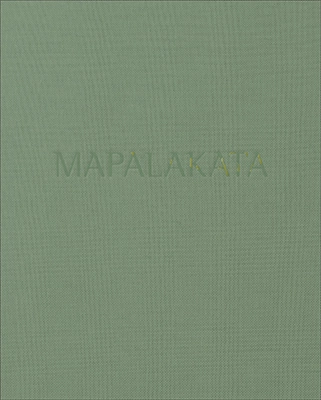
At the heart of Firelight is the series Dare alla Luce, a phrase that suggests both illumination and birth. Each photograph is carefully pierced by hand, punctured with constellations of tiny openings that allow light to pass through the paper. When backlit, the images shimmer with an almost supernatural glow. Faces, garments, skies, and interiors seem to breathe again, animated by a light that feels both intimate and otherworldly. The technique never overwhelms the original image; instead, it reveals what was always there but unseen.
Friend’s process is slow and meditative, rooted in respect for the physical photograph as an object. In an era defined by infinite digital reproduction, her work insists on tactility, patience, and care. The act of piercing becomes a gesture of devotion, a way of listening to what the image asks to become. Light operates not as decoration, but as a metaphor for memory itself—fragile, flickering, and dependent on our attention to remain alive.
The book Firelight extends this philosophy into its material form. Designed as a finely crafted artifact, the volume features laser-cut pages, refined French binding, and a cloth-bound box that recalls the intimacy of an heirloom. Each element reinforces the sense that this is not merely a book to be viewed, but an object to be handled with care, much like the photographs it contains.
Ultimately, Amy Friend: Firelight is an act of restoration rather than reinvention. By merging past and present through light, the work honors forgotten narratives while acknowledging their mystery. It reminds us that photography does not stop time, but it can offer moments of return—brief illuminations where absence becomes presence, and memory finds new breath.
The Best of Frank Kunert brings together a carefully curated selection from one of contemporary photography’s most distinctive and quietly subversive voices. Known for his meticulously crafted miniature tableaus, Kunert constructs worlds that appear instantly familiar, yet feel subtly wrong, as if reality itself has shifted by a few crucial degrees. This volume offers an immersive entry into an oeuvre where the everyday becomes a stage for reflection, irony, and unease.
Working patiently in the studio, Kunert builds architectural models by hand—interiors, suburban houses, staircases, bridges, and isolated towers—then photographs them with such precision that their scale all but disappears. What initially reads as documentary clarity soon reveals its artifice. Walls bend logic, spaces deny comfort, and functional objects suggest quiet failure. These scenes do not depict events, but states of mind, mirroring social pressures, isolation, and the contradictions of modern life.
The strength of Kunert’s images lies in their restraint. There is no spectacle, no overt drama, only the calm persistence of absurdity. A room may promise shelter while offering none, or a structure meant for passage leads nowhere. Humor is present, but it is dry and contemplative, rooted in recognition rather than surprise. The photographs reward slow looking, echoing traditions of conceptual photography while remaining deeply accessible.
This “best of” selection draws from several major bodies of work published over the years, highlighting the consistency of Kunert’s vision and the evolution of his visual language. His commitment to craft recalls earlier photographic traditions that valued precision, patience, and material presence—qualities that feel increasingly rare in an accelerated digital culture.
More than a retrospective, The Best of Frank Kunert functions as a mirror held up to contemporary existence. By reducing the world to a miniature, Kunert enlarges its emotional weight. His images remind us that beneath the surface of routine and order, uncertainty quietly resides. It is this balance between the ordinary and the unsettling that makes Kunert’s work enduring, resonant, and unmistakably his own.
Foc Kan: 80's Paris Nights: Top Models & Divas is a vibrant chronicle of a city after dark, capturing a Paris that pulsed with excess, creativity, and unapologetic style. Released in hardcover in March 2026, the book celebrates Foc Kan’s singular ability to move effortlessly through the capital’s nocturnal world, camera in hand, bearing witness to an era when fashion, music, and nightlife merged into a single, intoxicating rhythm.
Throughout the 1980s and 1990s, Foc Kan became a familiar presence in legendary Parisian clubs, documenting nights that felt endless and charged with possibility. His photographs reveal more than celebrity encounters; they preserve fleeting moments of freedom and performance, when identities blurred and glamour was worn with playful confidence. Models, designers, musicians, and actors appear not as distant icons, but as participants in a shared scene shaped by sound, light, and movement.
The book brings together a remarkable constellation of figures, from Claudia Schiffer and Naomi Campbell to Catherine Deneuve, Mick Jagger, Jean-Paul Gaultier, Karl Lagerfeld, and Yves Saint Laurent. These images unfold within emblematic spaces such as Les Bains-Douches and The Palace, venues that defined an entire generation’s idea of nightlife. Kan’s lens captures the elegance and abandon of these settings, balancing spontaneity with a keen sense of composition.
With a preface by Frédéric Beigbeder, 80's Paris Nights reads as both visual archive and cultural testimony. It is festive and refined, intimate yet expansive, revealing nightlife as a social ritual and a creative laboratory. Part ethnography, part fashion history, the book offers a rare window into a Paris that continues to influence contemporary culture. More than nostalgia, it stands as a reminder of how cities, at their most alive, are shaped by those who dare to live fully after sunset.
Celebrating the rich history of photography made by and for Black communities in Texas.
Kinship & Community presents an inspiring example of collective self-representation from the final decades of official segregation in the United States. With more than 150 images of everyday Black life—created by Black photographers for Black communities across Texas—this collection celebrates a proud but overlooked regional culture while testifying to the power of photography as a social tool. These photographers, typically operating small businesses that provided portraiture, promotional images, and event documentation, worked with their communities to develop an enduring vision of hope and uplift. Many also contributed photos to newspapers, magazines, and civil rights organizations, sometimes focusing on political leaders and protests. But their primary subject was the everyday expression of a vibrant and self-sufficient Black culture—an exhilarating achievement in the wider context of entrenched racial oppression. Completing the book is a vivid new photographic essay by Rahim Fortune that takes up the archive’s legacy and places it firmly in the present tense.
AlternativePhotography.com proudly announces the expanded second edition of Anthotypes, a must-have guide for anyone fascinated by alternative photographic processes.
The first edition quickly became a favorite among beginners and professional artists alike, offering a beautifully illustrated introduction that transforms how we see and interact with nature. Anthotypes invites readers to explore plants, fruits, and flowers in a completely new light, revealing their hidden photographic potential.
Edition 2 builds on this foundation, expanding the original publication into a comprehensive technical and educational reference. Years of testing, teaching, and hands-on experimentation inform this edition, which now addresses chemical, material, and process-related questions that could not be fully explored in an introductory guide. Whether you are curious about pigment extraction, choosing the right papers, or achieving vibrant sunlight prints, this book provides detailed, step-by-step instructions for creating and preserving eco-friendly, plant-based photographs.
Learn how to craft emulsions from natural pigments, select optimal papers, and print in sunlight with vivid, lasting colors. Anthotypes also includes expert tips on toning, permanence, and techniques for both beginners and experienced artists seeking to explore sustainable and experimental photography.
Published as part of a non-profit educational initiative, Anthotypes supports workshops, classrooms, and independent studio practice, encouraging photographers to work historically, creatively, and sustainably.
Available in both print and eBook formats, this edition ensures broad accessibility for artists and educators around the world.
About the author: Malin Fabbri, editor of AlternativePhotography.com for 25 years, combines academic research with practical experience to lead one of the most respected platforms for alternative photographic processes. She researches techniques, creates prints, runs workshops, and has authored several influential books, making her guidance invaluable for anyone exploring the art and science of anthotype photography.
“It’s unclear who first said, ‘The best camera in the world is the one in your hand,’ but most of the photographs in this book are the result of having one, or sometimes two, while on brief holidays or visiting people around Britain.” – Berris Conolly
Field Trips: Travels in Britain 1976–1993 captures nearly two decades of British life and landscapes through the eyes of one of the country’s most insightful documentary photographers. After leaving commercial photography in 1984, Conolly focused on documentary projects in Hackney and Sheffield, yet it was during breaks from these intensive works that Field Trips began, producing spontaneous and deeply personal images.
The book explores Britain in all its diversity: urban streets, rural lanes, quiet villages, industrial towns, and breathtaking countryside. From the rugged mountains of Wales to everyday city corners, Conolly’s black-and-white photographs highlight both the beauty and the mundane, transforming ordinary scenes into evocative visual stories. His ability to capture light, composition, and fleeting moments gives each image emotional depth and authenticity.
Conolly’s journeys also intersect with history. In Wales, he followed the 12th-century circular route described by Gerald of Wales, accompanying the Archbishop of Canterbury during the Third Crusade recruitment campaign, merging historical narrative with contemporary observation.
With eight previous books and numerous exhibitions to his credit, Berris Conolly is recognized internationally for his skill in documenting the character, soul, and subtle rhythms of British life. Essays by Travis Elborough, author of The Bus We Loved and Wish You Were Here – England on Sea, provide rich context, enhancing the reader’s understanding of both place and photographer.
Field Trips is a must-read for photography enthusiasts, historians, and lovers of British culture. This unique collection reminds us that powerful stories often emerge when we simply carry a camera, observe, and let the world unfold before us.
Born from joint expeditions in 2023 and 2024, this book is the result of a collaboration between photographer Mark Klett and writer, critic, and cultural geographer William L. Fox, who traveled together to the remote mid-Pacific nation of the Republic of the Marshall Islands. Their journey was not simply geographic but historical and philosophical, shaped by conversations with residents, encounters with fragile landscapes, and reflections on the layered narratives embedded in the atolls themselves.
Expanding on ideas first explored in their earlier project The Half Life of History (Radius Books, 2011), the publication revisits the islands’ nuclear legacy in the aftermath of twentieth-century weapons testing while confronting the accelerating realities of climate change today. Rising seas, shifting coastlines, and memories of displacement form a visual and literary dialogue that bridges past and present, revealing how environmental and political histories remain inseparable.
Blending archival imagery with Klett’s recent photographs and Fox’s texts—ranging from lyrical journal passages to concise essays—the book constructs a layered narrative that moves between documentation and meditation. The islands become both subject and symbol, a place where global forces converge in intimate scale. Through this focused lens, the project invites readers to consider the far-reaching implications of nuclear ambition, ecological vulnerability, and human resilience, suggesting that the story of this small nation ultimately mirrors shared planetary futures.
Rather than offering conclusions, the collaboration opens a contemplative space in which image and language interact as equal witnesses. Attention is drawn to textures of coral, weathered concrete, and luminous horizons, each detail carrying traces of history and possibility. In this quiet interplay, the artists propose that careful observation can become a form of responsibility, urging viewers to recognize connections between distant territories and their own lives. Its message resonates far beyond the Pacific for all humanity today and tomorrow always.
1861Luigi Ghirri: Felicità presents a luminous journey through the vision of one of Italy’s most influential photographers. Curated by Luca Guadagnino and Alessio Bolzoni, the volume brings together a thoughtful selection of Ghirri’s unseen and celebrated works, weaving a narrative that feels both intimate and expansive. The book moves fluidly from playful details—discarded magazine cuttings, fragments of everyday materials—to contemplative portraits of domestic interiors and sunlit landscapes captured during Ghirri’s travels across Italy and beyond. Each image is suffused with his characteristic attention to colour, light, and subtle geometry, revealing beauty in the mundane and the overlooked.
Ghirri’s photographs carry a quiet intelligence, finding poetry in small gestures and overlooked corners of the world. Whether capturing a window frame, a fading billboard, or a sunlit garden, his images suggest both presence and absence, evoking memory, longing, and the soft humor embedded in daily life. The sequence curated in Felicità highlights the recurring interplay between observation and imagination, structure and chance, offering a vision of photography as a tool to explore perception itself rather than simply to record it.
The book is punctuated by three essays written by Ghirri himself: The Open Work, The Impossible Landscape, and House, Bridge, Gate. These texts illuminate his approach to photography, emphasizing the fluidity of interpretation and the infinite possibilities of seeing. Together with the images, they provide a contemplative framework for understanding Ghirri’s enduring interest in how ordinary scenes can be transformed into art through composition, attention, and light.
Produced to accompany the exhibition curated by Guadagnino and Bolzoni, Felicità offers more than a retrospective; it is an invitation to inhabit Ghirri’s sensibility, to notice the subtleties of colour, form, and daily life, and to appreciate the poetic resonance hidden within the everyday. The volume affirms Ghirri’s place as a master of modern photography, whose work continues to reveal new ways of seeing the world.
Guido Guidi: Album, 1969–82 offers a remarkable glimpse into the formative years of one of contemporary photography’s most perceptive chroniclers. While organizing his archive, Guidi rediscovered a wealth of negatives and prints from the early period of his career, revealing a combination of intense observation and experimental curiosity. Made between 1969 and 1982 with small-format black-and-white cameras, the images traverse daily life, yet they never settle into simple documentation. Family gatherings, friends, and colleagues at the University of Architecture in Venice coexist with more fragmented and enigmatic compositions—isolated objects, shadows, abstracted forms, and deserted streets—that blur the line between realism and abstraction.
The photographs display a striking graphic quality, heightened by high contrast and disorienting framing. Some images retain traces of captions, notes, or smudges, fragments of prior sequences that evoke the passage of time and the living history of the negatives themselves. Through these marks, the viewer senses the ebb and flow of memory and the act of photography as a process of both recording and interpretation. Guidi’s eye captures the extraordinary within the ordinary, rendering everyday life with a combination of empathy, precision, and quiet humor.
In assembling this new album, Guidi revisits the title he used for several projects in the 1970s, including an unrealized collaboration with Luigi Ghirri. The book becomes a curated engagement with his younger self, balancing the anarchic energy of his early experimentation with the seasoned judgment of an accomplished editor. The resulting work bridges the familiar and the uncanny, offering sequences that feel both intimate and formally rigorous, documentary and speculative, tethered to lived experience yet opening onto broader visual possibilities.
Album, 1969–82 is the second of three volumes exploring Guidi’s black-and-white photography from the late 1960s to the early 1980s. It illuminates the development of his practice, revealing the tension between art and function, observation and imagination, realism and surrealism. Through these images, Guidi invites the viewer into a world in which the everyday, the overlooked, and the ambiguous coexist in striking visual harmony, reaffirming his status as a master of modern photography.
Luis Baylón: Los Españoles, published in hardcover on February 10, 2026 by Delpire, offers a compelling and deeply observed portrait of Spain through more than three decades of black-and-white photography. Spanning images made between 1982 and 2014, the book brings together photographs taken in cities such as Madrid, Barcelona, Murcia, Benidorm, Valencia, and Zamora, forming a visual journey across urban, social, and emotional landscapes. Baylón’s work is rooted in close attention to everyday life, revealing Spain not through spectacle, but through gestures, glances, and fleeting moments of human presence.
Working squarely within the documentary tradition, Baylón approaches the street as a space of quiet tension and subtle theater. His photographs echo the lineage of classic social photography, where observation and patience allow meaning to emerge naturally. Like Robert Frank and Martin Parr before him, Baylón resists idealization, instead embracing ambiguity, contradiction, and humor. His Spain is plural and unresolved: modern yet anchored in habit, intimate yet shaped by collective rituals. The choice of black and white reinforces this timeless quality, stripping scenes down to light, form, and expression.
Across the pages of Los Españoles, individuals appear both anonymous and emblematic, framed within streets, cafés, beaches, and public spaces that reflect shifting social realities. The long time span of the project allows subtle transformations to surface, as architecture, fashion, and attitudes evolve while certain human patterns remain unchanged. Baylón’s camera does not judge or dramatize; it observes with clarity and restraint, trusting the viewer to read between the lines.
More than a survey of a nation, this book stands as a personal and coherent body of work shaped by consistency of vision. Luis Baylón: Los Españoles affirms the enduring power of traditional documentary photography to describe a country from the inside, through lived experience and sustained attention. It is both a portrait of Spain and a testament to Baylón’s quiet, unwavering commitment to seeing.
131Helmut Newton: One-off offers an intimate encounter with one of the most influential photographers of the twentieth century, presented through the faithful reproduction of a singular, deeply personal album. Rather than a conventional retrospective, this volume invites readers into Newton’s own editorial universe, revealing how he assembled, annotated, and reflected upon his images outside the pressures of publication or commission.
Helmut Newton’s photography has long been associated with provocation, elegance, and power. Drawing from the visual language of Expressionist cinema, film noir, and surrealism, his work reshaped fashion photography by infusing it with narrative tension and psychological charge. Models become characters, urban spaces turn theatrical, and the camera asserts an unmistakable authority. In One-off, these qualities appear not as isolated masterpieces but as part of a continuous, evolving conversation within Newton’s practice.
Compiled in 1999 with collector and close collaborator Gert Elfering, the original album was never intended for wide circulation. Reproduced here at its original scale, it retains the tactile presence of the object itself. Polaroids sit alongside chromogenic and gelatin silver prints, tracing the movement from spontaneous test image to refined final photograph. Newton’s handwritten pencil notes, visible throughout, offer rare insight into his thought process, revealing decisions, doubts, and moments of quiet humor.
The inclusion of unique Polaroids is particularly revealing. Often used by Newton as tools of experimentation, they capture fleeting gestures and raw ideas, underscoring his belief in photography as a process rather than a fixed result. Seen together, the images illuminate how control and improvisation coexisted at the heart of his work.
Supplemented by an informed foreword and a revealing interview, Helmut Newton: One-off contextualizes the album without overshadowing it. The book stands as both an object of beauty and a document of artistic method. More than a celebration of iconic images, it is a portrait of Newton as a meticulous editor of his own legacy, reminding us that behind the boldness lies a sustained discipline and an unrelenting curiosity.
1416Nazraeli Press has announced a newly remastered and significantly expanded edition of Summertime, the celebrated monograph by Mark Steinmetz. Originally released in 2011 as a companion to his South Central Trilogy, the book returns in a refined edition that deepens its nostalgic portrait of American youth. This latest version features 30 previously unpublished photographs and is issued as a limited run of 2,000 beautifully produced casebound copies, printed in rich duotone on natural art paper.
Created between 1984 and 1991, Summertime captures children and teenagers immersed in unguarded moments of play, boredom, curiosity, and freedom. Photographed during an era before smartphones and constant digital connection, the images evoke a time when young people wandered neighborhoods independently, rode bikes without helmets, and passed long afternoons outdoors. Steinmetz’s quiet black-and-white compositions emphasize atmosphere and gesture, distilling the sensation of endless summer days that seem suspended outside of time.
The photographs were made in places where Steinmetz lived, visited family, or taught, giving him a natural familiarity with his surroundings. That sense of ease translates into the images, where his subjects appear relaxed and unposed, allowing fleeting expressions and subtle interactions to unfold organically within the frame. The result is a body of work that feels intimate without intrusion and observational without distance.
A recipient of a Guggenheim Fellowship, Steinmetz’s photographs are held in major museum collections, including the Museum of Modern Art, Metropolitan Museum of Art, Whitney Museum of American Art, Art Institute of Chicago, and Los Angeles County Museum of Art.
148Lisette Model presents a definitive exploration of one of the most influential photographers of the twentieth century, whose bold vision reshaped the way urban life and society were captured on film. This stunning hardcover features over 200 reproductions, ranging from her early Parisian portraits to the striking images of New York streets that defined her career.
Model’s photographic journey began in Vienna and matured in France, where her keen eye for social observation developed. Early works, including portraits of idle elites in Nice, reveal her sharp sense of critique tempered by empathy. These images, at once confrontational and intimate, established her as a formidable observer of human behavior. After emigrating to the United States, Model brought this incisive approach to New York, producing iconic images such as the Coney Island Bather and the Cafe Metropole series, which juxtapose vitality, vulnerability, and the stark contrasts of city life.
Her lens captured both the glamour and grit of her surroundings: the bustling streets of the Lower East Side, the grandeur of high-society gatherings, and the nuanced everyday gestures that reveal the inner lives of her subjects. Model’s distinctive framing, bold compositions, and unflinching attention to human detail created a visual language that remains influential to this day.
This collection also includes lesser-known works from her travels along the U.S. West Coast and Venezuela, highlighting her continued exploration of character, form, and place. Insights from scholar Walter Moser contextualize her work within the broader trajectory of twentieth-century photography, illuminating her enduring impact as both an artist and a teacher.
Lisette Model is more than a retrospective; it is an immersive journey into a world seen through a lens of unvarnished reality and poetic observation. It celebrates a photographer whose fearless engagement with her subjects, combined with her artistic rigor, forged a path for generations of street and documentary photographers, offering an essential resource for enthusiasts and scholars alike.
480Albert Watson: Kaos is a masterful survey of one of photography’s most influential voices, spanning five decades of work that oscillates between intimacy and spectacle. Watson’s photographs are at once meticulously composed and viscerally immediate, capturing both the iconic and the unexpected with equal authority.
KAOS charts Watson’s journey from his breakthrough Alfred Hitchcock portrait in 1973 to the present, revealing the astonishing range of his vision. Across its pages, readers encounter a kaleidoscope of subjects: celebrities in revealing vulnerability, strangers in fleeting urban moments, wildlife in arresting stillness, and landscapes that shimmer with elemental power. Each frame is a study in light, shadow, and narrative tension, embodying Watson’s extraordinary ability to render the familiar as extraordinary.
The book moves fluidly between worlds. Supermodels and pop icons—David Bowie, Kate Moss, Jay Z, Jennifer Lopez, Mick Jagger—sit alongside anonymous figures in neon-lit cities and remote Scottish landscapes, their presence amplified by Watson’s uncanny sense of timing and composition. From sensuous nudes to stark urban street photography, his work explores surface beauty while hinting at the emotional and psychological depth beneath. Watson’s camera captures not only what is seen, but the subtle textures of human experience: desire, humor, solitude, and magnetism.
Accompanied by an essay from Philippe Garner and enriched with Watson’s own reflections, as well as previously unpublished Polaroids from his personal archive, KAOS is both an authoritative career retrospective and a deeply personal document. The photographs pulse with cinematic allure, formal precision, and the irrepressible vitality of a life spent observing the world in its most dynamic and intimate moments.
Presented in a sumptuous hardcover, with optional signed Art Editions including exclusive prints, Albert Watson: Kaos is a definitive celebration of an artist whose work continues to inspire photographers, collectors, and enthusiasts around the globe, capturing a universe simultaneously chaotic, poetic, and utterly compelling.
53Anders Petersen: City Diary #1–7 gathers more than five decades of uncompromising photographic encounters into a single, resonant volume. Moving through cities across Europe, the Americas, and beyond, Petersen records lives lived at the edges of visibility, where intimacy, fragility, and resilience coexist. These photographs are not about spectacle or provocation, but about presence—about being there long enough for trust to surface and for guarded lives to briefly open.
From smoky bars and cramped hotel rooms to streets that come alive after dark, Petersen’s images trace human connection in its rawest form. Lovers cling to one another, strangers lock eyes with the camera, and solitude becomes palpable even in crowded spaces. His black-and-white photographs reject distance and neutrality, favoring closeness and emotional risk. Each frame feels less like an observation and more like a conversation, shaped by mutual recognition rather than hierarchy.
The City Diary series unfolds as a personal journal as much as a social document. Spanning work made between 1967 and 2019, these photographs reveal a remarkable consistency of vision, grounded in empathy and curiosity. Petersen does not romanticize hardship, nor does he explain it away. Instead, he allows complexity to remain unresolved, honoring the dignity of individuals often reduced to labels or stereotypes. Time passes, cities change, yet the human need for touch, belonging, and acknowledgment endures.
Bringing together the complete City Diary cycle, including newly published volumes alongside the earlier award-winning books, this edition offers a rare opportunity to experience the breadth of Petersen’s practice in full. It reflects a tradition of documentary photography rooted in lived experience, patience, and moral engagement. City Diary #1–7 stands as a testament to photography’s ability to bear witness without judgment, and to remind us that the stories unfolding in shadow are inseparable from the shared fabric of urban life.
Seminal Works brings together Hal Fischer’s iconic series Gay Semiotics with his rarely seen early photography and features a dynamic range of essays that consider queer culture and social change in San Francisco.
In the late 1970s, as gay men in San Francisco experienced a new sense of freedom following the Stonewall Uprising, Hal Fischer made Gay Semiotics, a photo-text project that categorized denizens of the Castro and Haight-Ashbury neighborhoods by social type such as the “jock” or the “hippie.” Sly and systematic, Fischer portrayed the sartorial codes of queer street style—earrings, handkerchiefs, jeans, or leather—that broadcast a range of desires to potential sexual prospects. The series became an influential record of a libertine era before AIDS, the rise of internet dating apps, and tech industry–accelerated gentrification transformed queer life forever. Tracing the formation of an essential American artist, Hal Fischer: Seminal Works includes Gay Semiotics together with Fischer’s rarely seen early photography and features essays that offer vital new perspectives on the history of San Francisco and the resonance of the gay rights movement across generations.
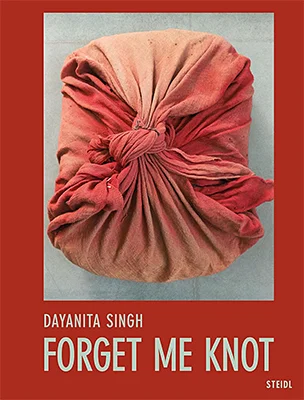
58 This majestic collection of black-and-white photographs captures the world’s great glaciers as both ancient monuments and fragile frontiers in the age of climate change.
In this arresting visual study, Sebastião Salgado brings together 65 duotone photographs from his epic project Genesis, offering a visual survey of some of the planet’s most remote and ice-bound regions. From the ice fields of Patagonia and the peaks of the Himalayas to the vast shelves of Antarctica and the volcanic flanks of Kamchatka, these images record the forms, textures, and scale of glacial landscapes around the world.
Shot in Salgado’s large-format, black-and-white style, the photographs emphasize the physical presence of ice—its ridges, fractures, density, and drift. Light and shadow reveal the structural complexity of each scene, from massive crevasses to the delicate patterns of wind-swept snow.
An essay by climate scientist Elisa Palazzi examines the science of glacier formation, transformation, and decline. Pairing meticulous sequencing with refined design and premium duotone printing, the book offers a focused and enduring portrait of the world’s glaciers at a critical moment in their history.
Larry Sultan: Water Over Thunder reveals a dimension of Larry Sultan that has long remained in the margins of his celebrated photographic career: his devotion to writing as an essential companion to image-making. Known for landmark series such as Pictures from Home, Evidence (created with Mike Mandel), and The Valley, Sultan shaped late twentieth-century photography with a practice rooted in narrative, ambiguity, and the tensions between private and public life. Yet behind these images lay notebooks, journals, drafts, and lectures that reveal how deeply language informed his artistic process.
This publication gathers many of those texts—some never before seen—offering reflections on teaching, meditations on art, fragments of short fiction, and even dream diaries. Sultan taught for decades at the California College of the Arts, where he encouraged students to interrogate the assumptions behind every photograph. In his writing, he wrestles openly with doubt, ambition, memory, and the slipperiness of truth. The act of putting words to paper becomes a way of clearing space, testing ideas, and pushing beyond the visible surface of things.
The title Water Over Thunder derives from an early draft connected to Pictures from Home, his poignant exploration of family, performance, and the mythology of the American Dream. Water recurs throughout the book as both substance and metaphor—fluid, reflective, impossible to grasp. Sultan often described the beginning of a project as a state of turbulence, where impressions collide and clarity feels distant. Writing, for him, was a means of navigating that motion.
Richly illustrated with contact sheets, outtakes, layout mock-ups, and found photographs from his archive, the volume forms an intimate portrait of an artist thinking in real time. Water Over Thunder does more than document a celebrated career; it invites readers into the workshop of the mind, where images and words intertwine and the uncertainties of creation become the very ground of discovery.
Exposure: Contemporary Photographers is a vibrant survey of the creative energy shaping contemporary photography today. Curated by Amber Creswell Bell, the book brings together forty artists whose work spans continents, subjects, and approaches, offering a rich mosaic of vision and technique. At its core, the collection explores the decisive moment, the instant when a photograph crystallizes emotion, narrative, and observation, revealing the delicate balance between intention and chance.
The featured photographers approach the medium in remarkably diverse ways. Some, like Leila Jeffreys, immerse the viewer in intimate, often theatrical scenes; others, such as Bill Henson, harness shadow and light to evoke mood and tension. Kara Rosenlund and many others examine identity, environment, and social dynamics through lenses that are both personal and expansive. Across these practices, there is a shared pursuit of resonance—a desire to connect the captured image with the viewer’s own perception and experience, whether through landscape, portraiture, or conceptual experimentation.
The book emphasizes not only the visual outcome but also the process and philosophy behind the work. Artists discuss their approach, reflecting on the choices that shape an image: framing, exposure, gesture, and timing. These insights illuminate the complexity of contemporary photography as a medium capable of conveying subtle cultural nuances, challenging conventions, and provoking thought. Each sequence within the book demonstrates the ways photographers negotiate between spontaneity and deliberation, whimsy and rigor, observation and imagination.
Exposure celebrates photography as a lens through which we can explore the world and ourselves. From striking landscapes to intimate domestic moments, from constructed tableaux to fleeting street encounters, the book captures the energy, diversity, and innovation of contemporary practice. It invites readers to pause, reflect, and engage with the artistry and sensitivity that mark these photographers’ work, reaffirming the enduring power of the image to inspire, question, and illuminate.
Ahndraya Parlato: Time To Kill confronts the passing of time with a fearless and unsettling gaze. Through a combination of photographs and personal letters, Parlato interrogates the societal expectations imposed on women as they age, exposing the tension between beauty, domestic responsibility, and the inevitability of bodily transformation. Her work does not shy away from discomfort; instead, it illuminates it, revealing the layered anxieties and fleeting triumphs of life lived under the weight of cultural prescription.
The photographs range from intimate portraits to expansive landscapes, from sparse, confined interiors to surreal arrangements of objects. Domestic items are juxtaposed with plants and weapons, producing a visual language that is both absurd and arresting. These still lifes serve as metaphors for impermanence, the contradictions of caretaking, and the invisible labor often expected of women. Within this careful framing, Parlato captures a world in which the familiar becomes uncanny, and ordinary spaces transform into sites of reflection, resistance, and revelation.
Embedded alongside these images are letters addressed to an enigmatic recipient, whose identity is never fixed. The letters fold inward and outward simultaneously, oscillating between intimate confession and philosophical inquiry. They navigate questions of self-perception, desire, and societal scrutiny, articulating the tension between who we are and how the world perceives us. In this interplay of image and text, aging is portrayed not simply as decline, but as a process imbued with both vulnerability and liberation.
Building on the visual and conceptual intensity of her previous work, Who is Changed and Who is Dead, Parlato extends her exploration of mortality, selfhood, and the female experience. Time To Kill is a meditation on corporeal and emotional transformation, a psychological mapping of fear, fantasy, and resilience. Through her striking imagery and incisive narrative, Parlato invites viewers to confront the brutal, tender, and often surreal realities of living in a body that ages, while questioning the cultural strictures that attempt to define what it means to grow, endure, and ultimately be seen.
6Brassaï: Paris by Night, newly released in a meticulously crafted hardcover edition on January 27, 2026, reintroduces one of the most influential photography books of the twentieth century. First published in 1933 and compiled by Brassaï himself, this volume stands as a defining portrait of Paris after dark. The new edition honors the original with great care, featuring tinted page edges and refined production choices that echo the spirit of its first appearance while meeting contemporary standards of print excellence.
Born in Hungary and drawn irresistibly to Paris, Brassaï approached the city with the curiosity of an outsider and the intimacy of a lifelong observer. By day, he worked as a journalist; by night, he wandered the capital’s streets, cafés, and hidden corners, immersing himself in a world that few dared to linger in. His lens captured the lives of artists, lovers, laborers, and outcasts, revealing a nocturnal Paris shaped by desire, solitude, and fleeting encounters. These images do not merely document the city—they breathe with it.
The sixty-two photographs in Paris by Night demonstrate Brassaï’s remarkable technical command of low light and shadow. Empty streets glisten after rain, stairways disappear into darkness, and figures emerge as silhouettes charged with tension and emotion. Elsewhere, nightclubs, dance halls, and backroom gatherings pulse with energy. Together, these scenes form a complex visual map of a city suspended between elegance and grit, romance and danger.
This new edition has been produced using advanced engraving and printing techniques that faithfully preserve the tonal richness and subtle gradations of the original photographs. The cloth-bound cover, embossed details, and inset vignette reinforce the book’s status as both an object of design and a historical document. It is as much a tactile experience as a visual one, inviting slow, contemplative viewing.
More than ninety years after its first publication, Brassaï: Paris by Night remains a vital source of inspiration for photographers, designers, and visual artists. It marks the moment Brassaï fully emerged as an artist and continues to define how cities—and nights—can be seen, felt, and remembered.
38Martin Parr: Global Warning brings together more than five decades of sharp observation and visual wit in a publication that feels uncannily attuned to the present moment. Long known for his unmistakable eye and saturated color palette, Parr has built a body of work that scrutinizes everyday life with equal parts affection and critique, revealing how ordinary behaviors quietly mirror global anxieties.
From his early black-and-white photographs made in modest English holiday camps and provincial supermarkets to his later color images of crowded beaches, souvenir stalls, and iconic landmarks, Parr has consistently examined the rituals of leisure and consumption. What might first appear humorous or trivial often carries a deeper unease. Sunburnt tourists, overflowing plates, and compulsive image-making become signs of excess, disconnection, and a world struggling to reconcile pleasure with consequence.
Global Warning reframes Parr’s archive through the lens of contemporary disorder. His photographs speak to climate stress, technological dependency, and the uneasy relationship between humans and animals, without ever resorting to overt moralizing. Instead, meaning emerges through accumulation and contrast. The repetition of gestures, poses, and settings across continents suggests a shared global culture, one that is both strangely unified and profoundly unsustainable.
Published alongside a major exhibition at the Jeu de Paume in Paris, the book benefits from a thoughtful curatorial approach that situates Parr’s work within broader social, geographic, and ecological debates. Essays by specialists from diverse disciplines expand the reading of the images, showing how Parr’s photographs intersect with issues of urban planning, tourism, wildlife preservation, and social behavior. These texts reinforce the idea that Parr is not merely a satirist, but a meticulous chronicler of his time.
Richly illustrated and carefully edited, Global Warning balances iconic photographs with lesser-known images, inviting readers to reconsider familiar scenes through fresh connections. The result is a portrait of a world teetering between amusement and alarm, where laughter and discomfort coexist. Parr’s enduring achievement lies in his ability to make us look closely at ourselves, and to recognize that the absurdities he captures are not exceptions, but reflections of how we live now.
1491Constance Jaeggi: Escaramuza is a richly layered exploration of a tradition where grace, discipline, and courage converge at full speed. Through this publication, Jaeggi turns her lens toward the all-female teams who practice escaramuza, a form of precision horse riding rooted in ritual and collective strength. Mounted side-saddle and dressed in ornate, flowing garments, the riders perform complex maneuvers that demand absolute trust between horse and rider, transforming athletic rigor into a powerful visual language.
Emerging from the broader tradition of Charrería, escaramuza occupies a singular place in cultural history. While horsemanship in Mexico has long been associated with masculinity and rural labor, escaramuza developed as a space where women could claim visibility, skill, and authority within that world. Jaeggi’s photographs honor this lineage while situating the practice firmly in the present, revealing how it continues to evolve within Mexican and Mexican-American communities across the United States.
The book moves fluidly between portraiture and atmosphere, capturing both the individuality of the riders and the collective rhythm of the teams. Details of embroidered dresses, braided hair, and weathered saddles speak to inheritance and care, while the riders’ focused expressions reflect a deep sense of responsibility to tradition. Jaeggi’s images are complemented by poetry that expands the emotional register of the work, giving voice to memory, migration, and belonging. Together, image and text suggest that escaramuza is not only a sport, but a living archive of women’s resilience.
Themes of family and transmission run throughout the book. Many riders inherit their connection to escaramuza through mothers, aunts, and grandmothers, creating a continuum shaped by both continuity and change. Historical echoes of the soldaderas—women who supported and fought during the Mexican Revolution—linger in the background, reinforcing the idea of women on horseback as symbols of endurance and agency.
As a physical object, Escaramuza reflects the care embedded in its subject. Issued in multiple cover colorways, the book underscores individuality within a shared form. Jaeggi’s project ultimately offers a meditation on identity in motion, where tradition is neither fixed nor nostalgic, but actively lived, negotiated, and reimagined by women riding together at speed.
Chris Levine: Light is an extraordinary two-volume monograph that illuminates the pioneering vision of one of contemporary art’s most innovative portrait and installation artists. Published in a deluxe slipcased edition, this work offers an immersive exploration of Levine’s artistic journey, showcasing his transformative approach to light, technology, and visual perception.
The first volume presents a curated selection of Levine’s most iconic portraits, including the serene Lightness of Being, capturing Queen Elizabeth II with her eyes closed in a moment of profound stillness. Alongside luminous portraits of Kate Moss, Grace Jones, the Dalai Lama, and Sir Elton John, Levine’s work demonstrates a rare ability to reveal both the physical presence and inner essence of his subjects. Using cutting-edge technologies alongside meticulous attention to light and form, these images elevate traditional portraiture into meditative, ethereal experiences that resonate far beyond the frame.
The second volume offers a richly detailed account of Levine’s life, tracing his evolution from designer to world-renowned artist. Beginning with his formative years at Chelsea College of Art, the book chronicles major milestones in his career, including large-scale installations, sculptural works, and dynamic public art projects. Highlights include immersive light shows for Massive Attack, groundbreaking installations at the Eden Project, and the site-specific exhibition at Houghton Hall (2020–21), where his innovative use of light transformed the historic space into a contemporary marvel.
Elegantly designed in close collaboration with Levine, this edition features premium printing techniques, including holographic inks that reflect the artist’s fascination with luminosity. A foreword by Dylan Jones OBE and insights into Levine’s creative process provide readers with a deep understanding of the philosophies and experimentation that underpin his work.
Chris Levine: Light stands as a definitive celebration of an artist who continues to redefine portraiture and installation art. It is an essential volume for collectors, art enthusiasts, and anyone captivated by the intersection of technology, beauty, and human presence.
Joy Gregory: Catching Flies With Honey offers a sweeping retrospective of one of the most inventive and socially engaged contemporary artists of the past forty years. This hardcover catalog, published alongside the major exhibition at London’s Whitechapel Gallery, presents over 200 color illustrations, bringing together iconic works, rarely seen pieces, and new commissions that highlight Gregory’s multifaceted practice.
From her early analogue photography to experimental digital works, video, textiles, and installations, Gregory has consistently combined technical mastery with a probing engagement with culture and history. Her work addresses complex topics such as post-colonial legacies, identity, beauty, and social justice, yet she draws viewers in with a captivating visual language that balances elegance, symbolism, and narrative power. The title of the catalog reflects her approach: to “catch flies with honey,” using beauty, tact, and careful craftsmanship to confront challenging subjects with intelligence and sensitivity.
Gregory’s photography and installations often explore histories of the transatlantic slave trade, endangered languages, and diasporic experiences, connecting personal narratives to broader global histories. Her work invites reflection, blending poetic abstraction with political awareness. Essays by leading scholars contextualize her contributions within both British and international contemporary art, highlighting how she has expanded notions of portraiture, archival work, and the materiality of image-making.
A candid conversation with Deborah Willis explores the role of archives in preserving marginalized histories, further emphasizing Gregory’s commitment to storytelling through both art and scholarship. Through these perspectives, the catalog illuminates not only the depth of her creative vision but also her enduring influence on contemporary photographic and visual culture.
Joy Gregory: Catching Flies With Honey is an essential monograph for collectors, scholars, and enthusiasts of contemporary art, offering both a visual feast and a profound meditation on identity, memory, and cultural resilience. It stands as a testament to Gregory’s ability to merge aesthetic beauty with critical engagement, leaving an indelible mark on the art world.
56Erwin Olaf: Freedom presents a sweeping and deeply human portrait of one of the most influential photographers of his generation. Conceived in close dialogue with the landmark exhibition at the Stedelijk Museum Amsterdam, this publication traces Olaf’s artistic journey from his earliest provocations to his most introspective final works. Across decades of practice, Olaf shaped a visual language that was unmistakably his own—cinematic, meticulously staged, and emotionally charged—while never losing sight of the real lives and struggles that informed his vision.
The book reveals how Olaf used photography as both a mirror and a tool for change. His images confront themes of identity, power, intimacy, and vulnerability with remarkable precision, often drawing the viewer into scenes that feel suspended in time. Whether depicting quiet domestic moments or carefully choreographed tableaux, Olaf’s work carries a tension between control and fragility. His sensitivity to light, gesture, and atmosphere transforms personal narratives into universal reflections on freedom, desire, and belonging.
Central to this volume is Olaf’s lifelong commitment to activism and representation. He consistently gave visibility to those pushed to the margins, portraying queer communities, people of color, individuals with disabilities, and aging bodies with dignity and nuance. These photographs do not seek pity or sensationalism; instead, they insist on empathy and recognition. Freedom, in Olaf’s work, is never abstract—it is lived, contested, and deeply personal.
The inclusion of previously unseen works from Olaf’s final years adds a poignant dimension to this overview. In these images, the artist turns inward, reflecting on mortality, illness, and resilience with striking honesty. Erwin Olaf: Freedom stands as both a retrospective and a testament, honoring an artist who believed that photography could challenge injustice, expand compassion, and preserve the emotional truths of a changing world.
Femxphotographers.org: Love offers a layered and quietly radical meditation on intimacy as seen through feminist eyes. This black-and-white publication gathers a wide range of voices who approach love not as a fixed ideal, but as a lived experience shaped by power, vulnerability, memory, and care. Here, love unfolds slowly, resisting spectacle in favor of presence, honesty, and emotional depth.
Across its pages, intimacy appears in many forms: between partners, within families, toward the self, and in moments of longing or loss. Some images are carefully constructed, others fleeting and instinctive, yet all share a commitment to reclaiming the act of looking. By placing womxn and non-binary perspectives at the center, the book gently but firmly disrupts inherited visual conventions, offering alternatives to the dominant narratives that have long framed desire and affection.
Photography in this volume functions as both witness and participant. The camera becomes a space of trust, where subjects are neither idealized nor reduced, but allowed to exist in their complexity. Love is shown as resilient and fragile, political and personal, tender and unresolved. The inclusion of poetry and written reflections deepens this experience, allowing images and words to resonate together, much like memory itself.
As the third publication by femxphotographers.org, Love continues the collective’s commitment to solidarity and shared authorship. Rather than presenting a single curatorial voice, the book embraces multiplicity, honoring differences in culture, generation, identity, and lived reality. This openness gives the work its strength, reinforcing the idea that love cannot be contained within one definition or visual language.
Rooted in feminist practice yet forward-looking in spirit, Femxphotographers.org: Love is both a visual archive and a quiet manifesto. It reminds us that photography, when guided by care and intention, can become a tool for connection rather than consumption. In returning to love as something slow, attentive, and deeply human, the book reclaims intimacy as an act of resistance and a shared ground for imagining more equitable ways of seeing.
Lisa Oppenheim: Eternal Substitute presents a body of work shaped by curiosity, patience, and a deep respect for photography’s layered histories. Over the past two decades, Oppenheim has forged a practice that begins with photography but rarely ends there. Her work moves fluidly between image, object, and idea, inviting viewers to reconsider what photography has been, what it is now, and what it might yet become.
Central to Oppenheim’s approach is the act of transformation. Rather than producing images from scratch, she revisits existing photographs, archives, and technologies, subjecting them to processes of reinterpretation and material shift. Through techniques that range from historical photographic methods to textiles, film, and sculptural forms, images are altered, displaced, and renewed. These acts of reprocessing expose the fragile relationship between memory, authorship, and reproduction.
The works gathered in Eternal Substitute reflect a sustained engagement with the social and political dimensions embedded within photographic history. Oppenheim’s interest lies not only in what images depict, but in how they circulate, age, and accumulate meaning over time. By foregrounding process and materiality, she slows down the act of looking, encouraging reflection rather than consumption. The familiar becomes uncertain, and the archival takes on a contemporary urgency.
Published alongside her exhibition Monsieur Steichen at MUDAM Luxembourg, the book offers a focused survey of the artist’s work from the past twelve years. Thoughtful essays and conversations deepen the context of her practice, tracing connections between experimentation, historical research, and critical inquiry. Together, image and text form a dialogue that mirrors Oppenheim’s own method of exchange between past and present.
Eternal Substitute stands as both a catalogue and a meditation on photography’s evolving language. In an era saturated with images, Oppenheim’s work reminds us of the power of restraint, revision, and care. Her practice honors tradition while quietly pushing against its limits, offering a forward-looking vision grounded in history, material intelligence, and sustained attention.
Lake Verea: Modern Barragán unfolds as a quiet act of devotion, a visual diary shaped by time, patience, and deep admiration. Over nearly twenty years, the Mexico City–based duo Lake Verea returned again and again to the home of architect Luis Barragán, not as distant observers but as attentive guests. Their photographs emerge from repeated encounters, allowing the house to reveal itself slowly, through ritual, intimacy, and silence.
Rather than documenting architecture as an object, Lake Verea approach Barragán’s home as a living presence. Chairs are sat upon, doors opened, gardens walked and lingered in. These gestures, subtle yet profound, infuse the images with a sense of inhabitation. The house is not staged or preserved in ideal conditions; it is encountered at dawn and nightfall, beneath stormy skies and glowing moons, under streetlights and sudden flashes that fracture its familiar serenity.
Light plays a central role throughout the book. Flash photography disrupts the soft modernist calm often associated with Barragán, introducing a spectral, almost otherworldly quality. Walls rubbed with aluminum sheets shimmer and expose textures normally absorbed by color and shadow. These surfaces seem to hold memory, suggesting that architecture, like photography, is a vessel for lived experience and emotional residue.
The project resists linear narrative, instead offering fragments that accumulate into a sensorial portrait. This diaristic structure mirrors the artists’ own relationship with the site, built through repetition and return rather than singular revelation. The result is both deeply personal and reverently restrained, honoring Barragán’s spiritual approach to space while quietly extending it into the present.
As a continuation of Lake Verea’s broader exploration of artistic legacy, Modern Barragán reflects their expanded photographic practice, where image-making intersects with performance, touch, and presence. The book stands as a meditation on influence, intimacy, and the enduring power of architecture to shape not only how we see, but how we feel and remember.
Christophe Jacrot: Winterland: The Colors of Snow offers a quiet immersion into winter as both landscape and state of mind. Published in January 2026, the book gathers photographs that suspend time, capturing snow not as spectacle but as atmosphere. Jacrot approaches winter with restraint and patience, allowing stillness, silence, and subtle transformation to shape each image. His photographs invite the viewer to slow down, to inhabit the pause that winter naturally imposes on the world.
Snow, in Jacrot’s work, is never merely white. It absorbs color, reflects memory, and softens the edges of reality. Urban streets dissolve into hushed tableaux, while open landscapes stretch toward abstraction, reduced to texture, light, and tone. Whether photographing a city caught in snowfall or a remote, unmarked expanse, Jacrot reveals winter as a fragile balance between presence and disappearance. Each scene feels fleeting, as though it might vanish moments after being seen.
Known for his long-standing engagement with weather as a central subject, Jacrot continues a photographic tradition that treats natural phenomena as expressive forces rather than backdrops. His attention to falling snow, drifting mist, and muted light echoes a painterly sensitivity, where composition and mood take precedence over description. The images do not document places so much as they evoke sensations: cold air on skin, muffled sound, the introspective calm that accompanies solitude.
There is a quiet melancholy running through Winterland, yet it is never heavy. Instead, it feels contemplative, even comforting. The landscapes suggest nostalgia for untouched spaces, but also acceptance of impermanence. Snow becomes a metaphor for time itself, covering, revealing, and erasing in equal measure. Jacrot’s work reminds us that beauty often resides in moments that cannot be held.
Through careful use of color, shadow, and atmosphere, Jacrot builds an emotional bridge between viewer and landscape. Winterland: The Colors of Snow is less about winter as a season than about winter as an experience: quiet, fleeting, and deeply human. It is a book to be returned to slowly, much like the snowfall it so poetically observes.
917Stephan Vanfleteren: Transcripts of a Sea marks a pivotal moment in the career of one of Europe’s most respected photographers. Long celebrated for his stark portraits and restrained visual language, Vanfleteren turns his gaze toward the sea as both subject and substance. This hardcover publication, released in January 2026, accompanies an exhibition at the Royal Museum of Fine Arts in Ghent and reveals a quieter, elemental chapter of his work, shaped by immersion, patience, and deep observation.
Rather than depicting the sea as a distant horizon, Vanfleteren approaches it from within, allowing water, light, and movement to define the image. His photographs echo the long tradition of maritime painting, yet resist nostalgia. The shifting surface of the sea becomes a living archive, where traces of storms, calm, and human presence linger without narrative certainty. These images recall the sensibilities of painters across centuries, while remaining firmly rooted in a contemporary photographic language.
The book unfolds as a visual dialogue between past and present, drawing subtle connections to artists who once sought to capture the sea’s grandeur and unpredictability. Vanfleteren does not imitate these historical works; instead, he translates their concerns into a modern, photographic syntax. The tonal restraint, attention to atmosphere, and physical closeness to the elements suggest a form of authorship grounded in continuity rather than rupture, honoring tradition while quietly extending it.
Transcripts of a Sea invites readers to slow down and engage with images that resist immediacy. The sea here is neither dramatic spectacle nor symbolic backdrop, but a space of reflection and endurance. Through this body of work, Vanfleteren reminds us that photography, like painting before it, can serve as a vessel for memory, time, and shared cultural inheritance. The book stands as both an homage to maritime art history and a contemplative meditation on humanity’s enduring relationship with the natural world.
An Extremely Un-get-atable Place is a quietly powerful photography book by Craig Easton that revisits one of the most secluded and symbolically charged locations in modern literary history. Published by GOST Books, the volume takes its title from George Orwell’s own words, written during his years of self-imposed isolation at Barnhill, a remote farmhouse on the Isle of Jura. Easton’s project is less a document than a poetic meditation, reimagining the atmosphere in which Orwell conceived Nineteen Eighty-Four, a work that continues to resonate with unsettling relevance today.
Invited to stay at Barnhill, largely unchanged since the late 1940s, Easton approached the site with restraint and attentiveness. Using a large-format 10x8 field camera, he photographed the surrounding landscape and the modest interiors of the house, allowing light, texture, and silence to guide his compositions. The resulting images evoke solitude rather than spectacle: a stove bearing traces of daily use, simple tools resting in a shed, a mirror, a teapot, worn surfaces shaped by time. These still lifes suggest presence through absence, offering a tangible sense of Orwell’s lived experience without ever depicting the writer himself.
The photographs are interwoven with excerpts from Orwell’s letters and diaries written during his Jura years, creating a subtle dialogue between image and text. This pairing deepens the emotional register of the book, situating Easton’s images within Orwell’s physical fragility, intellectual intensity, and desire for isolation. After returning from the island, Easton printed the negatives as hand-made silver gelatin prints, toning them in strong tea—a quiet, almost ritual gesture referencing Orwell’s famously austere habits.
More than a historical homage, An Extremely Un-get-atable Place reflects on solitude, endurance, and the relationship between place and thought. It is the first volume in Easton’s forthcoming Island Trilogy, a body of work that promises to explore remote landscapes as sites of memory, imagination, and creative resistance, where geography shapes not only daily life but the ideas that emerge from it.
By Helen Ennis, Amanda Maddox, Abigail Solomon-Godeau, Carla Williams, Yuri Yamada
Publisher : Hatje Cantz
2026 | 336 pages
Women Photographers 1900–1975: A Legacy of Light offers a sweeping journey through seven decades of photographic innovation shaped by women whose vision transformed the medium. Spanning continents, artistic movements and political upheavals, this volume gathers more than 80 photographers into a rich, interconnected narrative—one that restores their rightful place in the history of modern image-making. It traces how these artists navigated changing social landscapes while forging new approaches to portraiture, reportage, abstraction and experimental practice.
The book moves fluidly from the modernist precision of Florence Henri to the raw psychological intensity of Diane Arbus, revealing how each generation built on the breakthroughs of the last. It highlights the fearlessness of pioneers such as Dorothea Lange and Margaret Bourke-White, whose documentary work chronicled the human cost of global hardship, as well as the bold formal explorations of Lucia Moholy, Germaine Krull and Lola Álvarez-Bravo. Their images shaped the way the 20th century saw itself—yet their stories often remained in the margins.
By bringing together both celebrated figures and lesser-known independent voices, the publication acts as a corrective to the traditional photographic canon. It foregrounds the role women played not only as observers, but as technical innovators, educators and artistic leaders. Many challenged restrictive norms and introduced new visual languages: Helen Levitt’s poetic street scenes, Ruth Orkin’s cinematic framing, Francesca Woodman’s haunting self-interrogations, or Eiko Yamazawa’s vibrant experiments with color and form.
Richly illustrated and carefully researched, A Legacy of Light serves as both inspiration and documentation. It underscores how these photographers expanded the boundaries of the medium at moments when their contributions were too often overlooked or undervalued. In recounting their distinct paths and shared resilience, the book reveals a lineage of creativity that continues to influence visual culture today.
1533Fred Herzog: A Color Legacy opens a fresh chapter on the streets of Vancouver and beyond, offering the public previously unseen images from the archives of a man whose eye for color and life defied the conventions of his time. Herzog’s work in the 1950s and 60s stands out because he chose Kodachrome — a decision nearly heretical when art photography still equated seriousness with black and white. What emerges through his Leica’s lens is a world awash in warm reds, neon signs, and the soft glow of streetlights — a world that feels alive, tactile, and tender.
After emigrating from Germany to Vancouver in 1953 and working by day as a medical photographer, Herzog spent his evenings and weekends roaming the city streets. He captured storefronts, everyday people going about their lives, second-hand shops, Chinatown alleys, decaying cars, neon reflections — details often overlooked, but rich with character. He treated photography not as artifice but as observation, documenting modern urban life with precision and empathy. His photographs turned ordinary city scenes into a tribute to human presence and urban texture.
The volume collects these rediscovered gems alongside his best-known photos, offering a more complete portrait of a photographer who stubbornly trusted color when many of his peers turned away. The images span Vancouver and also trace Herzog’s travels to the U.S., the Caribbean, Mexico and Central America, showing a restless spirit and a worldwide curiosity. Each frame is infused with intimacy, subtle humor, and a respect for the quotidian — light on one face, a reflection in a shop window, the curve of a car hood shimmering in rain.
Fred Herzog: A Color Legacy is not just a homage to a photographer but a statement about memory, time, and beauty in the urban fabric. It reminds us how much of a city’s soul lives in small moments — a street sign, a storefront, a quiet onlooker — and how color, long seen as frivolous in serious photography, can reveal more truth than monochrome ever could.
Ideas of Africa: Portraiture and Political Imagination invites us to reconsider how portrait photography helped shape a vision of Africa as more than a continent — as a dynamic political and cultural idea. Released just as the exhibition opens at The Museum of Modern Art in New York, the book gathers over one hundred striking photographs by pivotal photographers of the mid-20th century and beyond, capturing Africans and members of the diaspora at moments of transformation, hope, and assertion.
From the studios of Seydou Keïta and Malick Sidibé to the streets of Kinshasa, Bamako or Bobo-Dioulasso, these portraits depict everyday people — musicians, workers, youth, families — with dignity, style, and presence. These are not exoticized snapshots but dignified self-representations, where garments, posture, and ambience are charged with meaning. In these images, personal identity becomes collective testimony — a visual articulation of dignity amid decolonization, societal change, and the rethinking of African identity.
The book does more than archive faces — it explores the photographic portrait as a tool of political imagination. It traces how portraiture helped foster Pan-African solidarity, challenged colonial stereotypes, and offered individuals a way to assert themselves on their own terms. By placing these works side by side with contemporary contributions by artists such as Samuel Fosso, Silvia Rosi or Njideka Akunyili‑Crosby, the book demonstrates how these dialogues between generations still resonate — how portraiture remains a vital medium for expression, memory, and identity.
With essays by scholars and writers accompanying the images, the publication situates the photographs within broader historical and intellectual currents: decolonization, migration, diasporic exchange, and the global civil-rights movement. It asks its readers to see beyond surface aesthetics — to engage with photography as a medium of empowerment, solidarity, and cultural reinvention. This book is a celebration of African creativity and resilience — a tribute to the power of the portrait to transform how Africa is imagined, represented, and lived.
23Everything Is Photograph offers a sweeping and intimate portrait of André Kertész, tracing the life and work of a man whose vision helped define modern photography. Born in Budapest in 1894, Kertész’s journey carried him from the cafés of Jazz Age Paris to the bustling streets of wartime New York, through periods of acclaim, obscurity, and reinvention. This biography presents a detailed exploration of both his personal and professional life, revealing the hardships, triumphs, and enduring curiosity that shaped his art.
Kertész was a pioneer in embracing new technologies and approaches. He was among the first to see the potential of the Leica camera, forever linking the instrument to street photography, and he helped establish the language of subjective photojournalism, producing one of the earliest influential photo essays. Over his career, he captured more than 100,000 images, each marked by a distinctive combination of formal rigor, emotional depth, and subtle humor. His work explores human connection, self-expression, and the mysteries embedded in everyday life, making ordinary moments resonate with extraordinary clarity.
The biography delves into Kertész’s complex personal history, from the traumas of World War I to the shadow of the Holocaust, and from tangled romances to professional rivalries with contemporaries like Brassaï and mentorship of figures like Robert Capa. It illuminates the resilience and adaptability that allowed him to navigate both the glamour and the hardships of the photographic world, including his years working for House & Garden and his later resurgence during the 1960s photo boom.
Through archival research and interviews, the book brings Kertész vividly to life: a man of Old-World charm, occasional mischief, and profound artistic insight. Everything Is Photograph is not only a biography but a meditation on photography itself — a medium capable of narrating identity, exploring perception, and connecting people across time and place. It immerses readers in the aesthetics, culture, and humanism of a lost photographic era, while celebrating the enduring influence of one of the medium’s most innovative and generous visionaries.
A photographic atlas that projects future climate scenarios onto present-day landscapes—turning data into haunting visions of a world transformed.
Atlas of the New World is a visionary photographic project by Giulia Piermartiri and Edoardo Delille that merges documentary rigor with speculative imagination. Projecting future climate scenarios onto present-day landscapes using analog photography techniques, the book creates a compelling visual atlas of a planet in transformation. Each image overlays real places with ghostly visions of the world to come: flooded cities, vanished glaciers, scorched forests. Scientific data meets poetic insight as the work explores six geographies deeply affected by the climate crisis—from the vanishing Maldives to the scorched forests of Russia and California, the disappearing glaciers of Mont Blanc, and the flooded river basins of China.
Accompanied by texts from scientists and writers, the book invites us to see what is not yet visible: a future already seeded in our present. Atlas of the New World is both warning and proposition—a lyrical cartography of climate collapse and an urgent call for imaginative resilience.
Cuba beyond all clichés: a black-and-white documentation of the many faces of the Caribbean island
Claire Garoutte and Anneke Wambaugh are not only friends, they also have a lot in common: Both are from Seattle, both are internationally successful documentary and street photographers, and both share a passion for Cuba. Since 1994, this passion has led the two photographers to return to the Caribbean island time and again to document the daily lives of the Cuban people, their traditions, and the changes the country has undergone over the years. Candid, unadorned black-and-white images reveal humorous, enigmatic, and often surreal moments of everyday life in Cuba, opening our eyes to the many different realities of this multifaceted country. By eschewing technical gimmicks and concentrating on the essentials, the two photographers manage to authentically capture the fascinating soul of Cuba.
Far from being a simple collection of images, MARLEY BOOK emerges as a thoughtful exploration of the human body in photography. Nude imagery has a long and complex history in art, often caught between ideals of beauty, vulnerability, and representation. What distinguishes this first print edition is its commitment to treating the nude not as objectified form but as subject—alive with personality, presence, and intention. The photographers featured have worked with sensitivity and vision, inviting viewers to see the body with empathy rather than spectacle.
The project has resonated deeply with its community, drawing enthusiastic responses that reflect a shared desire for photographic work that feels both timeless and immediate. In an age where images are most often consumed on screens, the physical magazine offers a different kind of encounter: one that encourages slow looking, reflection, and a tactile relationship with each photograph. The pages—carefully printed and beautifully bound—allow nuance of tone, texture, and expression to emerge in a way only print can achieve.
MARLEY BOOK – NUMBER 1 stands as a testament to what can happen when passion meets craft. It is a magazine made by people who love photography and who understand the power of the body to communicate, question, and connect. As the issue finds its way into a wider audience, there is a sense that this is just the beginning of a conversation—one that honors the nude not for its simplicity, but for its capacity to reveal complexity, humanity, and beauty beyond words.
1602Isolated Houses explores the farthest edges of Los Angeles, a metropolis defined as much by its outward expansion as by its cultural core. Turning his lens toward the desert margins nearly 150 miles from the urban center, John Divola documents a sparse landscape punctuated by solitary structures—minimal, cube-like dwellings that appear almost provisional against the vast, open terrain. These modest buildings, toy-like in scale yet visually commanding, become the focal point of each frame, anchoring the compositions and giving purpose to the surrounding emptiness.
Rather than treating the desert as mere backdrop, Divola positions it as an active participant in the narrative. His photographs contemplate the fragile boundary where human construction meets untamed environment, suggesting that these remote habitations exist within a liminal zone—neither fully natural nor entirely artificial. The result is a body of work that is both formally restrained and conceptually expansive, reflecting on habitation, isolation, and the human impulse to mark territory even in the most desolate spaces.
Divola’s photographs are held in the permanent collections of major institutions including the Museum of Modern Art, the Metropolitan Museum of Art, and the Museum of Fine Arts, Houston, and his work has been exhibited widely across the United States, Europe, and Japan.
Originally released in 2000 by Nazraeli Press, this newly remastered 25th-anniversary edition is issued in a strictly limited run of 1,000 casebound copies, offering a refined presentation of a quietly influential photographic series that continues to resonate with contemporary conversations about landscape, architecture, and perception.
Matthew Naythons: Light in Dark Places is a retrospective that unveils the dual life of a man whose lens and scalpel shaped his view of the world. Trained as a physician yet self‑taught as a photographer, Naythons forged an uncommon path that carried him from emergency rooms in rural California to some of the most consequential moments of the late twentieth century. In this volume, the arc of his career is laid bare through photography, narrative, and an autobiographical essay that traces his evolution from medic to chronicler of history.
At the core of the book are scenes that many in the West only know from headlines: evacuations during the fall of Saigon, the desolate stillness of Jonestown after the mass tragedy, and the struggles of revolutions from the Middle East to Central America. Naythons was present for these events not as a detached observer but as a witness guided by empathy, a quality perhaps sharpened by his medical background. His photographs insist on the human face of geopolitical upheaval, showing not only devastation but the resilience that flickers within it.
After documenting the exodus of refugees from Cambodia into Thailand in 1979, Naythons set aside his camera to answer suffering in a more immediate way. He founded International Medical Teams, an organization that brought American physicians, nurses, and paramedics across borders to deliver care where it was most needed. This chapter of his life reflects a rare integration of vocation and compassion, a commitment to healing that ran parallel to his work in photojournalism.
The book’s title captures the essence of Naythons’s vision: a camera’s capacity to illuminate where shadows have fallen. Within its pages, you encounter images that reveal moments of joy and connection as surely as scenes of conflict and destruction. Interwoven with reflections on a life lived at the intersection of art and service, Light in Dark Places celebrates a career defined by curiosity, courage, and an unflinching commitment to seeing and being seen.
Photographing a Modern World: Britain 1900–75, published in hardcover in December 2025, offers an expansive visual account of a nation in the midst of profound transformation. Spanning three quarters of a century, the book brings together nearly 500 news photographs that chart Britain’s passage into modernity, from the age of steam and industry to the cultural shifts of the postwar years. Drawn from the Daily Mail’s historical archive, these images form a vivid record of daily life shaped by innovation, conflict, resilience, and change.
Arranged thematically, the photographs trace how work, housing, leisure, and public life evolved across generations. Early images of machinery and industrial labor sit alongside scenes of suburban expansion, mass entertainment, and emerging youth cultures. Moments of collective trauma and resolve—most notably during World War II—are captured with striking immediacy, revealing how ordinary citizens endured and adapted during extraordinary times. Other chapters reflect optimism and curiosity, from technological breakthroughs to Britain’s fascination with science, aviation, and the Space Race.

The book highlights the role of pioneering press photographers who shaped the visual language of modern journalism. Figures such as Frank Rust and Herbert Mason brought clarity and drama to unfolding events, balancing factual documentation with a strong sense of composition and timing. Their images demonstrate how photography became central to the way news was experienced, offering both information and emotional connection. Each photograph is accompanied by a concise caption, grounding the image in its historical moment while inviting closer reflection.
Opening with an essay by social historian Dominic Sandbrook, Photographing a Modern World: Britain 1900–75 situates these images within a broader narrative of social change. More than a collection of photographs, the book functions as a collective memory, showing how modern Britain was built not only through landmark events, but through the accumulated texture of everyday life. It affirms the enduring power of news photography to define an era and preserve its complexities for future generations.

For many queer people, exile begins at home. The search for safety and freedom to express themselves drives millions of LGBTQIA+ people across borders. Their stories are full of contrasts—between isolation and community, freedom and nostalgia.
In their stunning compositions, photographer Asafe Ghalib explores the identities of members of the LGBTQIA+ immigrant community in Britain with striking beauty and poise. Brought up in a religious family, Ghalib draws from their own experience of leaving Brazil behind to depict the rich lives of their subjects who live at the intersections of multiple cultures. Their work, which evokes black-and-white newspaper photographs and classic portraiture that has been present since the dawn of photography, immortalizes the lives of a community that has been misrepresented for decades.
The latest in a groundbreaking series of photobooks that highlight queer lives and communities around the world, Shine invites the viewer to enter the world of Britain’s many queer communities and, in doing so, to challenge common misconceptions and prejudices about LGBTQIA+ people. An act of both confrontation and pride, this book is also an exploration of immigration as a human right and, above all, a celebration of the triumphs of a defiant community.
Shine was designed by Emerson, Wajdowicz Studios (EWS).
Publisher : Dewi Lewis Publishing & Martin Parr Foundation
2026 | 60 pages
"The pictures from The Last Resort still hold up brilliantly. If I ever reach the Pearly Gates, those are the ones I’d probably pull out first!" – Martin Parr
Published in collaboration with the Martin Parr Foundation, this special edition accompanies a tribute exhibition at the Foundation’s Bristol gallery, honouring Martin Parr following his passing in December. Shot in and around the English seaside town of New Brighton between 1983 and 1985, The Last Resort remains a landmark in British colour documentary photography, establishing Parr as one of the nation’s most influential photographers.
This volume presents a carefully curated selection of images from the iconic series, alongside extensive archival material, including contact sheets, photographs, and ephemera drawn from Martin’s personal collection. Isaac Blease, Archivist at the Foundation, provides insight into the project’s origins, exploring the artistic and cultural influences that prompted Parr’s shift from black-and-white to colour photography, as well as the series’ initial exhibitions in Liverpool and at London’s Serpentine Gallery.
Peter Brawne, designer of the original 1986 book, reflects on the creative process behind the design and his collaboration with Martin, while Susie Parr, Martin’s wife, contributes a personal account of New Brighton and the first public presentation of the work at Liverpool’s Open Eye Gallery in 1985.
Richly illustrated and thoughtfully contextualized, this book offers both longtime admirers and new readers a unique glimpse into the development of Martin Parr’s iconic vision and the vibrant world of British seaside life that inspired it.
Nathalie Rubens: Seasons of Time marks a thoughtful and intimate debut, tracing the subtle thresholds that define a woman’s life. In this carefully composed photobook, Nathalie Rubens reflects on two parallel passages: her daughter Ruby’s emergence into young adulthood and her own transition into post-menopausal life. Through this mirrored gaze, the work becomes a meditation on continuity and change, revealing how beginnings and endings often unfold side by side.
Rubens turns the camera inward and outward with equal tenderness. Portraits of Ruby capture the fragile confidence and uncertainty of youth—moments poised between dependence and independence. In contrast, self-portraits confront the physical and emotional transformations of midlife with quiet candor. The images resist sentimentality; instead, they dwell in nuance, acknowledging vulnerability while affirming resilience. The body, in its evolving forms, becomes both subject and witness to time’s passage.
Domestic interiors, shared gestures, and fleeting glances anchor the book in lived experience. Light filters through windows, falls across skin, and settles on everyday objects, creating a rhythm that echoes the seasons invoked in the title. Rubens approaches aging not as decline, but as a shifting landscape—one marked by introspection, memory, and renewed self-awareness. The dialogue between mother and daughter unfolds without hierarchy, suggesting that each stage of life carries its own clarity and its own mystery.
Deeply personal yet widely relatable, Seasons of Time speaks to the universality of transition. It honors the complexity of female identity as something neither fixed nor singular, but constantly in motion. Through measured composition and emotional honesty, Rubens crafts a visual reflection on growth, separation, and connection. The result is a quiet affirmation that time, though relentless, can also be a source of understanding and grace, binding generations even as it gently transforms them.
The structural organization of the biosphere is the primary subject of Patterns: Art of the Natural World, a comprehensive visual catalog by Australian photographer and conservationist Jon McCormack. The work operates on the premise that life and geology are governed by a shared geometry, manifested in the recurring arrangements found within botanical specimens, animal migration routes, and topographical transformations. McCormack utilizes high-resolution digital sensors to isolate these rhythms, presenting a data-rich look at the physical world that spans from the macro-scale of elephant trails in the Kenyan savanna to the micro-textures of fossilized feathers. This survey functions as an empirical record of the planet’s innate design, emphasizing the mathematical consistency of natural forms across disparate ecosystems.
The geographical scope of the project encompasses a wide range of extreme environments, including the volcanic coastlines of Iceland and the sub-zero fjords of Antarctica. McCormack documents the silent, systemic logic of the earth, such as the intricate symmetry found within the ice caves of Svalbard and the rhythmic branching of tree rings. A significant portion of the archive focuses on the photographer’s local environment in California, where the interplay of desert erosion and coastal tides provides a laboratory for studying the evolution of landforms. By removing the distraction of color in certain instances or utilizing flat lighting, the imagery highlights the "technofossils" of the natural world—the enduring structures that define the history of a landscape and its inhabitants.
Supplementing the visual evidence are a series of short essays penned by a multidisciplinary group of scientists and explorers. These texts provide a theoretical framework for the photographs, explaining the biological and physical forces that generate specific patterns, such as the fractals in river deltas or the hexagonal tiling of basalt columns. This collaboration ensures that the book remains a rigorous journalistic inquiry into the interconnectedness of life rather than a purely aesthetic exercise. As ecosystems face unprecedented pressure from climate instability, Patterns stands as a definitive document of the planet’s foundational architecture, recording the complex symmetries that underpin global biodiversity before they are irrevocably altered by human intervention.
Albert Watson: Kaos is a masterful survey of one of photography’s most influential voices, spanning five decades of work that oscillates between intimacy and spectacle. Watson’s photographs are at once meticulously composed and viscerally immediate, capturing both the iconic and the unexpected with equal authority.
KAOS charts Watson’s journey from his breakthrough Alfred Hitchcock portrait in 1973 to the present, revealing the astonishing range of his vision. Across its pages, readers encounter a kaleidoscope of subjects: celebrities in revealing vulnerability, strangers in fleeting urban moments, wildlife in arresting stillness, and landscapes that shimmer with elemental power. Each frame is a study in light, shadow, and narrative tension, embodying Watson’s extraordinary ability to render the familiar as extraordinary.
The book moves fluidly between worlds. Supermodels and pop icons—David Bowie, Kate Moss, Jay Z, Jennifer Lopez, Mick Jagger—sit alongside anonymous figures in neon-lit cities and remote Scottish landscapes, their presence amplified by Watson’s uncanny sense of timing and composition. From sensuous nudes to stark urban street photography, his work explores surface beauty while hinting at the emotional and psychological depth beneath. Watson’s camera captures not only what is seen, but the subtle textures of human experience: desire, humor, solitude, and magnetism.
Accompanied by an essay from Philippe Garner and enriched with Watson’s own reflections, as well as previously unpublished Polaroids from his personal archive, KAOS is both an authoritative career retrospective and a deeply personal document. The photographs pulse with cinematic allure, formal precision, and the irrepressible vitality of a life spent observing the world in its most dynamic and intimate moments.
Presented in a sumptuous hardcover, with optional signed Art Editions including exclusive prints, Albert Watson: Kaos is a definitive celebration of an artist whose work continues to inspire photographers, collectors, and enthusiasts around the globe, capturing a universe simultaneously chaotic, poetic, and utterly compelling.
GOST Books presents Robin Bernstein’s debut photobook MAPALAKATA, a compelling visual investigation into landscape, memory, and the layered histories of Southern Africa. The project offers a nuanced reflection on how geography is not only inhabited, but continually rewritten through movement, extraction, and shifting narratives of belonging.
A reflective photobook by Newsha Tavakolian revisiting her early Iranian archive through contact sheets, personal notes, and reworked images. Spanning 1995–2007 and 2017–2019, it explores memory, loss, political context, and resilience through photography and process.
Discover Pyramiden, a contemplative photography book by Damien Aubin exploring abandoned Soviet Arctic settlements through themes of persistence, displacement, and quiet continuity.
For over seven years, Of Lilies and Remains has explored the depths of the goth and darkwave underground, unfolding in Leipzig—a city long associated with a vibrant and enduring subcultural scene. Moving between iconic gatherings such as Wave-Gotik-Treffen and more intimate moments on the fringes, the project offers a rare and immersive glimpse into a world often misunderstood, yet rich in expression and community.
Created by Luca in collaboration with Laura Estelle Barmwoldt, the work embraces a cinematic and deeply personal approach. Rather than documenting from a distance, it moves within the scene itself, capturing its atmosphere, its codes, and its quiet contradictions. The title Of Lilies and Remains hints at this duality—where beauty and darkness, fragility and strength coexist.

As the book prepares for its release, we spoke with both artists about the origins of the project, their process, and what it means to document a subculture that continues to evolve while remaining true to its spirit.
Patterns: Art of the Natural World (Damiani) documents photographer Jon McCormack's meditation on the
geometric patterns that define our planet's most breathtaking landscapes and ecosystems. Through McCormack's
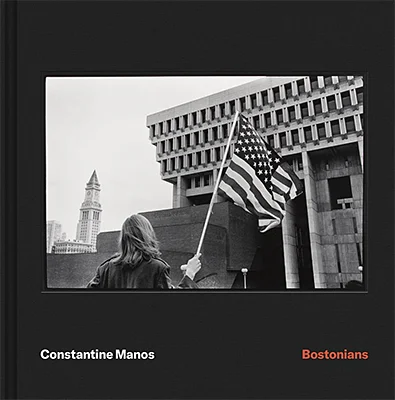
documentation, the Earth reveals itself as both architect and storyteller. Across continents and scales, from

microscopic mineral blooms to vast aerial geometries, the images trace a living grammar of pattern, rhythm, and
resonance that connects the intimate to the immense.
KAOS by Albert Watson is far more than a retrospective monograph spanning more than fifty years of photography. To me, it immediately felt like an object of art—something that insists on being present. With its imposing XL format and nearly eleven pounds, it’s not a book you casually leave on the side of a sofa or slip into a shelf. You place it somewhere with intention. On a table, in full view. Not just as decoration, but as something that invites attention, something you return to
Venezuelan Youth by Silvana Trevale is a powerful photography project exploring identity, resilience, and coming of age in contemporary Venezuela. Blending documentary and portraiture, the series offers an intimate and poetic perspective on youth navigating life amid social and economic challenges. Published by Guest Editions, this compelling body of work redefines visual narratives around Venezuela through sensitivity, depth, and hope.
Still Life: A Photographer’s Journey Through Grief and Gardening by Jane Fulton Alt presents forty-five photographs of a native garden and the flowers and plants that inhabit it. Following the unexpected death of her husband, Howard, Alt assumed responsibility for the nascent ecosystem he had planted in response to his growing concern over climate change. What began as daily stewardship gradually became a source of creative focus and sustenance amid mourning.
Seasons of Time is an intimate photographic exploration of transformation, identity, and the passage of time. Through deeply personal imagery, photographer Nathalie Rubens presents a visual dialogue between two interconnected yet profoundly different stages of life: the emergence into young adulthood and the transition into post-menopausal womanhood. The project brings together portraits of Rubens and her daughter Ruby, creating a powerful meditation on aging, family bonds, and the cyclical nature of human experience.