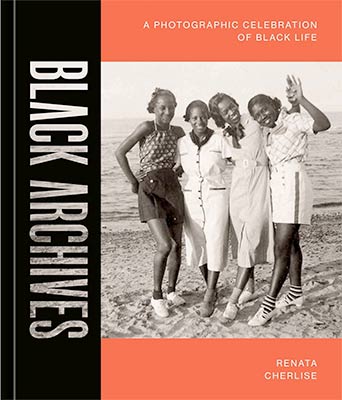
Renata Cherlise’s family loved capturing their lives in photographs and home movies, sparking her love of archival photography. Following in her family’s footsteps, Cherlise established Black Archives, which presents a nuanced representation of Black people across time living vibrant, ordinary lives. Through the platform, many have discovered and shared images of themselves and their loved ones experiencing daily life, forming multidimensional portraits of people, places, and the Black community. These photographs not only tell captivating stories, they hold space for collective memory and kinship.
Black Archives is a stunning collection of timeless images that tell powerful, joyful stories of everyday life and shed light on Black culture’s dynamic, enduring influence through the generations. The images showcase reunions, nights out on the town, parents and children, church and school functions, holidays, big life events, family vacations, moments at home, and many more occasions of leisure, excitement, reflection, and pride.
Featuring more than three hundred images that spotlight the iconic and the candid, Black Archives offers a nuanced compendium of Black memory and imagination.
The historical trajectory of Black liberation in the United States finds a powerful new resonance in Black Freedom: A Visual History of Juneteenth and Emancipation Days. This publication serves as the first comprehensive pictorial record of the varied traditions that emerged following the end of chattel slavery, moving beyond the singular narrative of June 19, 1865. While Juneteenth became a federal holiday in 2021, marking the arrival of Union General Gordon Granger in Galveston, Texas, this volume highlights a much broader constellation of observances. From the August 1st West Indies Emancipation Day to regional "Watch Night" services, the book documents how formerly enslaved people and their descendants crafted a distinct culture of remembrance across the American landscape.
The visual archive curated within these pages spans over a century and a half, featuring a compelling mix of early tintypes, documentary photography, and contemporary fine art. These images capture the evolution of freedom celebrations from clandestine gatherings in "Emancipation Parks" to massive public parades that challenged the racial hierarchies of the Jim Crow era. The narrative, provided by award-winning historians, contextualizes these photographs not merely as nostalgic records of festivities, but as evidence of political resistance. These rituals provided a vital platform for community organizing, education, and the public assertion of citizenship during periods when Black Americans were systematically denied basic civil rights.
By weaving together personal stories with broader historical analysis, the work illuminates the sophisticated ways in which Black communities sustained their collective memory. The photographs reveal the meticulous attention to attire, the prominence of the church, and the central role of veterans in these early processions. This history emphasizes that liberation was never a single static event, but a persistent, multi-generational process. As these celebrations continue to evolve in the twenty-first century, Black Freedom stands as an essential document of the enduring resilience and intellectual labor required to maintain the promise of liberty in the face of ongoing struggle.
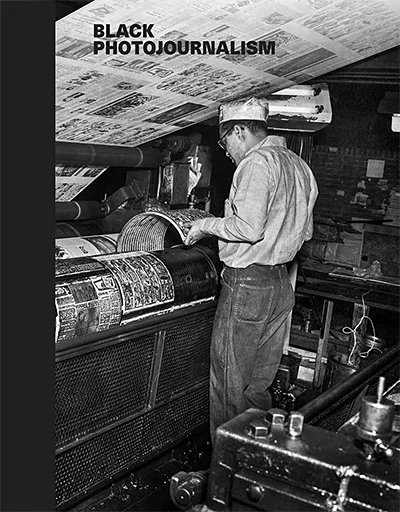
Black Photojournalism stands as a powerful chronicle of Black American life over four pivotal decades — from the end of World War II in 1945 through to the mid-1980s. This sweeping survey brings together the work of nearly sixty Black photographers who documented history as it happened: civil-rights protests, community gatherings, everyday life, cultural events, political rallies — and through their lenses, laid bare a vision of America too often ignored by mainstream media.
The book gathers more than 1000 images drawn from archives held in newspapers, libraries, museums, and private collections — photos that circulated in Black-owned media outlets such as the Pittsburgh Courier, Atlanta Daily World, the Afro American News, Chicago Defender, and Ebony. Through these pages, we discover how Black publishers and journalists forged their own networks of storytelling, giving communities the dignity of self-representation and preserving moments of struggle, solidarity, celebration, and everyday life.
Portraits and documentary scenes alike capture the complexities of post-war America: segregation and migration, activism and resistance, cultural renaissance and political mobilization. Photographers such as Gordon Parks, Charles "Teenie" Harris, Kwame Brathwaite and Ming Smith — among many others — contribute their distinct voices, composing a multifaceted portrait of Black experience in America.
More than a historical record, the collection demonstrates how photojournalism became a form of resistance and empowerment — a way for Black Americans to narrate their own stories and define their identity during times of upheaval. The volume also situates itself within a wider cultural and scholarly conversation, with essays and analyses drawn from historians, curators, archivists and media scholars, contextualizing the images within race, power, media representation and collective memory.
Black Photojournalism is thus both archive and testament — a tribute to those who dedicated their craft to witnessing beauty, struggle, joy and change. It reconnects us with voices and lives too long marginalized, and reminds us that representation matters. Through these photographs, we gain not only historical insight but also a deeper appreciation of visual storytelling’s power to affirm identity, resist injustice, and shape collective memory for generations to come.
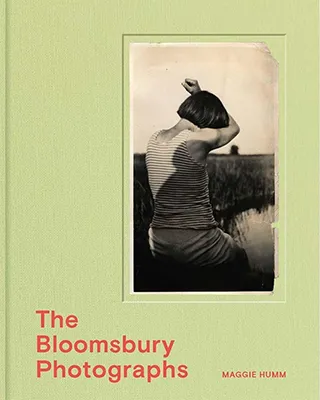
The Bloomsbury Group in Focus by Maggie Humm offers an enthralling and intimate portrait of the influential Bloomsbury Group through a rich collection of personal photographs. Drawing from the extensive photo albums kept by Virginia Woolf, Vanessa Bell, Dora Carrington, Lytton Strachey, and others, this book provides a unique window into the private world of these celebrated figures.
Humm’s curated selection of images captures the everyday lives and relationships of the Bloomsbury Group with remarkable intimacy. Rather than formal portraits, these photographs depict the group in their domestic environments—engaging in pastimes, surrounded by children, clothed in distinctive styles, and accompanied by servants and pets. The collection reveals their homes, holidays, and the textures of their personal worlds, bringing to life a side of Bloomsbury that feels tactile and immediate.
Some of the photographs are blurred, suggesting moments captured in haste, while unguarded close-ups reflect the complex and deeply emotional ties between the group’s members. These are not just historical documents but testimonies to the intricate web of friendships, romances, and empathetic connections that defined the Bloomsbury Group.
By weaving these images together, Humm presents a fresh and nuanced view of Bloomsbury, portraying the group not only as intellectuals and artists but as real people living richly connected lives. The Bloomsbury Group in Focus is an essential read for anyone interested in the intersections of art, photography, and the personal histories of one of the 20th century’s most iconic collectives.
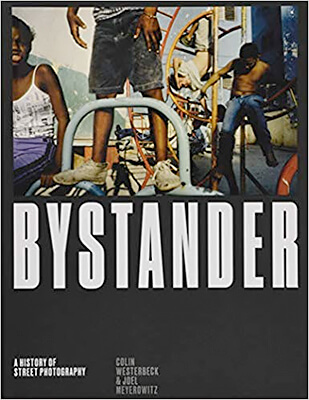
In this book, the authors explore and discuss the development of one of the most interesting and dynamic of photographic genres. Hailed as a landmark work when it was first published in 1994, Bystander is widely regarded by street photographers as the "bible" of street photography.
It covers an incredible array of talent, from the unknowns of the late 19th century to the acknowledged masters of the 20th, such as Atget, Stieglitz, Strand, Cartier-Bresson, Brassai, Kertesz, Frank, Arbus, Winogrand, and Levitt to name just a few.
In this new and fully revised edition, the story of street photography is brought up to date with a re-evaluation of some historical material, the inclusion of more contemporary photographers, and a discussion of the ongoing rise of digital photography.
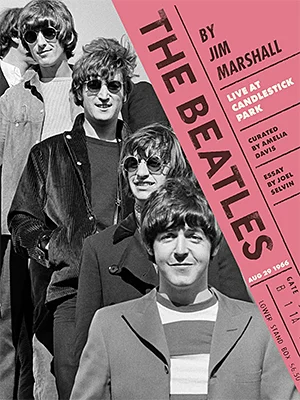
The final public performance of the Beatles at San Francisco’s Candlestick Park remains one of the most storied chapters in music history, marking the end of a touring era that defined a global phenomenon. On August 29, 1966, the band stepped onto a makeshift stage surrounded by a chain-link fence, playing a brief set to a crowd of roughly 25,000 fans. While the technical conditions of the night were famously chaotic, the visual record of the event was secured by Jim Marshall, the only photographer granted unrestricted access to the band’s inner circle during their stay. This historic convergence between the premier chronicler of rock culture and the world’s most influential group is now preserved in a deluxe volume titled The Beatles by Jim Marshall: Live at Candlestick Park 1966.
Marshall’s unique standing as a trusted peer allowed him to bypass the frantic energy of Beatlemania to capture the exhaustion and camaraderie that characterized the group's final days on the road. The collection features over 150 photographs, including rare proof sheets and a significant number of images that remained hidden in archives for six decades. Beyond the wide-angle shots of the windy stadium, the book documents the quiet tension of the locker room and candid interactions with figures such as Joan Baez and her sisters. These photographs utilize the high-contrast tones and sharp clarity that became Marshall’s signature, offering a raw, unfiltered perspective on the musicians before they retreated into the studio experimentation of the late 1960s.
As the 60th anniversary of this landmark performance arrives in 2026, the publication provides a vital reassessment of the band’s transition away from the stage. Accompanied by an essay from music historian Joel Selvin, the imagery serves as a definitive document of the moment the Beatles decided to stop being a live act. Marshall, who famously documented the Monterey Pop Festival and Johnny Cash at Folsom Prison, treats the Candlestick Park show with the same journalistic integrity and artistic flair that defined his career. The result is an essential artifact for historians and collectors alike, capturing the precise second the four men from Liverpool stepped off the stage and into legend.
By Jean Back, Gabriel Bauret, Antoinette Lorang, Françoise Poos
Publisher : D.A.P./Distributed Art Publishers
2012 | 288 pages
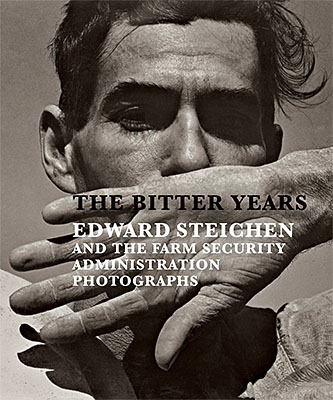
The Bitter Years was the title of a seminal exhibition held in 1962 at The Museum of Modern Art, New York, curated by Edward Steichen, and 2012 marks its fiftieth anniversary. The show featured 209 images by photographers who worked under the aegis of the U.S. Farm Security Administration (FSA) in 1935-41, as part of Roosevelt's New Deal. The FSA, set up to combat rural poverty during the Great Depression, included an ambitious photography project that launched many photographic careers, most notably those of Walker Evans and Dorothea Lange. The exhibition featured their work as well as that of ten other FSA photographers, including Ben Shahn, Carl Mydans and Arthur Rothstein. Their images are among the most remarkable in documentary photography--testimonies of a people in crisis, hit by the full force of economic turmoil and the effects of drought and dust storms. This volume includes all the photographs in the original show, in a structure and sequence that reflect those devised by Steichen for the exhibition.
For some travelers, a hotel is simply a place to stay. For LEONE, it is an experience shaped by atmosphere, people, and a sense of belonging. His third book, *A Place We Like*, grew out of a years-long search for that elusive feeling. Published as the inaugural title under the Leisure imprint of C41 Magazine, the project serves as both a visual guide to some of Europe’s most remarkable hotels and a personal reflection on the meaning of hospitality.
Discover Crossing, Kaplan’s powerful documentary photography project capturing Roxham Road, the irregular Canada-US border crossing used by refugees from 2018 to 2023.
Spurred by Trump-era immigration policies, this tiny site between New York and Quebec became a safe, highly unusual microcosm of global migration. Over four years, Kaplan photographed the entire ecosystem—from local cab drivers and border police to the asylum-seekers themselves. Moving past traditional media tropes of victimhood, these photographs challenge stereotypes to highlight the immense courage and resilience required to step into an unknown future before the site's closure in 2023.
I have spent years looking at Lee Friedlander’s America. It has always been a country of sharp angles, cluttered street corners, and shadows that seem to swallow the photographer whole. So when I picked up his latest monograph, Life Still, I expected the familiar noise of his world. Instead, I found something stranger: a 91-year-old master holding his breath.
Part of a bigger journey of liberation through self-exploration, this new photobook by Jo Ann Chaus is above all a collection of self-portraits, complemented by landscapes, still lifes and domestic interiors observed and inhabited by the photographer-cum-model
Blending photography and poetry, Burnt Eyes explores nostalgia, memory, and identity, offering a profound reflection on the complexities of belonging and the stories that shape us.
Seasons of Time by Nathalie Rubens is an intimate and fearless photobook exploring the emotional distance and deep connection between mother and daughter, while confronting the beauty, vulnerability, and physical reality of a woman’s aging body with rare honesty.
1804 continues Rich-Joseph Facun’s exploration of life in the Appalachian foothills of Southeast Ohio, this time turning his lens toward the local university and its complex, symbiotic relationship with the surrounding community.
GOST Books presents Robin Bernstein’s debut photobook MAPALAKATA, a compelling visual investigation into landscape, memory, and the layered histories of Southern Africa. The project offers a nuanced reflection on how geography is not only inhabited, but continually rewritten through movement, extraction, and shifting narratives of belonging.