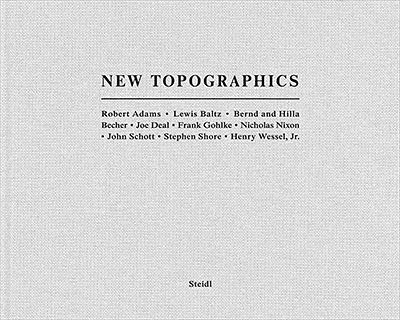
The 1975 exhibition at the George Eastman House in Rochester, New York, stands as a watershed moment that permanently altered the trajectory of landscape photography. Curated by William Jenkins, New Topographics: Photographs of a Man-Altered Landscape dismantled the romanticized traditions of the American wilderness popularized by figures like Ansel Adams. In their place, it installed a rigorous, detached aesthetic focused on the intrusion of human industry and suburban sprawl. This movement introduced a radical objectivity, where the camera functioned as a surveying tool rather than a romantic brush, capturing the stark reality of industrial parks, motels, and tract housing with a deliberate lack of emotional theater.
The original group of ten photographers—including Robert Adams, Lewis Baltz, Stephen Shore, and the influential German duo Bernd and Hilla Becher—represented a bridge between traditional craftsmanship and the burgeoning world of conceptual art. While their work appeared at first glance to be purely informational and topographic, it signaled a profound paradigm shift. By focusing on the "man-altered" terrain, these artists highlighted the mundane and the overlooked, finding a new kind of visual language in the grey geometry of the modern environment. Their collective vision established what many historians now consider the first truly photoconceptual style, influencing generations of artists who had not yet been born when the first catalog went to press.
Half a century later, the legacy of this exhibition continues to resonate within the contemporary art world. This meticulous reimagining of the original catalog, led by curator Britt Salvesen, provides an essential reassessment of how these ten individuals redefined our relationship with the land. Through installation views and comparative analysis, the volume traces the enduring impact of a style that once claimed to eschew beauty, yet ultimately found a profound, haunting significance in the ordinary. It remains a vital document for understanding the transition of photography from a niche documentary practice into a central pillar of fine art.
Patterns: Art of the Natural World (Damiani) documents photographer Jon McCormack's meditation on the
geometric patterns that define our planet's most breathtaking landscapes and ecosystems. Through McCormack's
documentation, the Earth reveals itself as both architect and storyteller. Across continents and scales, from
microscopic mineral blooms to vast aerial geometries, the images trace a living grammar of pattern, rhythm, and
resonance that connects the intimate to the immense.
KAOS by Albert Watson is far more than a retrospective monograph spanning more than fifty years of photography. To me, it immediately felt like an object of art—something that insists on being present. With its imposing XL format and nearly eleven pounds, it’s not a book you casually leave on the side of a sofa or slip into a shelf. You place it somewhere with intention. On a table, in full view. Not just as decoration, but as something that invites attention, something you return to
Venezuelan Youth by Silvana Trevale is a powerful photography project exploring identity, resilience, and coming of age in contemporary Venezuela. Blending documentary and portraiture, the series offers an intimate and poetic perspective on youth navigating life amid social and economic challenges. Published by Guest Editions, this compelling body of work redefines visual narratives around Venezuela through sensitivity, depth, and hope.
Still Life: A Photographer’s Journey Through Grief and Gardening by Jane Fulton Alt presents forty-five photographs of a native garden and the flowers and plants that inhabit it. Following the unexpected death of her husband, Howard, Alt assumed responsibility for the nascent ecosystem he had planted in response to his growing concern over climate change. What began as daily stewardship gradually became a source of creative focus and sustenance amid mourning.
Seasons of Time is an intimate photographic exploration of transformation, identity, and the passage of time. Through deeply personal imagery, photographer Nathalie Rubens presents a visual dialogue between two interconnected yet profoundly different stages of life: the emergence into young adulthood and the transition into post-menopausal womanhood. The project brings together portraits of Rubens and her daughter Ruby, creating a powerful meditation on aging, family bonds, and the cyclical nature of human experience.
“It’s unclear who first said, ‘The best camera in the world is the one in your hand,’ or words to that effect, but most of the photographs in this book are the result of having one, or sometimes two with me while on brief holidays or visiting people around Britain.” – Berris Conolly
Released today by Reporters Without Borders, Malick Sidibé, 100 Photos for Press Freedom celebrates the work of one of the most influential photographers of the twentieth century.
Through a selection of iconic images, the album revisits the vibrant world of Malick Sidibé, whose photographs captured the spirit of a generation coming of age in post-independence Mali.
In the winter of 2021, Luke Oppenheimer arrived in the Tien Shan mountains of central Kyrgyzstan with a straightforward assignment: document the wolves that prey on livestock in the remote shepherding village of Ottuk. Each year, wolves descend from the high ridges to kill dozens of horses and countless sheep. For families whose wealth is measured in hooves and wool, these losses are catastrophic. The men ride into the mountains during the harshest winter months to track and hunt the predators, navigating blizzards and subzero nights in defense of their herds.
The Inner Passage: An Untold Story of Black Resistance Along a Southern Waterway is a groundbreaking photographic and historical project by Charleston-based photographer Virginia McGee Richards, published by MIT Press in April 2026. The work uncovers a little-known chapter of American history, revealing a 300-mile network of colonial-era canals—called “cuts”—dug by enslaved people between the 17th and 18th centuries along the Atlantic coastline from Charleston, South Carolina to St. Augustine, Florida.