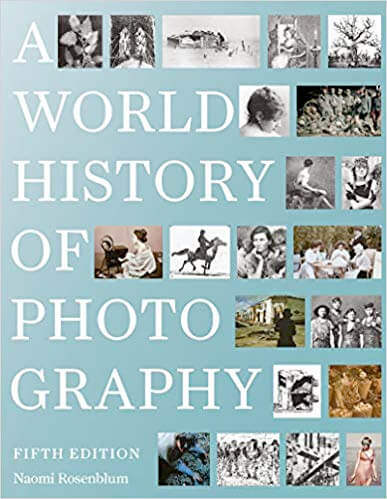
Naomi Rosenblum's classic history of photography traces the evolution of this young art form chronologically and thematically. Exploring the diverse roles that photography has played in the communication of ideas, Rosenblum devotes special attention to topics such as portraiture, documentation, advertising, and photojournalism, and to the camera as a means of personal artistic expression. Her text is illustrated with nearly nine hundred images by photographers both celebrated and little known, arranged in stimulating juxtapositions that illuminate their visual power.
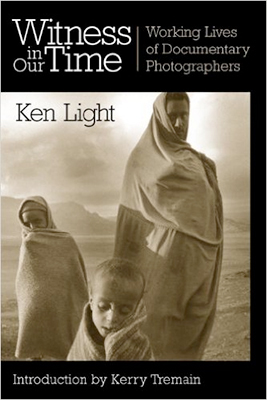
Illustrated with a compelling image from each photographer, Witness in Our Time traces the recent history of social documentary photography in the words of twenty-two of the genre's best photographers, editors, and curators, showing that the profession remains vital, innovative, and committed to social change. Featuring interviews with Hansel Mieth, Walter Rosenblum, Michelle Vignes, Wayne Miller, Peter Magubane, Matt Herron, Jill Freedman, Mary Ellen Mark, Earl Dotter, Eugene Richards, Susan Meiselas, Sebastião Salgado, Graciela Iturbide, Antonin Kratochvil, Donna Ferrato, Joseph Rodriguez, Dayanita Singh, Fazal Sheikh, Gifford Hampshire, Peter Howe, Colin Jacobson, and Ann Wilkes Tucker
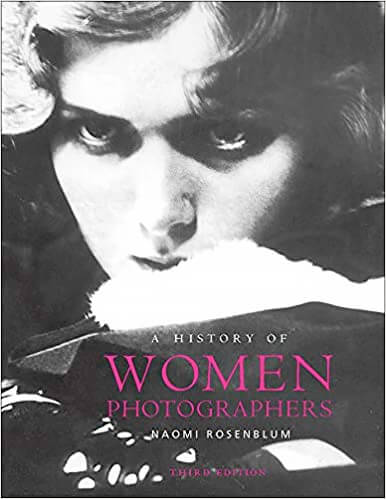
Women have had a special relationship with the camera since the advent of photographic technology in the mid-nineteenth century. Photographers celebrated women as their subjects, from intimate family portraits and fashion spreads to artistic photography and nude studies, including Man Ray's Violon d'Ingres. Lesser known - and lesser studied - is the history of women photographers, who continue to make invaluable contributions to this flourishing art form.
Featuring more than 300 illustrations, A History of Women Photographers is the only comprehensive survey of women photographers from the age of the daguerreotype to the present day. In this edition, author Naomi Rosenblum expands the book's coverage to include additional photographers and fourteen new images. The text and the appendix of photographer biographies have been revised throughout, and Rosenblum also provides a new afterword, in which she evaluates the influence of rapidly changing digital technology on the field of photography and the standing of women photographers in the twenty-first century.
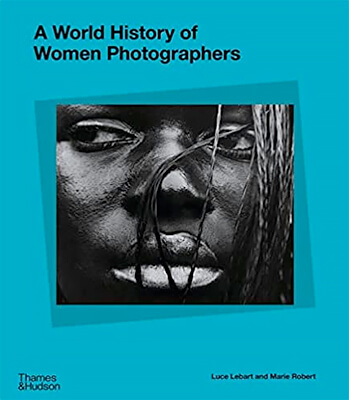
A magnificently illustrated history showcasing the work of three hundred women photographers from all over the world, from the invention of the medium through to the present.
Since the invention of the camera, women photographers have been key innovators in the medium and members of all major photography movements. These are artists who never stopped documenting, questioning, and transforming the world, breaking down social boundaries, challenging gender roles, and expressing their imagination and sexuality.
To capture the diversity of this global body of work, authors Luce Lebart and Marie Robert have invited 160 international women writers to contribute to this bold and beautifully illustrated manifesto.
Spanning from 1850 to the present day, and including images by Helen Levitt, Carrie Mae Weems, Hannah Höch, Sarah Moon, Eve Arnold, and Shirin Neshat, among many others, A World History of Women Photographers is an invaluable work of reference.
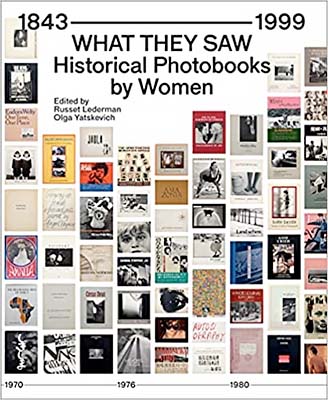
What They Saw: Historical Photobooks by Women, 1843 – 1999, 10×10's most recent “book-on-photobooks” anthology in its ongoing examination of photobook history, explores photobooks created by women from photography's beginnings to the dawn of the 21st century. Presenting a diverse geographic and ethnic selection, the anthology interprets historical photobooks by women in the broadest sense possible: classic bound books, portfolios, personal albums, unpublished books, zines and scrapbooks. Some of the books documented are well-known publications such as Anna Atkins' Photographs of British Algae: Cyanotype Impressions (1843-1853), Germaine Krull's Métal (1928) and Diane Arbus: An Aperture Monograph (1972), while other books may be relatively unknown, such as Alice Seeley Harris' The Camera and the Congo Crime (c. 1906), Varvara Stepanova's Groznyi smekh. Okna Rosta (1932), Eslanda Cardozo Goode Robeson's African Journey (1945), Fina Gómez Revenga's Fotografías de Fina Gómez Revenga (1954), Eiko Yamazawa's Far and Near (1962) and Gretta Alegre Sarfaty's Auto-photos: Série transformações-1976: Diário de Uma Mulher-1977 (1978). Also addressed in the publication are the glaring gaps and omissions in current photobook history-in particular, the lack of access, support and funding for photobooks by non-Western women and women of color.
Aperture PhotoBook Awards: Winner of Photography Catalogue of the Year 2021
By Helen Ennis, Amanda Maddox, Abigail Solomon-Godeau, Carla Williams, Yuri Yamada
Publisher : Hatje Cantz
2026 | 336 pages
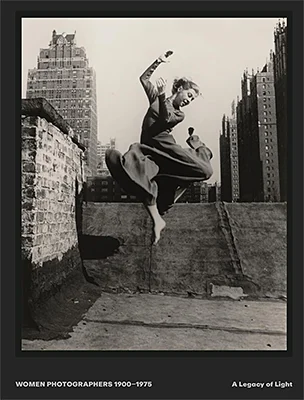
Women Photographers 1900–1975: A Legacy of Light offers a sweeping journey through seven decades of photographic innovation shaped by women whose vision transformed the medium. Spanning continents, artistic movements and political upheavals, this volume gathers more than 80 photographers into a rich, interconnected narrative—one that restores their rightful place in the history of modern image-making. It traces how these artists navigated changing social landscapes while forging new approaches to portraiture, reportage, abstraction and experimental practice.
The book moves fluidly from the modernist precision of Florence Henri to the raw psychological intensity of Diane Arbus, revealing how each generation built on the breakthroughs of the last. It highlights the fearlessness of pioneers such as Dorothea Lange and Margaret Bourke-White, whose documentary work chronicled the human cost of global hardship, as well as the bold formal explorations of Lucia Moholy, Germaine Krull and Lola Álvarez-Bravo. Their images shaped the way the 20th century saw itself—yet their stories often remained in the margins.
By bringing together both celebrated figures and lesser-known independent voices, the publication acts as a corrective to the traditional photographic canon. It foregrounds the role women played not only as observers, but as technical innovators, educators and artistic leaders. Many challenged restrictive norms and introduced new visual languages: Helen Levitt’s poetic street scenes, Ruth Orkin’s cinematic framing, Francesca Woodman’s haunting self-interrogations, or Eiko Yamazawa’s vibrant experiments with color and form.
Richly illustrated and carefully researched, A Legacy of Light serves as both inspiration and documentation. It underscores how these photographers expanded the boundaries of the medium at moments when their contributions were too often overlooked or undervalued. In recounting their distinct paths and shared resilience, the book reveals a lineage of creativity that continues to influence visual culture today.
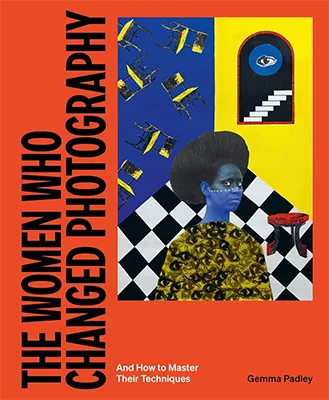
The Women Who Changed Photography: And How to Master Their Techniques is a compelling exploration of 50 trailblazing female photographers whose groundbreaking work reshaped the history of photography. Often overshadowed by their male peers, these visionary women developed innovative techniques and unique styles, documenting everything from war and fashion to everyday life. They not only paved the way for future generations but continue to inspire photographers to this day.
The book features iconic figures such as Anna Atkins, Imogen Cunningham, Nadine Ijewere, Lee Miller, Shirin Neshat, Lorna Simpson, Cindy Sherman, Zanele Muholi, and Ingrid Pollard. Each section highlights their contributions, illustrating how their work has transformed the way we see the world and photography itself. Beautifully illustrated with full-color images of both the photographers and their creations, the book provides a rich visual journey through the evolution of the medium.
In addition to celebrating these pioneering women, the book offers practical advice on how to incorporate their techniques and styles into your own photography. With step-by-step instructions, readers can learn to master the approaches that made these photographers iconic and bring a fresh perspective to their own work.
For those eager to understand and emulate the styles of these influential artists, The Women Who Changed Photography serves as both a historical tribute and a practical guide. It's an essential read for anyone interested in photography and the lasting impact of women in the field.
Follow the fascinating threads of human history in this monumental volume, amply illustrated with maps, archival imagery, and revealing photographs.
History comes to life in this comprehensive overview of humankind, from earliest times to the present day. Each page is filled with stunning visuals and thought-provoking text that make this book an instant classic. From the Babylonian Empire to the Persian Gulf War, from the Xia and Shang Dynasties of Bronze Age China to the new space race, from Egyptian hieroglyphics to the digital age-here, in vivid color and crisp narrative, is the sweeping story of the history of civilization.
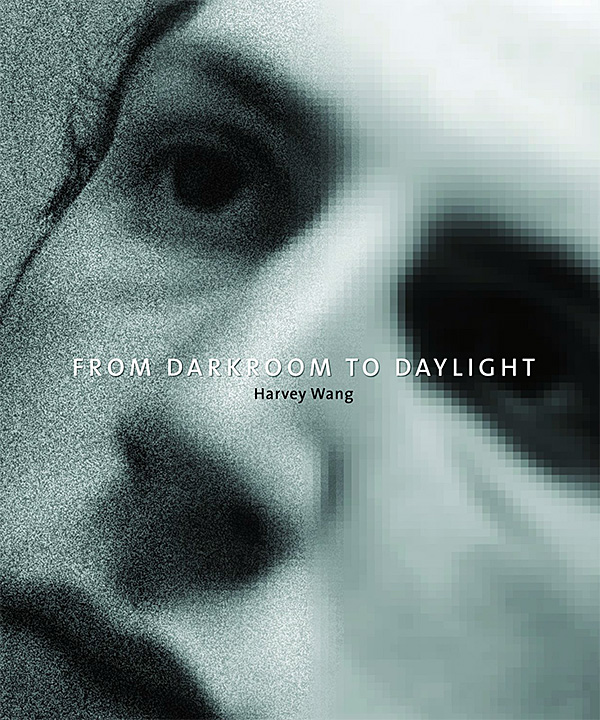
From Darkroom to Daylight explores how the dramatic change from film to digital has affected photographers and their work. Harvey Wang interviewed and photographed more than 40 important photographers and prominent figures in the field, including Jerome Liebling, George Tice, Elliott Erwitt, David Goldblatt, Sally Mann, Gregory Crewdson, Susan Meiselas and Eugene Richards, as well as innovators Steven Sasson, who built the first digital camera while at Kodak, and Thomas Knoll, who, along with his brother, created Photoshop. This collection of personal narratives and portraits is both a document of this critical moment and a unique history of photography. Much of Wang's work has been about disappearance-of trades, neighborhoods, ways of life-and to live through this transition in his own craft has enabled him to illuminate the state of the art as both an insider and a documentary photographer.
Bringing together a group of stylistically diverse but similarly adventurous and innovative artists, this book explores the intense creative experimentation in photography that has occurred since the 1970s. Few people ask, "What is a painting? A drawing? A sculpture?" But the medium of photography, especially since the 1970s, has been constantly changing as technological developments allow for endless experimentation--until the very definition of a photograph becomes ripe for debate. Beginning with the waning days of conceptual art, this book presents a wide variety of artists--among them James Welling, Christopher Williams, Marco Breuer, Alison Rossiter, Sigmar Polke, and Gerhard Richter--who have reconsidered and reinvented the role of light, color, composition, materiality, and subject in the art of photography. Brought together for the first time in book form, these individuals have found new ways of implementing both analog and digital technology, in many cases creating hybrid works that open up new possibilities for today's artists. Filled with brilliant color reproductions, this volume not only traces the many strands of experimentation that have developed out of conceptual art, but also encourages dialogue on the continuing experimentation that is occurring as photography continues to evolve within the analog and digital worlds.
In the winter of 2021, Luke Oppenheimer arrived in the Tien Shan mountains of central Kyrgyzstan with a straightforward assignment: document the wolves that prey on livestock in the remote shepherding village of Ottuk. Each year, wolves descend from the high ridges to kill dozens of horses and countless sheep. For families whose wealth is measured in hooves and wool, these losses are catastrophic. The men ride into the mountains during the harshest winter months to track and hunt the predators, navigating blizzards and subzero nights in defense of their herds.
Spanning more than a decade of journeys and visual discoveries, Stories Untold is the ambitious new publication by internationally acclaimed photographer Calla Fleischer, a traveler whose lens is guided as much by curiosity as by empathy. Expansive in both scale and spirit, the nearly 400-page volume gathers a rich tapestry of images that explore the subtleties of the human experience—from fleeting gestures in crowded streets to quiet, contemplative portraits that linger long after the page is turned.
The Inner Passage: An Untold Story of Black Resistance Along a Southern Waterway is a groundbreaking photographic and historical project by Charleston-based photographer Virginia McGee Richards, published by MIT Press in April 2026. The work uncovers a little-known chapter of American history, revealing a 300-mile network of colonial-era canals—called “cuts”—dug by enslaved people between the 17th and 18th centuries along the Atlantic coastline from Charleston, South Carolina to St. Augustine, Florida.
"Another Time, Another Place" is an homage to New York City in the 1980s, when it was raw, chaotic, and alive with possibility. Downtown Manhattan was a place where art, music, performance, and nightlife collided—igniting a cultural revolution that still echoes today.
Where Do I Go? is the newest photobook by Rania Matar, bringing together approximately 128 color portraits of young women living in Lebanon today. Released in the shadow of the fiftieth anniversary of the Lebanese Civil War, the book offers a meditation on life shaped by prolonged instability, without allowing conflict to dominate the narrative. Instead of foregrounding destruction, Matar centers creativity, dignity, and resilience, crafting a body of work that quietly insists on the complexity of everyday existence amid uncertainty.
Award-winning Palestinian photographer Ahmad Al-Bazz presents a groundbreaking new work, The Erasure of Palestine, the result of a three-year journey documenting the remnants of hundreds of Palestinian villages and towns depopulated and destroyed from 1948 to the present. Through his lens, Al-Bazz confronts history, memory, and contemporary occupation, offering a stark counter-narrative to the dominant historical record.
With Cockaigne, Austrian photographer Gregor Sailer directs his gaze toward the largely unseen machinery of contemporary food production. Drawing inspiration from the medieval legend of the “Land of Cockaigne” — a fantasy of limitless abundance — Sailer examines the very real systems, technologies, and infrastructures that underpin how food is produced, distributed, and controlled today. The book challenges readers to rethink ideas of nourishment, consumption, and collective responsibility.
In 1998, the Good Friday Agreement was signed in Belfast, signaling peace following 30 years of sectarian violence in Northern Ireland known as The Troubles. Photographer Julie McCarthy photographed annually for five years on Shankill Road, a one-mile Protestant/Loyalist enclave running parallel to the Catholic/Republican area. A wall called the “Peace Wall” divides the two communities.
For the first time, Jo Spence: The Unknown Recordings brings together the full transcripts of key historic recordings made with and by the acclaimed British photographer, writer, and feminist Jo Spence (1934–1992), alongside a wealth of unpublished photographs and documents. This landmark book offers an intimate window into the life, work, and politics of one of the most influential figures in British documentary photography.