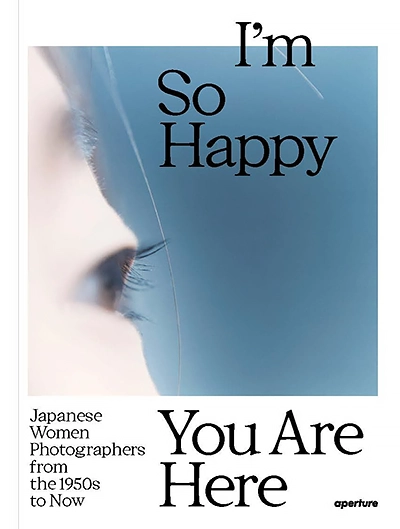
I’m So Happy You Are Here presents a much-needed counterpoint, complement, and challenge to historical precedents and the established canon of Japanese photography. This restorative history presents a wide range of photographic approaches brought to bear on the lived experiences and perspectives of women in Japanese society. Editors Pauline Vermare and Lesley A. Martin, curator and writer Takeuchi Mariko, and photo-historians Carrie Cushman and Kelly Midori McCormick provide a critical historical and contemporary framework for understanding the work in three richly illustrated essays. Additional context is provided by an in-depth illustrated bibliography by Marc Feustel and Russet Lederman, and a selection of key critical writings from leading Japanese curators, critics, and historians such as Kasahara Michiko, Fuku Noriko, and others, many of which will be published in translation for the first time. While this book does not claim to be fully comprehensive or encyclopedic, its goal is to provide a solid foundation for a more thorough conversation about the contributions of Japanese women to photography—and an indispensable resource for anyone interested in a more robust history of Japanese photography.
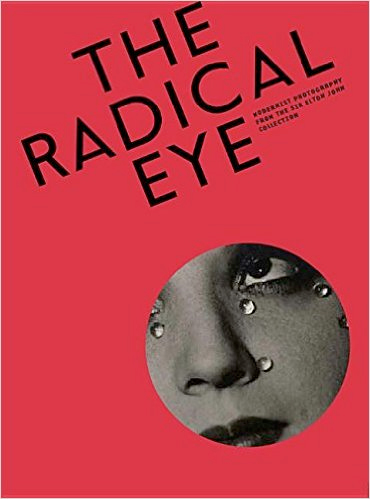
Sir Elton John, musician and philanthropist, has built one of the greatest private collections of photography in the world. This book presents an unparalleled selection of modernist images, which introduce a crucial moment in the history of photography when artists were beginning to use the camera and darkroom to redefine and transform visions of the modern world. Technological advancements gave artists the freedom to experiment and test the limits of the medium enabling new imaginings of portraits, nudes and still lifes; and street life and the modern world was captured from a new, uniquely modern perspective. Showcasing only original vintage prints by the artists themselves, the book features key figures from the 1920s to 1950s, such as Brassai, Andre Kertesz, Dorothea Lange, Tina Modotti, Man Ray, Edward Steichen and Alexander Rodchenko. Also includes a newly commissioned interview with Sir Elton John and essays on modernist photography and technology and innovation by Dawn Ades and Shoair Mavlian.
The public profile of the Japanese photography book has recently boomed, from near-complete obscurity to great desirability. And not only for the aficionados. Photobooks that once were entirely unknown outside Japan (except to a few well-informed scholars and collectors) now sell at astronomical prices at auctions and online. And yet the photobook has been central to the development of Japanese photography, particularly in its postwar phase. To sketch the stages of this boom: 1999's Fotografia Publica included just one Japanese photobook, Kiyoishi Koishi's Early Summer Nerves of 1937, plus two photo magazines from the 1930s, Nippon and Koga; Andrew Roth's The Book of 101 Books (2001) listed four seminal titles by Hosoe, Kawada, Araki and Moriyama; but it was not until 2004, with the first volume of Martin Parr and Gerry Badger's indispensable The Photobook: A History, that it began to be clear what a rich body of work awaited excavation. Japanese Photobooks of the 1960s and 70s may be seen as a culmination of this trajectory and, as such, marks a very exciting moment in photo publishing and in the history of photography. It presents 40 definitive publications from the era, piecing together a previously invisible history from some of the most influential works, as well as from forgotten gems, and situating them against the broader historical and sociological backdrop. Each book, beautifully reproduced through numerous spreads, is accompanied by an in-depth explanatory text, and sidebars highlight important editors, designers, themes and periodicals. A superb production, Japanese Photobooks is a landmark celebration of the distinct character and influence of the Japanese photobook.
For some travelers, a hotel is simply a place to stay. For LEONE, it is an experience shaped by atmosphere, people, and a sense of belonging. His third book, *A Place We Like*, grew out of a years-long search for that elusive feeling. Published as the inaugural title under the Leisure imprint of C41 Magazine, the project serves as both a visual guide to some of Europe’s most remarkable hotels and a personal reflection on the meaning of hospitality.
Discover Crossing, Kaplan’s powerful documentary photography project capturing Roxham Road, the irregular Canada-US border crossing used by refugees from 2018 to 2023.
Spurred by Trump-era immigration policies, this tiny site between New York and Quebec became a safe, highly unusual microcosm of global migration. Over four years, Kaplan photographed the entire ecosystem—from local cab drivers and border police to the asylum-seekers themselves. Moving past traditional media tropes of victimhood, these photographs challenge stereotypes to highlight the immense courage and resilience required to step into an unknown future before the site's closure in 2023.
I have spent years looking at Lee Friedlander’s America. It has always been a country of sharp angles, cluttered street corners, and shadows that seem to swallow the photographer whole. So when I picked up his latest monograph, Life Still, I expected the familiar noise of his world. Instead, I found something stranger: a 91-year-old master holding his breath.
Part of a bigger journey of liberation through self-exploration, this new photobook by Jo Ann Chaus is above all a collection of self-portraits, complemented by landscapes, still lifes and domestic interiors observed and inhabited by the photographer-cum-model
Blending photography and poetry, Burnt Eyes explores nostalgia, memory, and identity, offering a profound reflection on the complexities of belonging and the stories that shape us.
Seasons of Time by Nathalie Rubens is an intimate and fearless photobook exploring the emotional distance and deep connection between mother and daughter, while confronting the beauty, vulnerability, and physical reality of a woman’s aging body with rare honesty.
1804 continues Rich-Joseph Facun’s exploration of life in the Appalachian foothills of Southeast Ohio, this time turning his lens toward the local university and its complex, symbiotic relationship with the surrounding community.
GOST Books presents Robin Bernstein’s debut photobook MAPALAKATA, a compelling visual investigation into landscape, memory, and the layered histories of Southern Africa. The project offers a nuanced reflection on how geography is not only inhabited, but continually rewritten through movement, extraction, and shifting narratives of belonging.