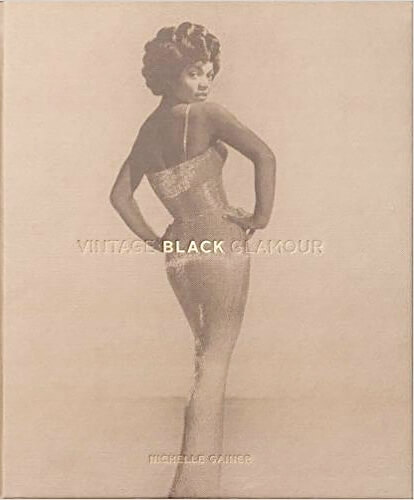
Using rarely accessed photographic archives and private collections, inspired by her family history, Nichelle Gainer has unearthed a revealing treasure trove of historic photographs of famous actors, dancers, writers and entertainers who worked in the 20th-century entertainment business, but who rarely appeared in the same publications as their white counterparts. Alongside the familiar images and stories of renowned performers such as Eartha Kitt, Lena Horne and Aretha Franklin are those of less well-remembered figures such as Bricktop, Pearl Primus, Diana Sands and many, many more. Vintage Black Glamour is a unique, sumptuous and revealing celebration of the lives and indomitable spirit of Black women of a previous era. Although talented, successful and ground-breaking, many of the women in these pages were ignored by mainstream media, but their life's work and attitude stand as inspiration for us still, today. With its stunning photographs and insightful biographies, this book is a hugely important addition to Black history archives.
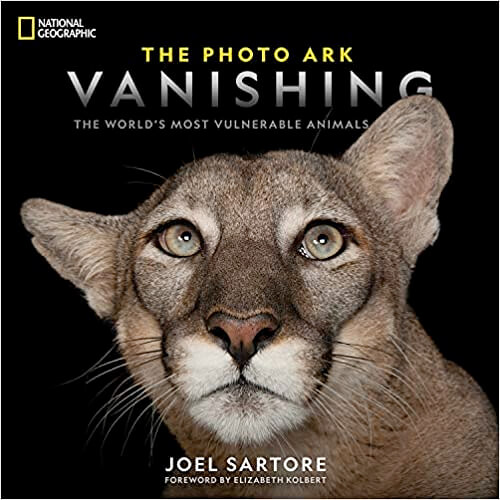
Joel Sartore's quest to photograph all the animal species under human care celebrates its 15th year with this glorious and heartwrenching collection of photographs. The animals featured in these pages are either destined for extinction or already extinct in the wild but still alive today, thanks to dedication of a heroic group committed to their continued survival. From the majestic Sumatran rhinoceros to the tiny Salt Creek tiger beetle, Sartore's photographs bring us eye to eye with the kaleidoscopic diversity of shapes, colors, personalities, and attitudes of the animal world.
In these vivid pages, Sartore singles out the species most likely to disappear in the next decades, as well as some that have already been lost. Alongside these indelible images are the words of scientists and conservationists who are working to protect and restore populations of endangered species. With Sartore's distinctive portrait photography, he invites us to look closer--and to care more.
In the 1960s and 1970s, the artist Ed Ruscha created a series of small photo-conceptual artist's books, among them Twentysix Gas Stations, Various Small Fires, Every Building on the Sunset Strip, Thirtyfour Parking Lots, Real Estate Opportunities, and A Few Palm Trees. Featuring mundane subjects photographed prosaically, with idiosyncratically deadpan titles, these "small books" were sought after, collected, and loved by Ruscha's fans and fellow artists. Over the past thirty years, close to 100 other small books that appropriated or paid homage to Ruscha's have appeared throughout the world. This book collects ninety-one of these projects, showcasing the cover and sample layouts from each along with a description of the work. It also includes selections from Ruscha's books and an appendix listing all known Ruscha book tributes. These small books revisit, imitate, honor, and parody Ruscha in form, content, and title. Some rephotograph his subjects: Thirtyfour Parking Lots, Forty Years Later. Some offer a humorous variation: Various Unbaked Cookies (which concludes, as did Ruscha's Various Small Fires, with a glass of milk), Twentynine Palms (twenty-nine photographs of palm-readers' signs). Some say something different: None of the Buildings on Sunset Strip. Some reach for a connection with Ruscha himself: 17 Parked Cars in Various Parking Lots Along Pacific Coast Highway Between My House and Ed Ruscha's. With his books, Ruscha expanded the artist's field of permissible subjects, approaches, and methods. With VARIOUS SMALL BOOKS, various artists pay tribute to Ed Ruscha and extend the legacy of his books.
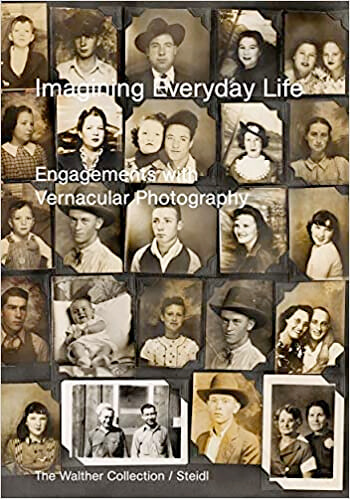
Imagining Everyday Life: Engagements with Vernacular Photography surveys the expansive field of vernacular photography, the vast archive of utilitarian images created for bureaucratic structures, commercial usage and personal commemoration (as opposed to aesthetic purposes). As a crucial extension of its ongoing investigation of vernacular photography, the Walther Collection has collaborated with key scholars and critical thinkers in the history of photography, women's studies, queer theory, Africana studies and curatorial practice to interrogate vernacular's theoretical limits, as well as to conduct case studies of a striking array of objects and images, many from the collection's holdings.
Publisher : MFA Publications, Museum of Fine Arts, Boston
2019 | 192 pages
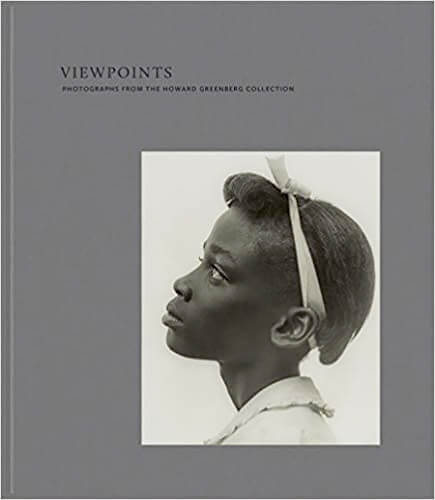
Over the course of the 20th century, photography evolved as an art form while serving as an eyewitness to social, cultural and political change. This book presents more than 80 significant images-many from unique vintage prints-that came to define their times, and invites us to take a fresh look at celebrated photographs by such masters of the medium as Berenice Abbott, Margaret Bourke-White, Robert Capa, Henri Cartier-Bresson, Walker Evans, Robert Frank, Consuelo Kanaga, Dorothea Lange, Gordon Parks and Edward Steichen.
Drawing on the unparalleled Howard Greenberg Collection-446 photographs recently acquired by the Museum of Fine Arts, Boston-Viewpoints brings to vivid life the transformative power of photography, and invites the reader into a collection assembled with a connoisseur's eye by a former photographer who is also a gallery dealer and a strong advocate for artists.
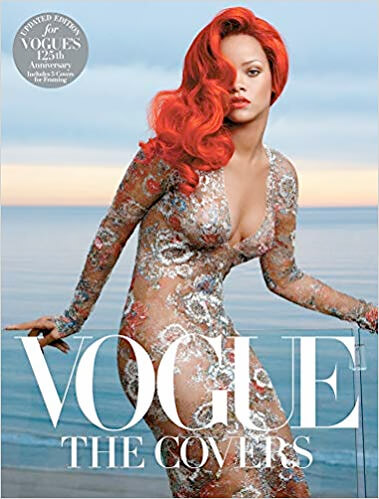
In this stunning updated edition of the successful Vogue: The Covers, Vogue continues to pay tribute to its tradition of beauty and excellence with a compilation of even more spectacular cover art. In addition to featuring classic covers from the magazine's 125-year history, this updated edition features every cover since 2010, with each cover displaying the magazine's cutting-edge takes on style, fashion, and culture. Unforgettable new covers feature such celebrated subjects as Michelle Obama, Kim and Kanye, Lena Dunham, and more. This lavish, beautifully illustrated book even includes five new frameable Vogue cover prints that can be removed from the back of the book. Vogue: The Covers (Updated Edition) is a must-have for every fashion lover and collector.
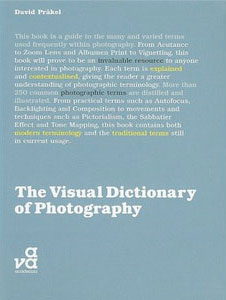
The Visual Dictionary of Photography provides clear definitions of key terms and concepts, backed up by hundreds of illustrative examples. Covering practical terms such as Lens Hood and Sheet Film as well as movements and styles such as Pictorialism and the Photosecession, it deals with the terminology of both digital and traditional photography.
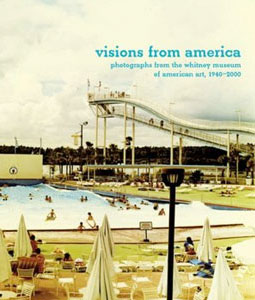
From the street photographs of the 1950s and 1960s to the postmodern imagery of the 1980s, from photography that addressed identity politics in the early 1990s to the new imaging technologies of the last decade, photography has been at the forefront of artistic innovation in America. As this work demonstrates, its capacity for personal expression, for telling stories, and for documenting facts, makes it a medium of eloquence, relevance and lasting power. The Whitney Museum of American Art, which possesses a comprehensive collection of 20th- and 21st-century American art, has concentrated on expanding its photography collection. Representing the work of more than 40 artists, this volume of over 160 photographs highlights the Whitney's collection and provides photographic visions made by artists living and working in the United States from 1940 to 2000. Accompanying an exhibition at the Whitney, this catalogue offers portraits, landscapes, streetscapes, and genre subjects from both emerging and well-known photographers, including Diane Arbus, Harry Callahan, William Eggleston, Lee Friedlander, Nan Goldin, Mary Ellen Mark, Joel Meyerowitz, Cindy Sherman, Joel Sternfeld, Brett Weston and Garry Winogrand.
For some travelers, a hotel is simply a place to stay. For LEONE, it is an experience shaped by atmosphere, people, and a sense of belonging. His third book, *A Place We Like*, grew out of a years-long search for that elusive feeling. Published as the inaugural title under the Leisure imprint of C41 Magazine, the project serves as both a visual guide to some of Europe’s most remarkable hotels and a personal reflection on the meaning of hospitality.
Discover Crossing, Kaplan’s powerful documentary photography project capturing Roxham Road, the irregular Canada-US border crossing used by refugees from 2018 to 2023.
Spurred by Trump-era immigration policies, this tiny site between New York and Quebec became a safe, highly unusual microcosm of global migration. Over four years, Kaplan photographed the entire ecosystem—from local cab drivers and border police to the asylum-seekers themselves. Moving past traditional media tropes of victimhood, these photographs challenge stereotypes to highlight the immense courage and resilience required to step into an unknown future before the site's closure in 2023.
I have spent years looking at Lee Friedlander’s America. It has always been a country of sharp angles, cluttered street corners, and shadows that seem to swallow the photographer whole. So when I picked up his latest monograph, Life Still, I expected the familiar noise of his world. Instead, I found something stranger: a 91-year-old master holding his breath.
Part of a bigger journey of liberation through self-exploration, this new photobook by Jo Ann Chaus is above all a collection of self-portraits, complemented by landscapes, still lifes and domestic interiors observed and inhabited by the photographer-cum-model
Blending photography and poetry, Burnt Eyes explores nostalgia, memory, and identity, offering a profound reflection on the complexities of belonging and the stories that shape us.
Seasons of Time by Nathalie Rubens is an intimate and fearless photobook exploring the emotional distance and deep connection between mother and daughter, while confronting the beauty, vulnerability, and physical reality of a woman’s aging body with rare honesty.
1804 continues Rich-Joseph Facun’s exploration of life in the Appalachian foothills of Southeast Ohio, this time turning his lens toward the local university and its complex, symbiotic relationship with the surrounding community.
GOST Books presents Robin Bernstein’s debut photobook MAPALAKATA, a compelling visual investigation into landscape, memory, and the layered histories of Southern Africa. The project offers a nuanced reflection on how geography is not only inhabited, but continually rewritten through movement, extraction, and shifting narratives of belonging.