Photographic lighting is a topic that will never go out of style, no matter how sophisticated cameras and other technology get. Even with the most high-tech gear, photographers still need to put a lot of thought and vision into lighting their photographs in order to get great results. This key skill has the power to dramatically and quickly improve photographs.
Light Science and Magic provides you with a comprehensive theory of the nature and principles of light, with examples and instructions for practical application. Featuring photographs, diagrams, and step-by-step instructions, this book speaks to photographers of varying levels. It provides invaluable information on how to light the most difficult subjects, such as surfaces, metal, glass, liquids, extremes (black-on-black and white-on-white), and portraits.
Roberto Valenzuela is a photographer and educator who has a talent for identifying areas where photographers regularly hit roadblocks and a passion for developing clear and concise systems that allow photographers to break through those barriers and become better, more confident practitioners of their craft. His two previous books, Picture Perfect Practice and Picture Perfect Posing, shattered the mold of instructional photography books as they empowered readers to advance their composition and posing skills. Picture Perfect Lighting, the third book in the Picture Perfect series, brings that same spirit and approach to teaching lighting. With it, Roberto empowers photographers to embrace lighting as a source of creativity and expression in service of their vision for the image.
In Picture Perfect Lighting, Roberto has created a truly original system for understanding and controlling light in photography. After discussing the universal nature of light, Roberto introduces the five key behaviors of light, which are essential to understand in order to improve your knowledge of light. With those behaviors established, Roberto introduces his concept of “circumstantial light,” an ingenious way of examining and breaking down the light around you in any given situation. Providing a detailed analysis of circumstantial light, Roberto develops the top ten circumstantial light elements you need to know in order to fully harness the power of the light around you to create an image that is true to your vision.
But how will you know if the circumstantial light is enough? The final piece of the Picture Perfect Lighting system is Roberto’s “lighting benchmark test,” a brilliant method for determining the quality of the light in any given situation. It is with the lighting benchmark test that you will determine if and when you need to use “helper light,” the light that is needed or manipulated in order to “help” the circumstantial light so that your vision comes to life. Helper light is created with diffusers, reflectors, flashes, strobes, and light modifiers. Picture Perfect Lighting covers all of this in depth.
Light & Lens: Photography in the Digital Age is a groundbreaking introductory book that clearly and concisely provides the instruction and building blocks necessary to create thought-provoking digitally based photographs. It is an adventurous idea book that features numerous classroom-tested assignments and exercises from leading photographic educators to encourage you to critically explore and make images from the photographers' eye, an aesthetic point of view.
Acquire a basic foundation for digital photography. Light and Lens covers the fundamental concepts of image-making; how to use today's digital technology to create compelling images; and how to output and preserve images in the digital world.
Explore the history, theory and methods of digital image-making. Light and Lens translates the enduring aesthetics of art photography into the digital realm. You'll view, capture and think about images from a new perspective.
Increase your ability to analyze, discuss and write about your own work and the images of others.
Learn with exercises and assignments by leading digital educators. Innovative techniques will train your eye to make the strongest visual statement.
Solve visual problems and overcome image challenges. Whether you use a digital SLR or a point-and-shoot camera, you'll get new strategies to master composition, design and light.
View the full range of the digital terrain with stunning images and commentary by over 190 international artists.
Light Science and Magic more than just provides set examples for photographers to follow. This international bestseller provides photographers with a comprehensive theory of the nature and principles of light to allow individual photographers to use lighting to express their own creativity. It will show you how to light the most difficult subjects such as surfaces, metal, glass, liquids, extremes (black-on-black and white-on-white), and people.
With more information specific for digital photographers, a brand new chapter on equipment, much more information on location lighting, and more on photographing people, this brand new fourth edition will make it clear why this is one of the only recommended books by Strobist.com.
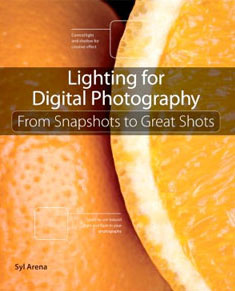
In Lighting for Digital Photography: From Snapshots to Great Shots, photographer and bestselling author Syl Arena begins with a primer on light itself—how to see its direction, intensity, color, contrast, and hardness—and quickly moves on to discussions of shooting both indoors and outdoors in the many different conditions of natural or man-made light. Then the book digs in to begin creating light with photographic lights, whether that’s small flash or big strobe, the pop-up flash on your DSLR or continuous lights.
Follow along with Syl and you will:
Learn the basics (and beyond) of light modifiers that make light bigger and softer, such as umbrellas, softboxes, beauty dishes, and diffusion panels.
Understand how to control and shape the light itself with flags, grids, snoots, and the zoom function on your flash.
Appreciate the color temperature of light (whether that’s the sun, a light bulb, or a flash), and how to influence it with white balance settings on your camera and colored gels on your flash.
Learn how to take great pictures across many different genres, from product and still life images, to simple (and not so simple) portraits and group shots.
Offering digital photographers a complete course in photographic lighting, this book covers everything from using flash systems and studio lights to working outdoors in bright or low-light conditions. Full-color examples show how the right lighting can enhance color, improve contrast, and open the door to new creative possibilities.
ince Lightroom 1.0 first launched, Scott’s Kelby’s The Adobe Photoshop Lightroom Book for Digital Photographers has been the world’s #1 best-selling Lightroom book (it has been translated into a dozen different languages), and in this latest version for Lightroom 5, Scott uses his same award-winning, step-by-step, plain-English style and layout to make learning Lightroom easy and fun.
Adobe Photoshop Lightroom was designed from the ground up with digital photographers in mind, offering powerful editing features in a streamlined interface that lets photographers import, sort, and organize images. In this completely updated bestseller, author Martin Evening describes features in Lightroom 5 in detail from a photographer’s perspective. As an established commercial and fashion photographer, Martin knows firsthand what photographers need for an efficient workflow. He has been working with Lightroom from the beginning, monitoring the product’s development and providing valued feedback to Adobe. As a result, Martin knows the software inside and out, from image selection to image editing and image management.
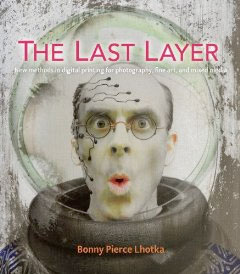
In The Last Layer–the follow-up to Digital Alchemy, her successful book on alternative printmaking techniques–Bonny Lhotka teaches how to make prints that take their inspiration from early printmaking processes. In this book, Lhotka shows readers step-by-step how to create modern-day versions of anthotypes, cyanotypes, tintypes, and daguerreotypes as well as platinum and carbon prints. She also reinvents the photogravure and Polaroid transfer processes and explores and explains groundbreaking techniques for combining digital images with traditional monotype, collograph, and etching press prints. By applying these classic techniques to modern images, readers will be able to recreate the look of historical printmaking techniques and explore the limits of their creative voice. Best of all, the only equipment required is a desktop inkjet printer that uses pigment inks, and a handful of readily available materials and supplies–not the toxic chemicals once required to perform these very same processes. Leveraging her training as a traditional painter and printmaker, Bonny Lhotka brings new innovations and inventions that combine the best of centuries of printmaking technique with modern technology to create unique works of art and photography. After years of experimentation and development, these new processes allow alternative photographers, traditional printer makers, and 21st century digital artists to express their creative voice in ways never before possible.
In the winter of 2021, Luke Oppenheimer arrived in the Tien Shan mountains of central Kyrgyzstan with a straightforward assignment: document the wolves that prey on livestock in the remote shepherding village of Ottuk. Each year, wolves descend from the high ridges to kill dozens of horses and countless sheep. For families whose wealth is measured in hooves and wool, these losses are catastrophic. The men ride into the mountains during the harshest winter months to track and hunt the predators, navigating blizzards and subzero nights in defense of their herds.
Spanning more than a decade of journeys and visual discoveries, Stories Untold is the ambitious new publication by internationally acclaimed photographer Calla Fleischer, a traveler whose lens is guided as much by curiosity as by empathy. Expansive in both scale and spirit, the nearly 400-page volume gathers a rich tapestry of images that explore the subtleties of the human experience—from fleeting gestures in crowded streets to quiet, contemplative portraits that linger long after the page is turned.
The Inner Passage: An Untold Story of Black Resistance Along a Southern Waterway is a groundbreaking photographic and historical project by Charleston-based photographer Virginia McGee Richards, published by MIT Press in April 2026. The work uncovers a little-known chapter of American history, revealing a 300-mile network of colonial-era canals—called “cuts”—dug by enslaved people between the 17th and 18th centuries along the Atlantic coastline from Charleston, South Carolina to St. Augustine, Florida.
"Another Time, Another Place" is an homage to New York City in the 1980s, when it was raw, chaotic, and alive with possibility. Downtown Manhattan was a place where art, music, performance, and nightlife collided—igniting a cultural revolution that still echoes today.
Where Do I Go? is the newest photobook by Rania Matar, bringing together approximately 128 color portraits of young women living in Lebanon today. Released in the shadow of the fiftieth anniversary of the Lebanese Civil War, the book offers a meditation on life shaped by prolonged instability, without allowing conflict to dominate the narrative. Instead of foregrounding destruction, Matar centers creativity, dignity, and resilience, crafting a body of work that quietly insists on the complexity of everyday existence amid uncertainty.
Award-winning Palestinian photographer Ahmad Al-Bazz presents a groundbreaking new work, The Erasure of Palestine, the result of a three-year journey documenting the remnants of hundreds of Palestinian villages and towns depopulated and destroyed from 1948 to the present. Through his lens, Al-Bazz confronts history, memory, and contemporary occupation, offering a stark counter-narrative to the dominant historical record.
With Cockaigne, Austrian photographer Gregor Sailer directs his gaze toward the largely unseen machinery of contemporary food production. Drawing inspiration from the medieval legend of the “Land of Cockaigne” — a fantasy of limitless abundance — Sailer examines the very real systems, technologies, and infrastructures that underpin how food is produced, distributed, and controlled today. The book challenges readers to rethink ideas of nourishment, consumption, and collective responsibility.
In 1998, the Good Friday Agreement was signed in Belfast, signaling peace following 30 years of sectarian violence in Northern Ireland known as The Troubles. Photographer Julie McCarthy photographed annually for five years on Shankill Road, a one-mile Protestant/Loyalist enclave running parallel to the Catholic/Republican area. A wall called the “Peace Wall” divides the two communities.
For the first time, Jo Spence: The Unknown Recordings brings together the full transcripts of key historic recordings made with and by the acclaimed British photographer, writer, and feminist Jo Spence (1934–1992), alongside a wealth of unpublished photographs and documents. This landmark book offers an intimate window into the life, work, and politics of one of the most influential figures in British documentary photography.