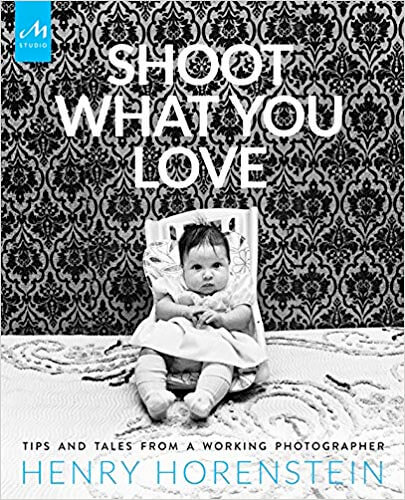
The best professional advice Henry Horenstein ever received was to "shoot what you love." He's been doing that for more than four decades, capturing photographs that often richly evoke older cultures and places, especially ones that are disappearing: country musicians in Branson, horse racing at Saratoga Springs, nightlife in Buenos Aires, fais do-dos in Cajun Louisiana, old highways everywhere.
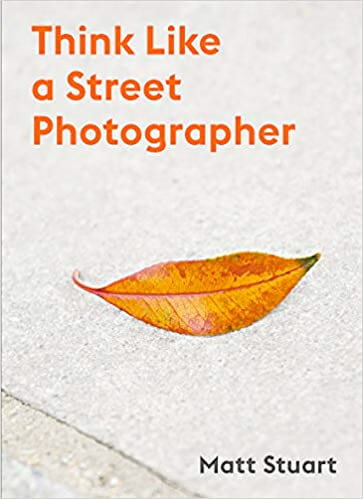
Street photography may look like luck, but you have to get out there and hone your craft if you want to shake up those luck vibes. Matt Stuart never goes out without his trusty Leica and, in a career spanning twenty years, has taken some of the most accomplished, witty and well-known photographs of the streets.
Look beyond the obvious. Street photography is what you make it’.
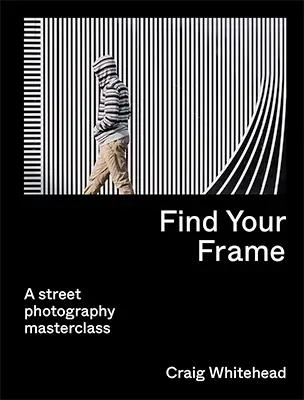
Craig Whitehead’s shots of the streets are unique – his sense of colour, composition, storytelling and timing have earned him a hugely dedicated following. But how does he consistently take such special images, and what are the key creative takeaways to bring to your own photography?
Find Your Frame is Whitehead’s personal how-to guide to a craft he has spent many years honing. Across 20 short, sharp lessons, he reveals his secrets, his tips, his creative approach, his sources of inspiration, and his way of seeing, shooting and anticipating the streets.
Illustrated throughout with example images, and full of creative wisdom and advice, this is the start of your journey toward better street photography and a more creative way of visual thinking.
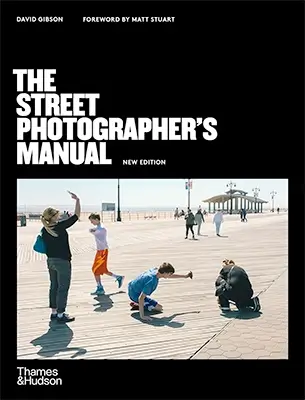
In recent years, photo sharing on social media has rejuvenated street photography, and its spirit has been reborn. The Street Photographer’s Manual is about the possibilities of street photography as a medium, and how it can be approached in an accessible way.
The book begins with an overview of street photography, examining its past, present, and future, and looking at how the genre has changed over time. The reader is then introduced to twenty of the most acclaimed international street photographers. This new, revised edition features six new photographers: Troy Holden, Merel Schoneveld, Melissa Breyer, David Gaberle, Michelle Groskopf, and Craig Whitehead.
Integrated within the profiles are twenty fully illustrated tutorials, including how to shoot a face in a crowd and how to train your eye to observe and capture the unexpected. The Street Photographer’s Manual shows you that being a street photographer is partly about looking for luck. But luck requires inspiration―and that is where this book is indispensable.
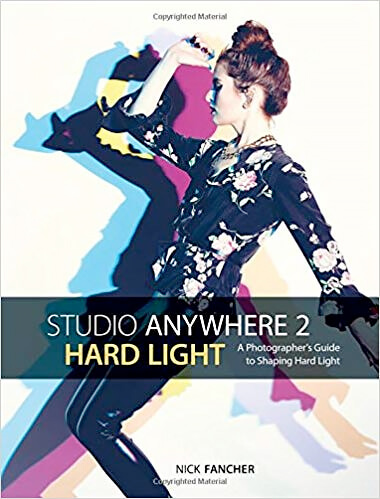
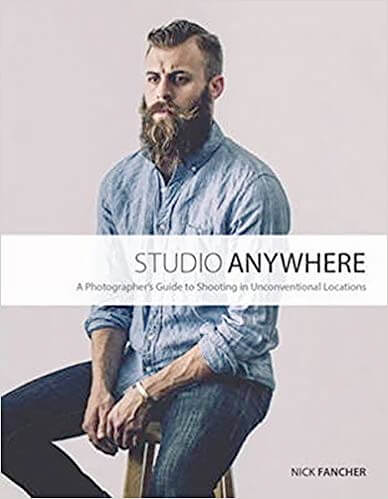
In Studio Anywhere 2: Hard Light, photographer and author Nick Fancher builds on the success of his previous book (Studio Anywhere: A Photographer's Guide to Shooting in Unconventional Locations) as he continues to offer candid, practical, and valuable lessons on how to create successful and fresh photographs armed with only minimal gear, a resourceful mind, and a creative spirit. The heart and soul of Studio Anywhere 2: Hard Light resemble its predecessor, but this time Nick focuses his approach on hard light, demonstrating how to use it in innovative and flattering ways, working with subjects ranging from products to people.
What's your definition of a photo studio? Is it a room with a white seamless backdrop or a cyc wall? Maybe it's simply anywhere you’re in control of the lighting. In a perfect world, where every day is a breezy 72 degrees with partial cloud coverage, we would all have a 5,000-square-foot studio–and the entire catalog of B&H™ in our equipment lockups.
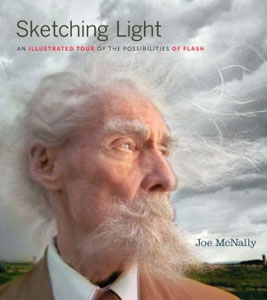
Following up on the great success of The Moment It Clicks and The Hot Shoe Diaries: Big Light from Small Flashes, legendary magazine photographer Joe McNally takes us on another memorable ride with Sketching Light, another trip into the land of light--but this time running the gamut from small flash to big flash, and everywhere in between.
Of course, Joe includes coverage of Nikon Speedlights, but he also covers big flash, as well as "in-between" lights as the Elinchrom Quadra. The exploration of new technology, as well as the explanation of older technology. No matter what equipment Joe uses and discusses, the most important element of Joe's instruction is that it is straightforward, complete, and honest. No secrets are held back, and the principles he talks about apply generally to the shaping and quality of light, not just to an individual model or brand of flash.
He tells readers what works and what doesn't via his let's-see-what-happens approach, he shows how he sets up his shots with plentiful sketches and behind-the-scenes production shots, and he does it all with the intelligence, clarity, and wisdom that can only come from shooting in the field for 30 years for the likes of National Geographic, Time, Life, and Sports Illustrated--not to mention the wit and humor of a clearly warped (if gifted) mind.
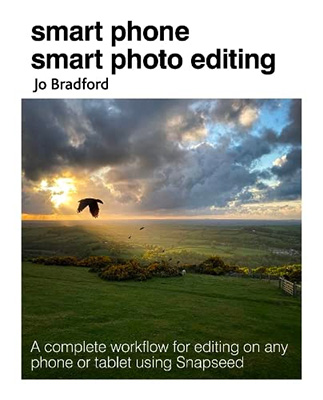
Learn how to edit photographs on your phone with this step-by-step guide from professional photographer Jo Bradford.
Do you know how to make the best of the photos you’ve taken with your phone? We all have hundreds of images on our phones that could do with a little improvement, but transferring them to a hard drive and working in an out-of-date editing program on your Mac or PC can seem like too much hassle. Award-winning professional photographer Jo Bradford, author of the bestselling Smart Phone Smart Photography, can show you how to edit your photos easily and conveniently on your iPhone or Android, using the free Snapseed app. Smart Phone Smart Photo Editing shows you how to use the app to do everything from raw developing and saving a copy, to compositional improvements, global enhancements to color and other elements, and smaller adjustments to specific details. With clear step-by-step text and illustrations for each process, you will soon learn how to get the best from the app and from your images. Case studies and beautiful images taken by Jo will also help to inspire you in your photography.
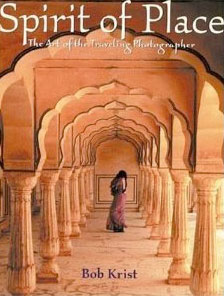
On this thrilling worldwide tour, the author shows traveling nonprofessional photographers how to bring home memorable pictures of people, festivals, wildlife, architecture—even aerial and underwater shots. Directions are detailed for composing landscapes with a variety of lenses, working in both natural and artificial lilght. Valuable tips tell how to pack and carry photo equipment, deal with airport and hotel security, and prepare for various locations and weather conditions.
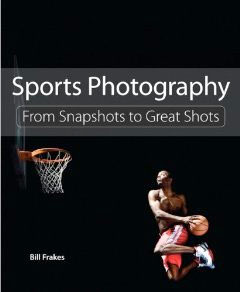
n Sports Photography: From Snapshots to Great Shots, author and sports photographer Bill Frakes shows you how to capture the key elements of sports photographs–motion and emotion, style and scene, place and purpose–whether you’re at a baseball tournament, a track meet, or a professional football game. Starting with the basics of equipment, camera settings, and exposure, Bill covers the fundamental techniques of sports photography–understanding lighting, handling composition and focus, and timing peak action. He explains how to choose a shooting position on the field of play, identify the defining moments away from the action, and learn the etiquette of covering live sporting events. He then breaks down the shooting processes of specific sports, outlining the challenges and demands of each and showing how to isolate individual athletes in action.
In the winter of 2021, Luke Oppenheimer arrived in the Tien Shan mountains of central Kyrgyzstan with a straightforward assignment: document the wolves that prey on livestock in the remote shepherding village of Ottuk. Each year, wolves descend from the high ridges to kill dozens of horses and countless sheep. For families whose wealth is measured in hooves and wool, these losses are catastrophic. The men ride into the mountains during the harshest winter months to track and hunt the predators, navigating blizzards and subzero nights in defense of their herds.
Spanning more than a decade of journeys and visual discoveries, Stories Untold is the ambitious new publication by internationally acclaimed photographer Calla Fleischer, a traveler whose lens is guided as much by curiosity as by empathy. Expansive in both scale and spirit, the nearly 400-page volume gathers a rich tapestry of images that explore the subtleties of the human experience—from fleeting gestures in crowded streets to quiet, contemplative portraits that linger long after the page is turned.
The Inner Passage: An Untold Story of Black Resistance Along a Southern Waterway is a groundbreaking photographic and historical project by Charleston-based photographer Virginia McGee Richards, published by MIT Press in April 2026. The work uncovers a little-known chapter of American history, revealing a 300-mile network of colonial-era canals—called “cuts”—dug by enslaved people between the 17th and 18th centuries along the Atlantic coastline from Charleston, South Carolina to St. Augustine, Florida.
"Another Time, Another Place" is an homage to New York City in the 1980s, when it was raw, chaotic, and alive with possibility. Downtown Manhattan was a place where art, music, performance, and nightlife collided—igniting a cultural revolution that still echoes today.
Where Do I Go? is the newest photobook by Rania Matar, bringing together approximately 128 color portraits of young women living in Lebanon today. Released in the shadow of the fiftieth anniversary of the Lebanese Civil War, the book offers a meditation on life shaped by prolonged instability, without allowing conflict to dominate the narrative. Instead of foregrounding destruction, Matar centers creativity, dignity, and resilience, crafting a body of work that quietly insists on the complexity of everyday existence amid uncertainty.
Award-winning Palestinian photographer Ahmad Al-Bazz presents a groundbreaking new work, The Erasure of Palestine, the result of a three-year journey documenting the remnants of hundreds of Palestinian villages and towns depopulated and destroyed from 1948 to the present. Through his lens, Al-Bazz confronts history, memory, and contemporary occupation, offering a stark counter-narrative to the dominant historical record.
With Cockaigne, Austrian photographer Gregor Sailer directs his gaze toward the largely unseen machinery of contemporary food production. Drawing inspiration from the medieval legend of the “Land of Cockaigne” — a fantasy of limitless abundance — Sailer examines the very real systems, technologies, and infrastructures that underpin how food is produced, distributed, and controlled today. The book challenges readers to rethink ideas of nourishment, consumption, and collective responsibility.
In 1998, the Good Friday Agreement was signed in Belfast, signaling peace following 30 years of sectarian violence in Northern Ireland known as The Troubles. Photographer Julie McCarthy photographed annually for five years on Shankill Road, a one-mile Protestant/Loyalist enclave running parallel to the Catholic/Republican area. A wall called the “Peace Wall” divides the two communities.
For the first time, Jo Spence: The Unknown Recordings brings together the full transcripts of key historic recordings made with and by the acclaimed British photographer, writer, and feminist Jo Spence (1934–1992), alongside a wealth of unpublished photographs and documents. This landmark book offers an intimate window into the life, work, and politics of one of the most influential figures in British documentary photography.